
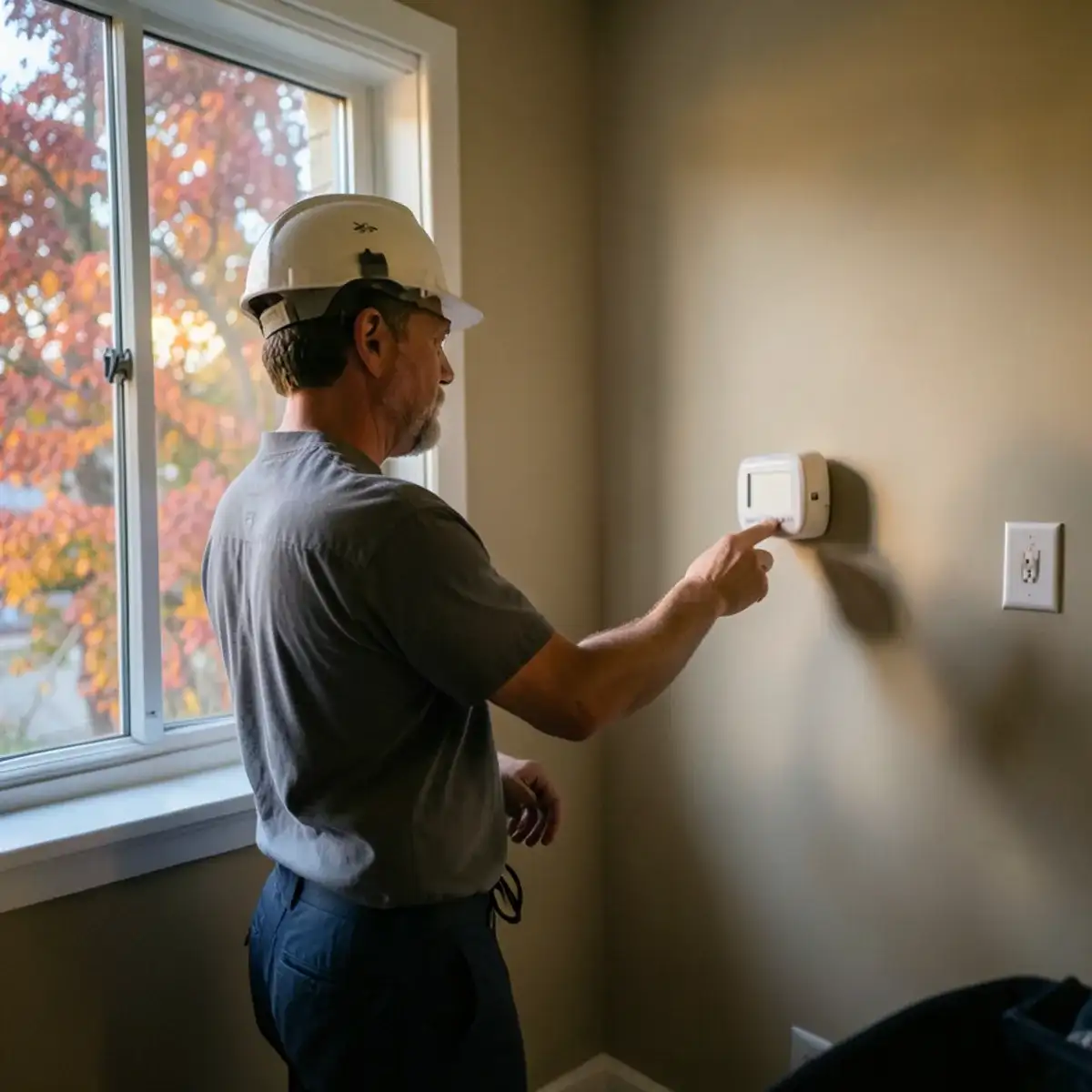
Run this furnace maintenance checklist while the nights are still mild. Start with the items that keep people safe: CO alarms, vents and a clear furnace room. Then change the filter, test the thermostat and run the heat for an hour, so that any fault shows up in September and not on the first freeze.
Safety items first: do these three before anything else
You cannot smell carbon monoxide, which leaves an alarm as your only warning. The CPSC says more than 200 people in the U.S. die each year from accidental non-fire CO poisoning tied to consumer products. Start here, even if everything seems fine.
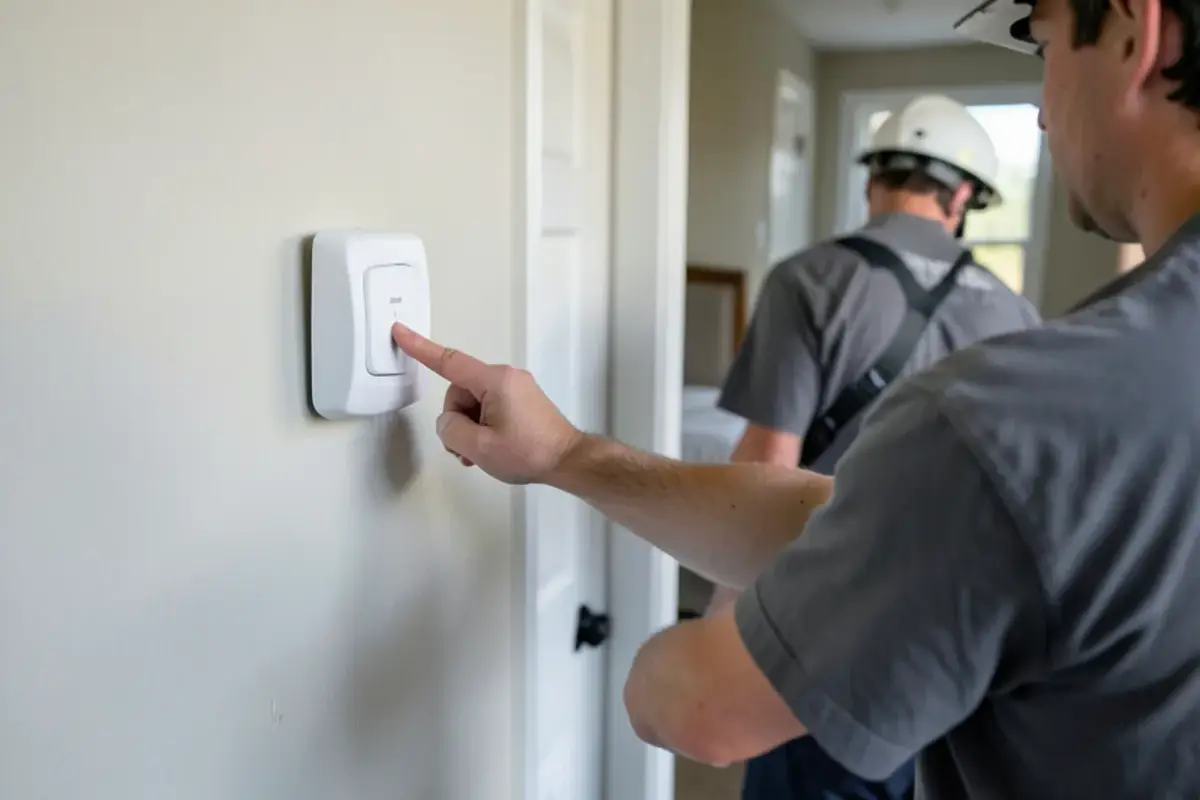
- Test every CO alarm. Press the button and listen for it on each level.
- Confirm placement. The CPSC calls for an alarm on each level and outside the bedrooms, with battery backup. Interconnected alarms are better, because they all sound together.
- Replace the batteries and check the date on the back of each alarm. Replace any unit past the maker's end-of-life date.
- Check the smoke alarms while you are there.
- Clear the furnace room. Move paint, solvents, gasoline, laundry and cardboard well away from the unit.
Furnace maintenance checklist for the air side
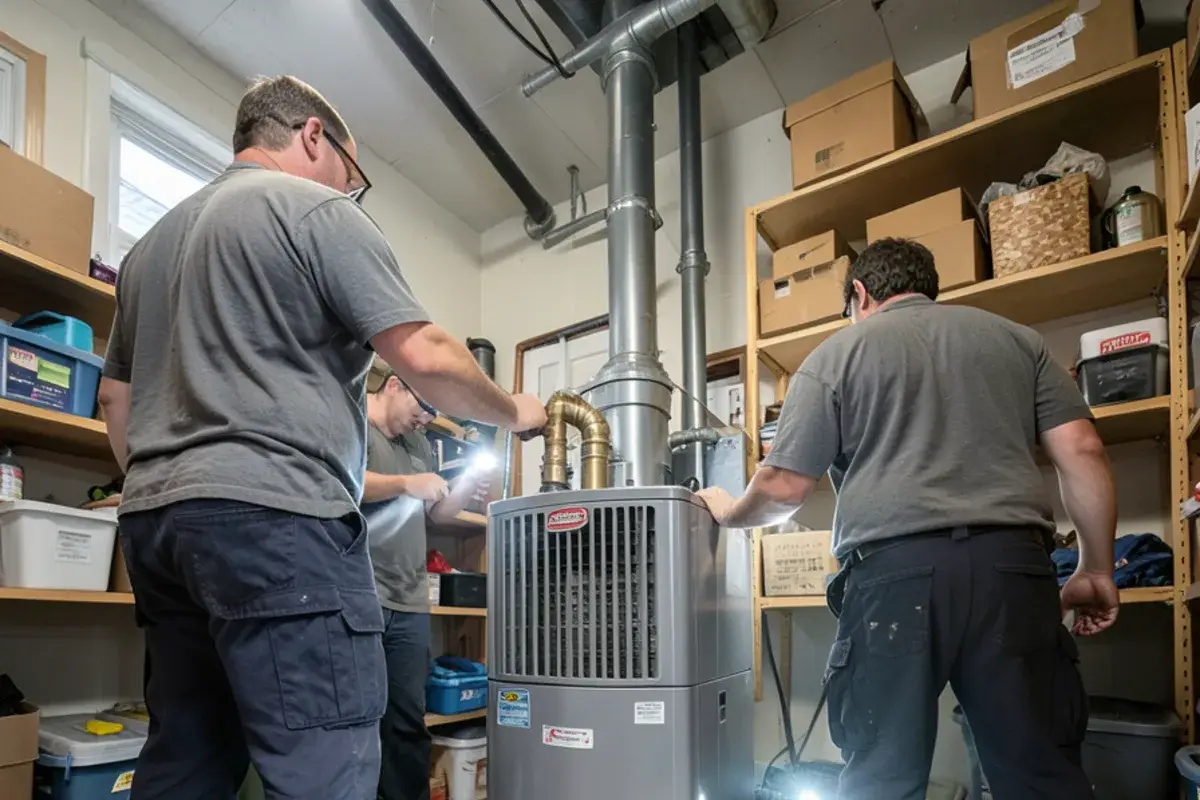
These items keep air moving, and most no-heat calls in the first cold week trace back to one of them. Turn the furnace off at the switch before you open anything.
- Change the filter and write the date on its frame.
- Open supply registers, and pull rugs and furniture off them.
- Vacuum return grilles and the area around the unit.
- Look along the ducts you can see for disconnected joints.
- Look at the condensate drain, if your furnace has a plastic vent. It should be clear and draining.
- Confirm the blower door is seated. Many furnaces will not start if it is loose.
Tell us what your system is doing
Our office is open Monday to Friday, 8 AM to 4 PM. Call and we will sort out the next step.
Vents, flue and the outdoors
Exhaust has to get out and combustion air has to get in, so walk around the house and look.
- Check plastic intake and exhaust pipes on the wall for nests, leaves and sagging.
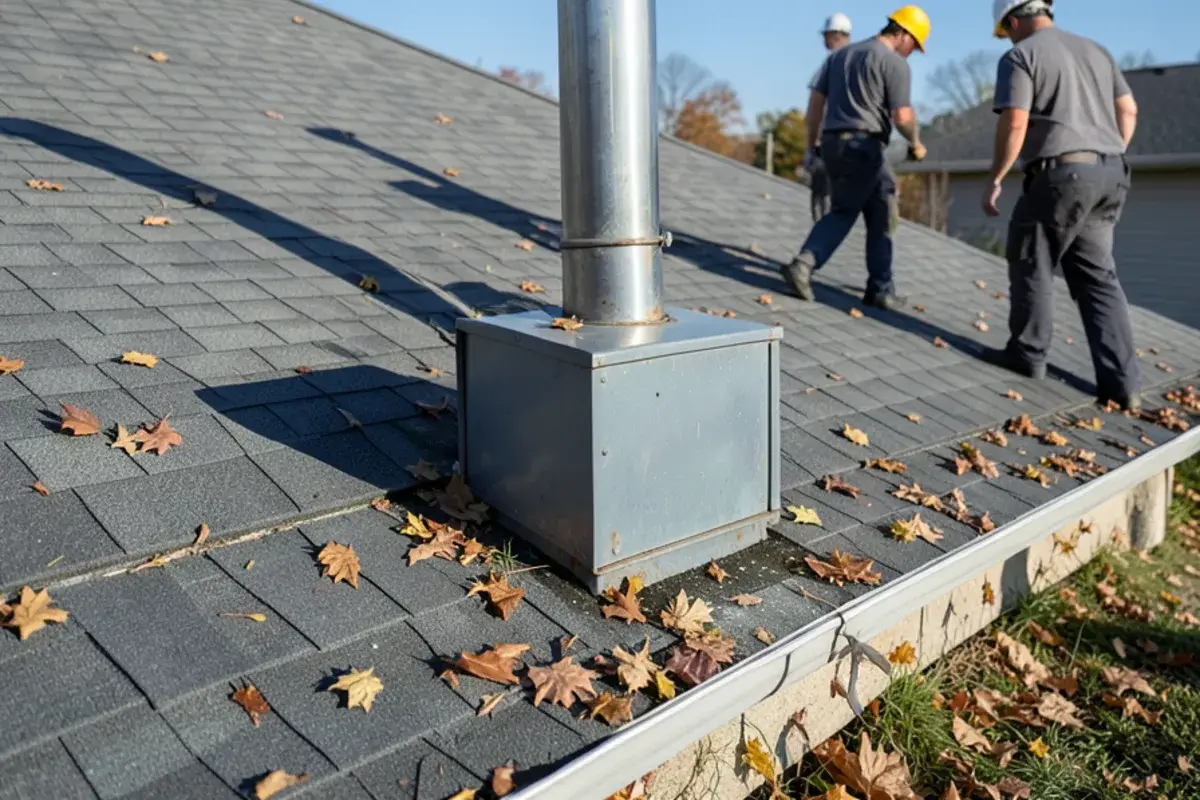
- Look at the metal flue from the ground for rust, a missing cap or a loose section.
- Clear leaves, mulch and woodpiles from around any wall vents.
- Check the gas or propane line where you can see it, without touching any valve.
- On propane, read the tank gauge and arrange a fill before cold weather.
- Remove any window AC units and seal drafts at old windows.
The one-hour test run
Run the heat while you can still open a window, and while a repair is not an emergency. An evening in the 50s is ideal.
- Set the thermostat to heat, a few degrees above room temperature.
- Listen for the sequence: inducer fan, igniter or pilot, burners, then blower.
- Stand at a register and confirm warm air within a few minutes.
- Let it run through a full cycle, then turn it down and listen for a clean shutdown.
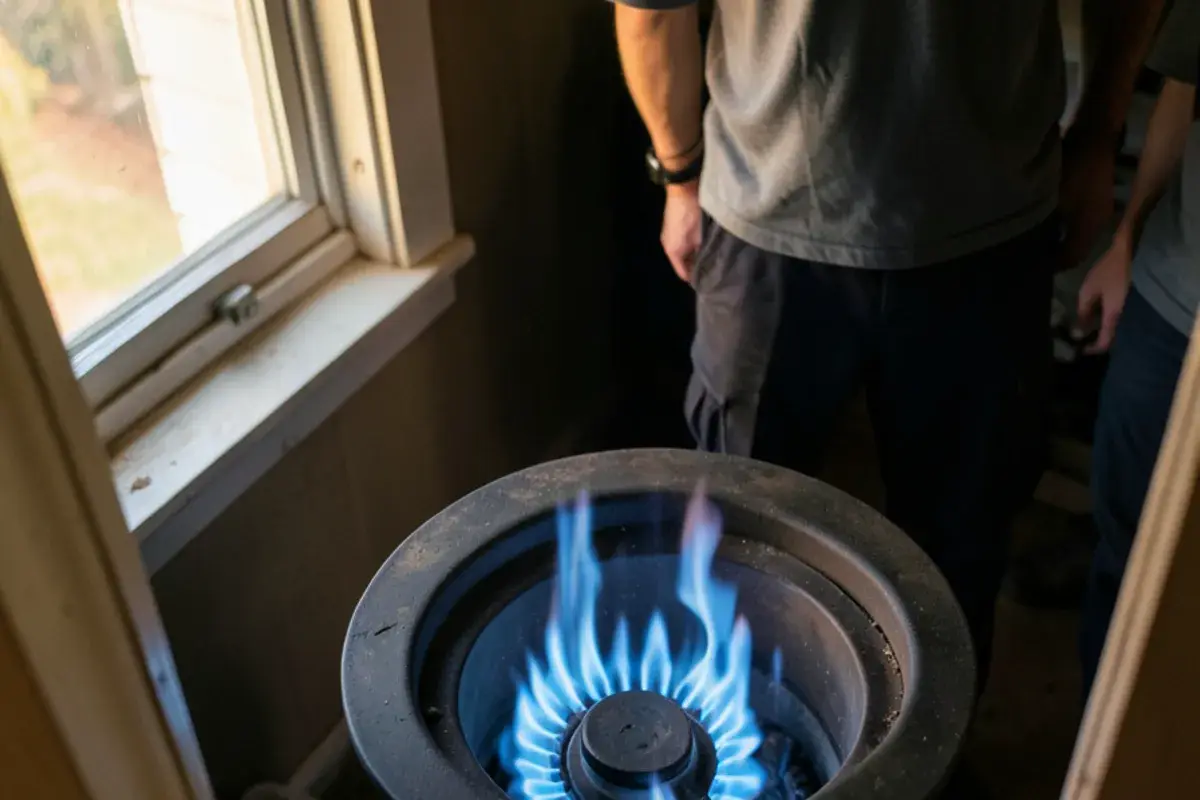
- Look through the viewing port, if there is one, for steady blue flames.
Expect a dusty smell the first time. Call if the burners light and then drop out, if the furnace starts and stops every few minutes, if the flames look yellow or wavering, or if it blows cold air. Some of those faults have simple causes, and our furnace repair page explains what we test.
Check the thermostat while you are at it. Replace batteries, set the schedule and make sure it reads close to a separate thermometer.
Extra checks for wood stoves, weekend places and rentals
Some homes need more than the standard list. Wood heats 13.3% of occupied homes in Gasconade County, per the Census Bureau's five-year estimates, and plenty of county homes sit empty for weeks.
- Wood stove or fireplace. Have the chimney swept and inspected. If a furnace or water heater shares that chimney, ask whether a stove can pull exhaust back into the house.
- Weekend or seasonal place. Set the thermostat no lower than 55°F, know where the main water shutoff is, and add a low-temperature alert if the place has Wi-Fi. A failed igniter in an empty cabin can become a burst pipe before anyone notices.
- Rental unit. Write the filter size on the frame, leave a spare with the tenant and date the CO alarms. A renter who knows who to call reports a problem sooner.
- Generator backup. Keep it outside, more than 20 feet from doors, windows and vents, and test it before the first storm. A gas or propane furnace still needs power for the blower.
What to have on hand before the first cold night
Spend ten minutes putting these in one place, so you are not hunting for them at 10 PM.
- Two spare filters in the right size
- Batteries for the thermostat and CO alarms
- A flashlight, since the furnace room may be dark when the power is out
- A photo of the data plate on your phone
- Your gas or propane supplier's emergency number
- Our number, plus your landlord's number if you rent
What belongs to a technician
Some furnace checks need instruments, and a clean-looking furnace can still fail them. A cracked heat exchanger is the classic example: you cannot see it from the door, and it is the reason a yearly visit matters.
| Item | Why a homeowner cannot judge it |
|---|---|
| Heat exchanger inspection | Cracks hide inside the metal and need a mirror, camera or test |
| Gas pressure at the valve | Needs a manometer and a shutoff you should not touch |
| Burner combustion | Needs a combustion reading, not a look at the color |
| Flame sensor and igniter condition | Measured in microamps and ohms |
| Electrical connections, motor voltage and current | Live testing inside the cabinet |
| Venting draft and CO reading in the flue | Needs an analyzer |
ENERGY STAR's contractor list includes the gas connections, gas pressure, burner combustion and heat exchanger, along with tightening electrical connections and checking the startup cycle. Our furnace tune-up covers that kind of work. Ask any contractor for the readings in writing, so you can compare them next year.
When to do what
Winter lows in Hermann average about 24°F, and the town logs some 116 freezing nights a year (BestPlaces), so do not leave this until November.
| Timing | Task |
|---|---|
| Early September | Book the tune-up, buy filters, check the tank |
| Mid to late September | Safety list, air-side list, outdoor walk |
| First evening in the 50s | One-hour test run |
| October | Fix anything the test found |
| Each month through winter | Check the filter, test CO alarms, clear vents after snow |
What we tell customers before the freeze
Think about age now, while you still have a choice. A maintained furnace often gives 15 to 20 years, by the usual estimates. If yours is in that range and needs a large repair, price a furnace replacement before you approve the work. It is a much easier decision in October than on a Sunday in January.
Keep this list with the date on it. If you are near Rhineland or Morrison, the drive to you is short, but the calendar still fills once the first cold front is in the forecast. Call (209) 563-1270 in September, and let us look at it while the weather is on your side.
Brian Grannemann
Owner, Brian Grannemann Services Inc, Hermann, MO. In business since 1998 across heating, cooling, electrical and plumbing work.