
Heating
Geothermal Heat Pumps in Hermann, MO
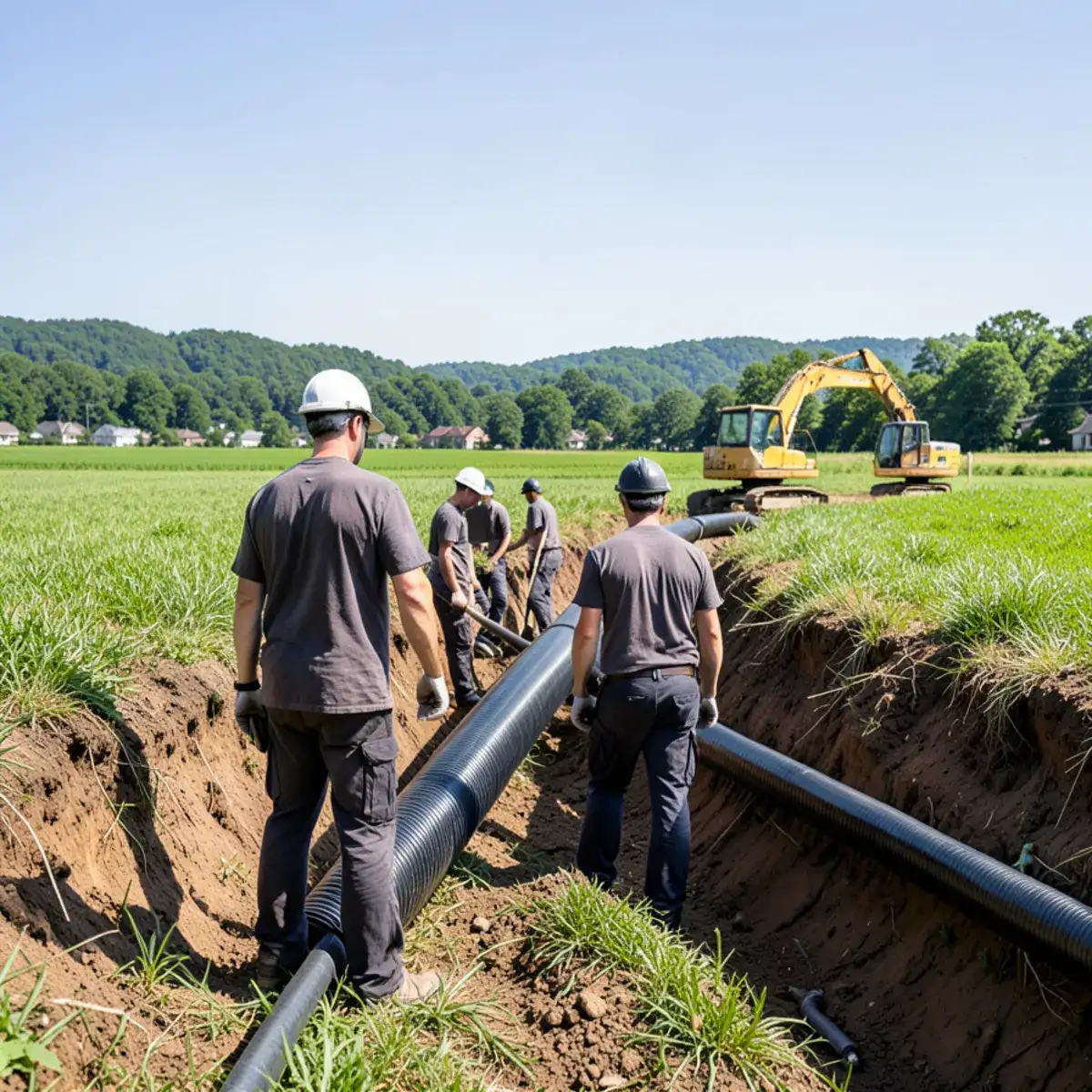
Geothermal heat pumps trade the outdoor unit for a buried loop, so your land decides the job before the equipment does. Around Hermann that means looking at acreage, soil depth, bedrock and any pond first, then working out whether a ground source heat pump pays back on your property.
- 4.7 on Google(15 reviews)
- Serving Hermann since 1998
- Office at 124 E 10th St
Geothermal heat pumps in Hermann: which loop fits your land?
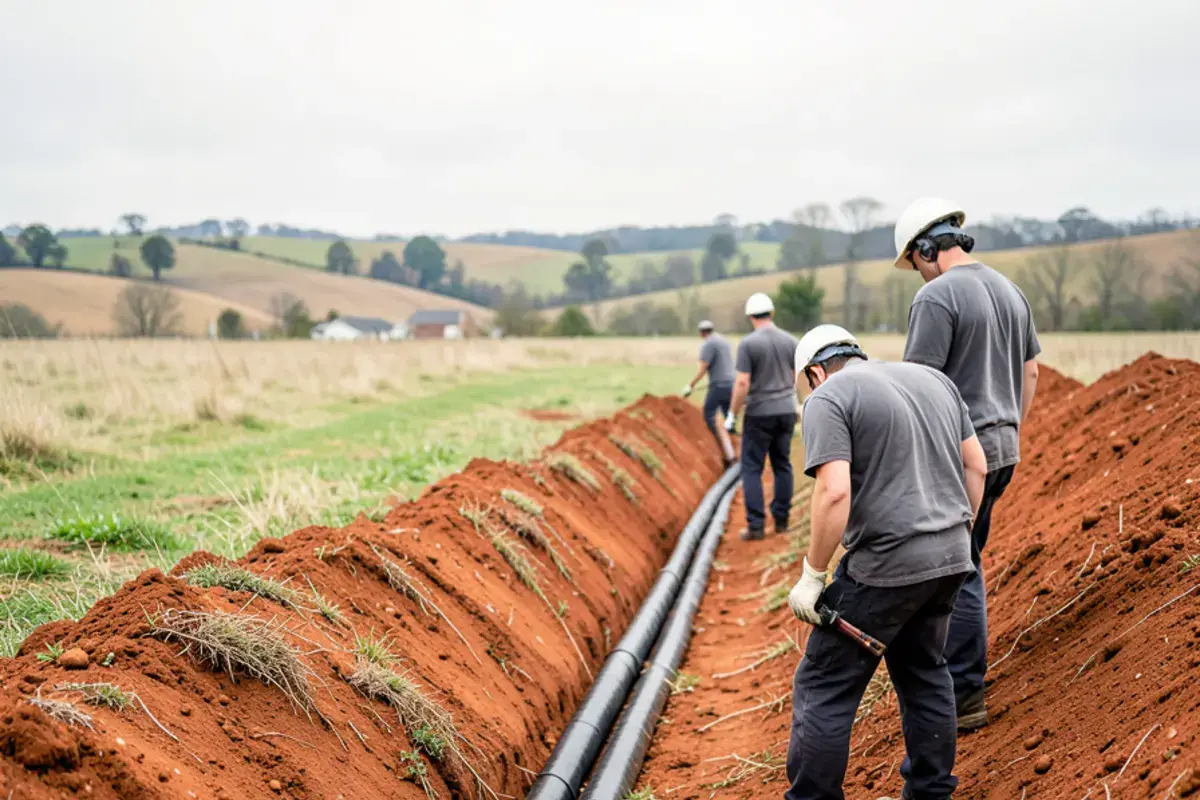
Choose the loop from the site, not from a brochure. DOE names four types, and the climate, soil, available land and local installation cost decide between them. Rural acreage gives you more of these options than a town lot does.
| Loop type | Suits | Watch for |
|---|---|---|
| Horizontal | Open pasture with deep enough soil | DOE says trenches at least 4 feet deep, so shallow rock rules it out |
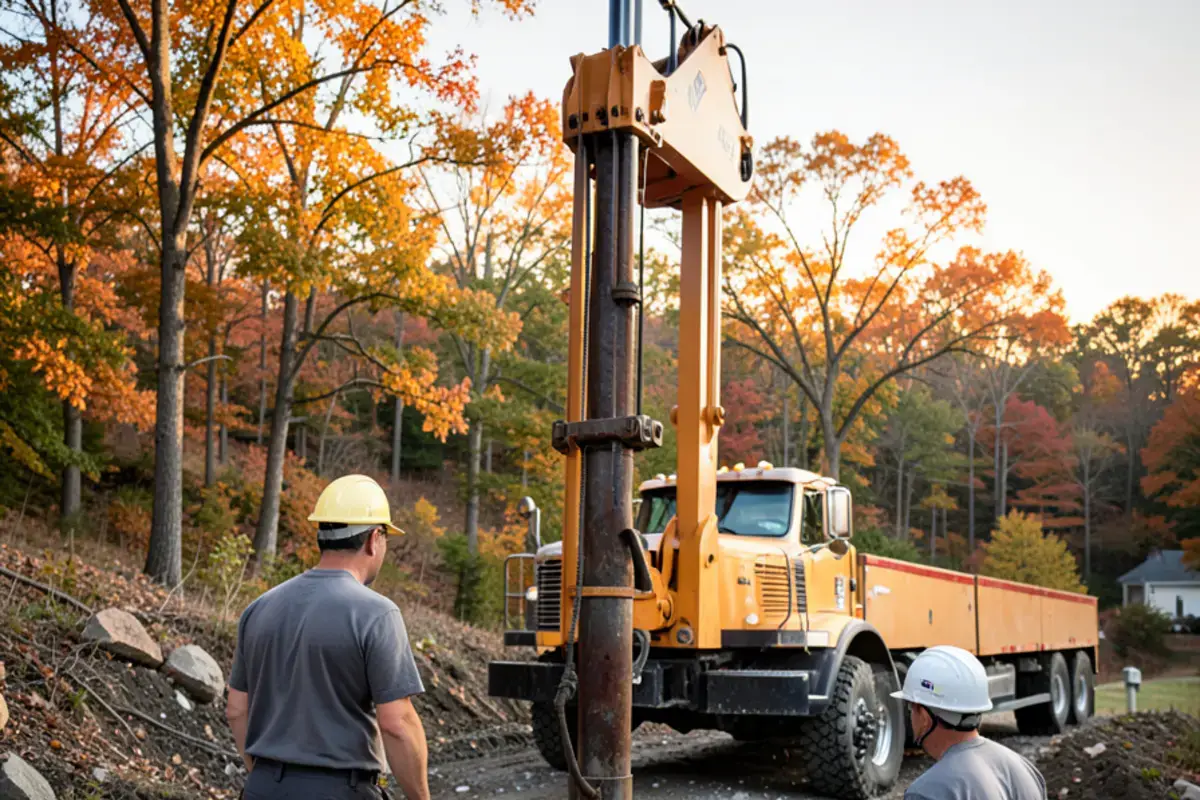
| Vertical | Thin soil, small sites, rocky ground | Costs more, and Missouri's well rules apply |
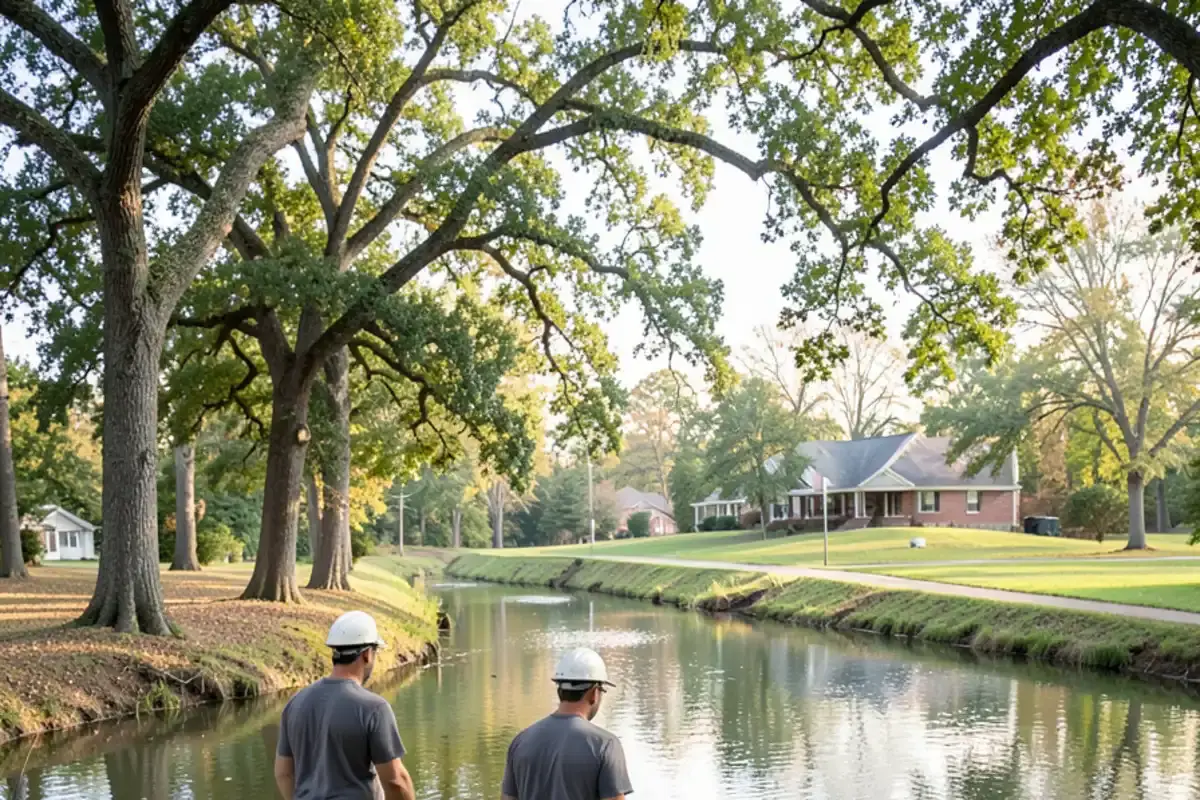
| Pond | A farm pond of adequate size | DOE says coils at least 8 feet under the surface |
| Open loop | A strong, clean well | Needs clean water and must meet groundwater discharge rules |
Need Geothermal Heat Pumps?
Our office is open Monday to Friday, 8 AM to 4 PM. Call and we will sort out the next step.
Karst, bedrock and rocky ground: what to check before drilling
Do not price a loop until someone has looked at what is under it. The Missouri Department of Conservation says much of Missouri is a karst landscape of porous limestone and dolomite, and the Missouri Department of Natural Resources counts more than 16,000 known sinkholes statewide. MDC places most sinkhole basins in the Ozark and Ozark Border natural divisions. St. Louis and Jefferson City are named on the northern Ozark border, and Hermann sits between them along the Missouri River.
Three things follow from that geology.
- Soil can be thin. On ridges and hillsides, rock near the surface can end a horizontal plan. DOE points to vertical loops where soil is too shallow for trenches.
- Drilling costs vary. Hard rock and fractured zones change the bid, so a price with no site review is a guess.
- Groundwater is exposed. USGS calls Ozark karst aquifers productive but very vulnerable to contamination. That is why sealing a bore matters, and why an open-loop plan needs extra scrutiny.
We cannot read your parcel from a map, and regional geology does not tell you what sits under one pasture. Before you commit, look for sinkholes and springs on the property, ask what nearby wells hit and have the driller review the site.
How is a ground source heat pump sized?
A ground source heat pump is sized twice: once for the house, once for the ground. Manual J sets the load, which picks the tonnage. The loop is then designed around that load and the soil or rock it sits in, because a short loop drifts in temperature over a long winter and the efficiency goes with it.
Size matters more here than with an air-source unit, since each extra ton means more pipe in the ground. Sealing the house first can shrink the loop, which is often the cheapest savings on the job. Ductwork gets the same Manual D check it would for any forced-air system, and leaky duct runs should be fixed before the new unit goes in.
DOE says a dual-source heat pump, which pairs an air-source unit with a geothermal unit, costs much less to install and works almost as well. It is worth asking about if the loop bid comes in high.
Geothermal installation from survey to startup
Geothermal installation has two crews' worth of work in it, the ground and the house, so your quote should show both.
- We walk the site, review the soil and any pond, and run the load calculation.
- Call 811 to mark buried lines before any trench or bore.
- The loop field is trenched or drilled, then pressure tested.
- Supply and return lines come through the foundation and are sealed.
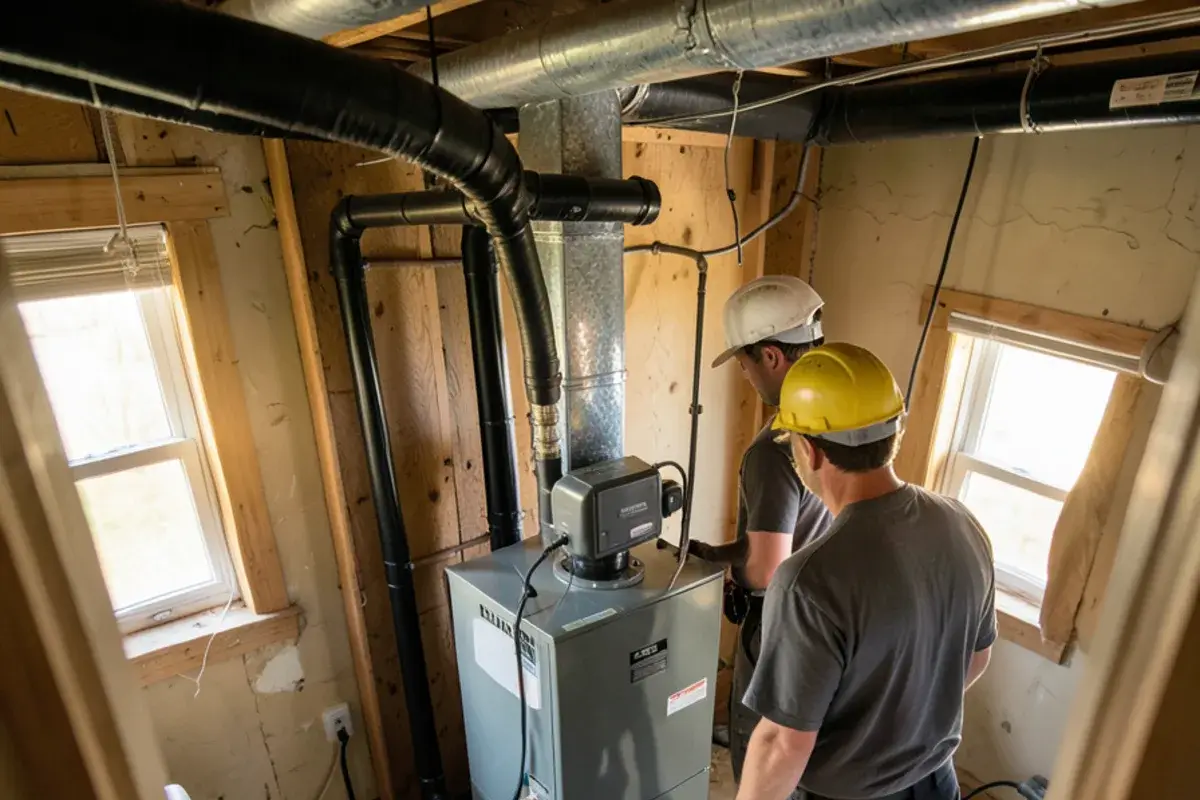
- The indoor unit, pump module and ductwork connections go in.
- The loop is flushed, purged of air and filled.
- We start the system and record pressures, temperatures and airflow.
- The yard is backfilled and the loop location is recorded.
What is included: your quote should name the load calculation, a loop design with type and length, the indoor equipment, startup readings and a map of the loop. Timing depends on the rock and the ground conditions, and a trenched pasture can take a season to green up.
Missouri's rules for closed-loop wells
Missouri treats a vertical bore as a well. The state's well construction rules, 10 CSR 23-5, cover the construction and plugging of geothermal wells. As published, they cap closed-loop heat pump wells at 500 feet, require casing to be grouted full length and exempt trench installations 10 feet deep or less. Installs are reported on a heat pump certification form.
An amendment to the closed-loop standards went out for public comment in 2024, so confirm the current text with the Missouri Department of Natural Resources. Ask any contractor who drills the bores, who files the state paperwork and who pulls any local permit, because permit rules here change from one city or county to the next.
What does geothermal cost without a federal credit?
Pick HVAC's May 2026 national figures for a 2 to 3 ton closed-loop system run $10,000 to $30,000 for horizontal and $18,000 to $50,000 for vertical. Those are national numbers, not our prices, and we did not find a Missouri-specific figure. Bedrock, loop length and duct work are the main swing factors.
DOE says geothermal can use 25% to 50% less energy than an air-source heat pump, and estimates a payback of 5 to 10 years. Test that against your own bills: the federal credit is gone, and a propane home and an all-electric home will see different savings.
Incentives depend on your electric provider. Hermann city customers are on a municipal utility, so do not assume Ameren programs apply. Ameren programs are for Ameren customers only, and published geothermal amounts conflict, so check its current chart. Home Energy Basics reports per-ton geothermal incentives from some rural co-ops, which vary by co-op. Missouri has no statewide rebate.
Why Brian Grannemann Services for geothermal work
- A buried loop is a long-term commitment, so it helps to have a walk-in office at 124 E 10th St, open since 1998.
- You will find us in the Missouri 811 member directory, and locates come before any digging on your land.
- New construction is on our Google profile, and a new build is where DOE says geothermal fits especially well.
- Electrical and plumbing are on that profile too, which covers the pump, circuit and desuperheater connections.
- One reviewer, Donna M., used the words "very thorough," which is the standard for a system you cannot dig up twice.
Geothermal repair and care
Change filters on schedule, watch your electric bill for an unexplained rise and keep your loop map with the house papers. Have the system checked yearly. Geothermal repair usually stays indoors, and the same refrigerant, airflow and control logic applies as on our heat pump repair page. If the land rules out a loop, a cold climate air-source system may be the better spend.
Rural properties are where this work makes sense, and we quote it from Hermann across the region, including Marthasville, Montgomery City, Linn and Bland. Call (209) 563-1270 to set up a site walk.
Calling is fastest
Ask about Geothermal Heat Pumps
Calling gets you an answer sooner, especially if the house is cold or hot right now. If it can wait, send the details and our office will get back to you during business hours.
Smell gas? Do not use this form. Leave the building and call from outside.
What customers say on Google
4.7 on Google(15 reviews)“During one of the coldest days in decades, and with fresh snow falling, Brian came out to our house this evening to repair our faulty furnace so we would have heat. He didn't hesitate to make the trip out. Cannot express how much we appreciate his efforts and care. I highly recommend his company for your HVAC needs. Thank you!”
“Hot water heater went out and Brian worked with us to help us find the correct replacement parts, and the repair process. He is knowledgeable, reliable and very responsive. He came out saw that we needed one more possible part and said he wouldn’t charge us labor until the water heater was up and running. We got the right parts he came out to install and had us up and running! We will definitely rely on him again for any future issues with HVAC, water heater, and or plumbing issues! It’s so nice to have hot water again!”
“I can’t say enough good about Brian and his company. They are my go to guy’s. I’ve had them work for me about a half dozen times now. No need to look elsewhere. They are fair and responsive to your needs.”
Good to know
Geothermal Heat Pumps questions
Does my property in central Missouri have enough land for geothermal?
Probably, if you are on acreage, though the amount of soil matters as much as the amount of land. DOE says horizontal trenches need to be at least four feet deep, so thin soil over rock rules them out even on a big parcel. A vertical loop needs far less land, at a higher price. We start with a walk of the site.
Can you drill for geothermal in karst ground?
Often yes, but it takes more care. Karst bedrock can hold fractures and voids that connect directly to groundwater, so a bore has to be properly sealed. Missouri's well rules for closed-loop wells cover grouting and depth. Have the parcel looked at by the driller before you sign, and ask how they handle lost grout or a void.
Is the federal tax credit still available for geothermal?
No. Geothermal was covered by the Residential Clean Energy Credit, and the IRS says that credit ended with systems placed in service by the close of 2025. A 2026 install gets nothing federal, so run the payback without it. Some older cost guides still quote the 30% figure. A tax adviser can confirm your own position.
Can I add geothermal to my existing ductwork?
Usually, if the ducts are sized well. Like an air-source heat pump, a geothermal unit moves a steady volume of mild air, so tight or leaky ducts cost you the efficiency you paid for. We measure airflow and check the ducts before quoting. If a run needs rebuilding, it is cheaper to do that before the new unit goes in.
How long does a geothermal system last?
DOE's consumer guide gives an average of 20 or more years for the heat pump itself and 25 to 50 years for the underground loop. That means the buried part can outlive one indoor unit, and the next replacement should cost far less than the first install. Keep your loop map and records, because they make future repair far simpler.
What are the signs a geothermal system needs repair?
Longer run times, aux heat coming on more often and a rising electric bill are the usual signs. Lockouts on the thermostat are another. Most faults we would expect are indoors: pump modules, controls, airflow and water coil scale on open loops. Loop leaks are less common, but a drop in loop pressure should be checked. Call with the model number.
Sources
- U.S. DOE, Consumer Guide to Geothermal Heat Pumps (2021)
- Missouri Department of Conservation, caves and karst
- Missouri Department of Conservation, sinkholes and sinkhole ponds
- Missouri Department of Natural Resources, karst in Missouri
- USGS, Ozark Plateau karst aquifers
- Wikipedia, Ozarks
- Missouri Code of State Regulations, 10 CSR 23-5, heat pump well construction rules
- Pick HVAC, geothermal heat pump cost (May 2026)
- IRS, Residential Clean Energy Credit
- Home Energy Basics, Missouri heat pump rebates (updated September 2026)
Where we handle geothermal heat pumps
- MarthasvilleKaty Trail town with older homes.
- Montgomery CityCounty seat with older housing.
- LinnOsage County seat with rural homes around it.
- BlandRural homes in southern Gasconade County.
- RhinelandDirectly across the river, with flood-aware rebuilt homes.
- BergerSmall town on the Berger Bottom along Route 100.
- Gasconade CountyRural homes, historic Hermann and scattered farms with propane heat.
- Franklin CountyMix of commuter towns and working farms.
- Warren CountyRural growth spreading from the St. Louis metro.
Read next
Based at 124 E 10th St in Hermann, we work across Gasconade County and the towns around it, including Owensville, Morrison, Rhineland, Berger. See all the areas we serve.
Geothermal Heat Pumps from a Hermann company
A Hermann company since 1998. Tell us what is going on and we will tell you what happens next.
- 4.7 on Google(15 reviews)
- Serving Hermann since 1998
- Office at 124 E 10th St