
Indoor Air Quality
Air Purifiers and Filtration in Hermann, MO
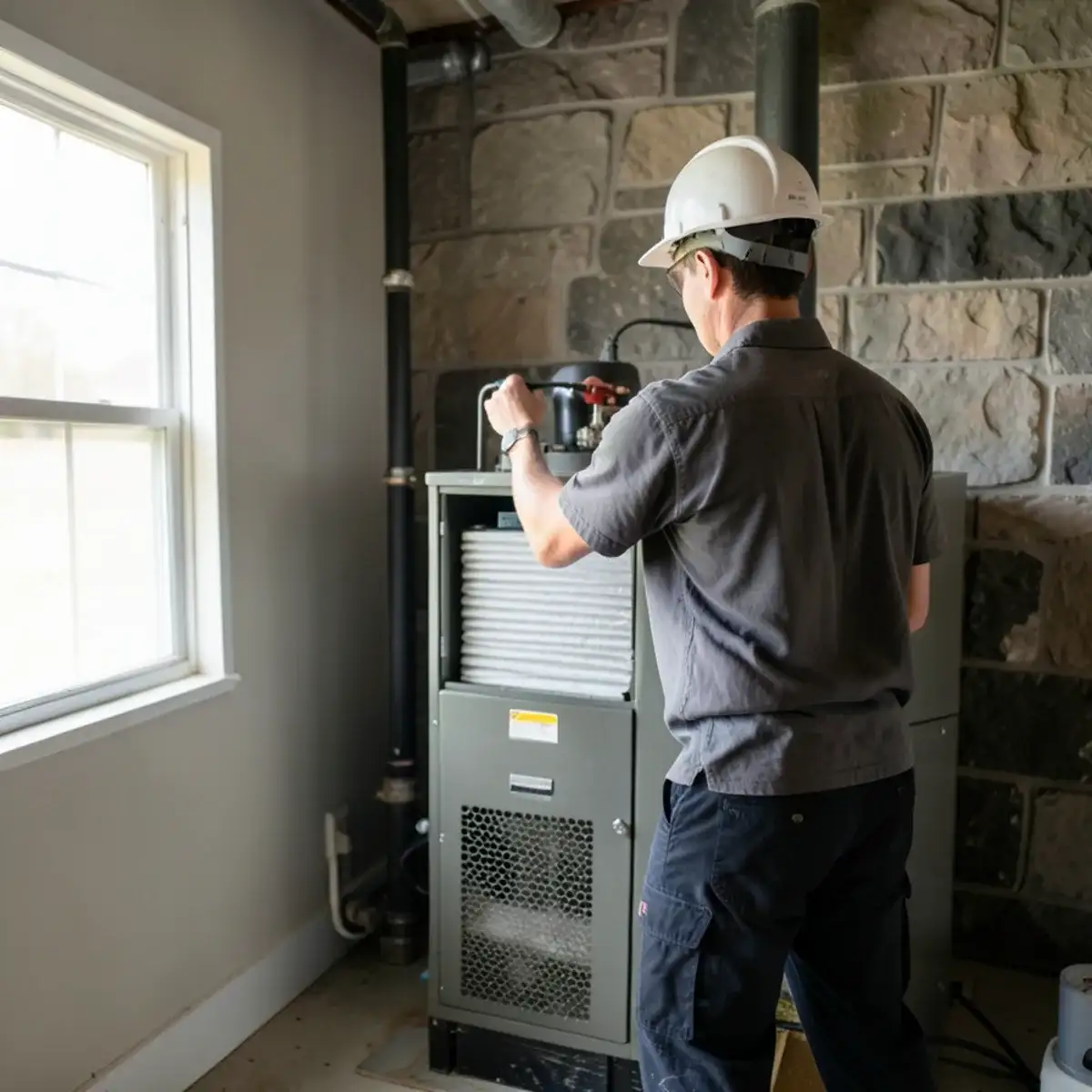
Air purifiers and filtration in Hermann work best when they match the problem: a media filter for oak and ragweed pollen, activated carbon for odors, and moisture control for anything musty. These products reduce what is floating in the air. They do not treat allergies or asthma, and we will not tell you otherwise.
- 4.7 on Google(15 reviews)
- Serving Hermann since 1998
- Office at 124 E 10th St
Which air purifier or filter fits your home?
Start with what you want out of the air, then check what your system can move. This table compares the common choices.
| Option | What it targets | Limit | Good fit |
|---|---|---|---|
| 1-inch pleated filter | Dust, some pollen | Higher ratings can choke airflow | Tight slot, budget |
| 4-inch media filter | Pollen, fine dust at higher MERV | Needs a cabinet at the furnace | Most ducted homes |
| Whole-home HEPA | Very fine particles | Usually needs its own fan and bypass | Specific needs, room to install |
| Portable HEPA | One room's particles | Treats only that room | Bedrooms, homes without ducts |
| Activated carbon | Odors and gases | Needs plenty of carbon | Smoke, cooking, chemical odors |
| UV light for HVAC | Growth on a damp coil | Captures nothing | Add-on after filtration |
| Electronic or ionizing | Particles | May emit ozone | Check ozone data first |
Need Air Purifiers and Filtration?
Our office is open Monday to Friday, 8 AM to 4 PM. Call and we will sort out the next step.
What can filtration do, and what can it not do?
Filtration lowers particles in air that passes through it. That is useful, and it is the whole claim. The EPA says no air cleaner removes every pollutant, that you still need source control and fresh air, and that a filter does not fix mold.
So we do not sell any filter as an allergy air filter that treats a condition. If you have asthma or serious allergies, your doctor is the right person to ask about symptoms. Our job is the equipment: what it catches, what it costs and what it does to your airflow.
The ENERGY STAR label on air cleaning products covers energy use, not cleaning power, and the EPA does not certify filter brands. Read performance numbers, not marketing.
Sizing a whole home air purifier around your airflow
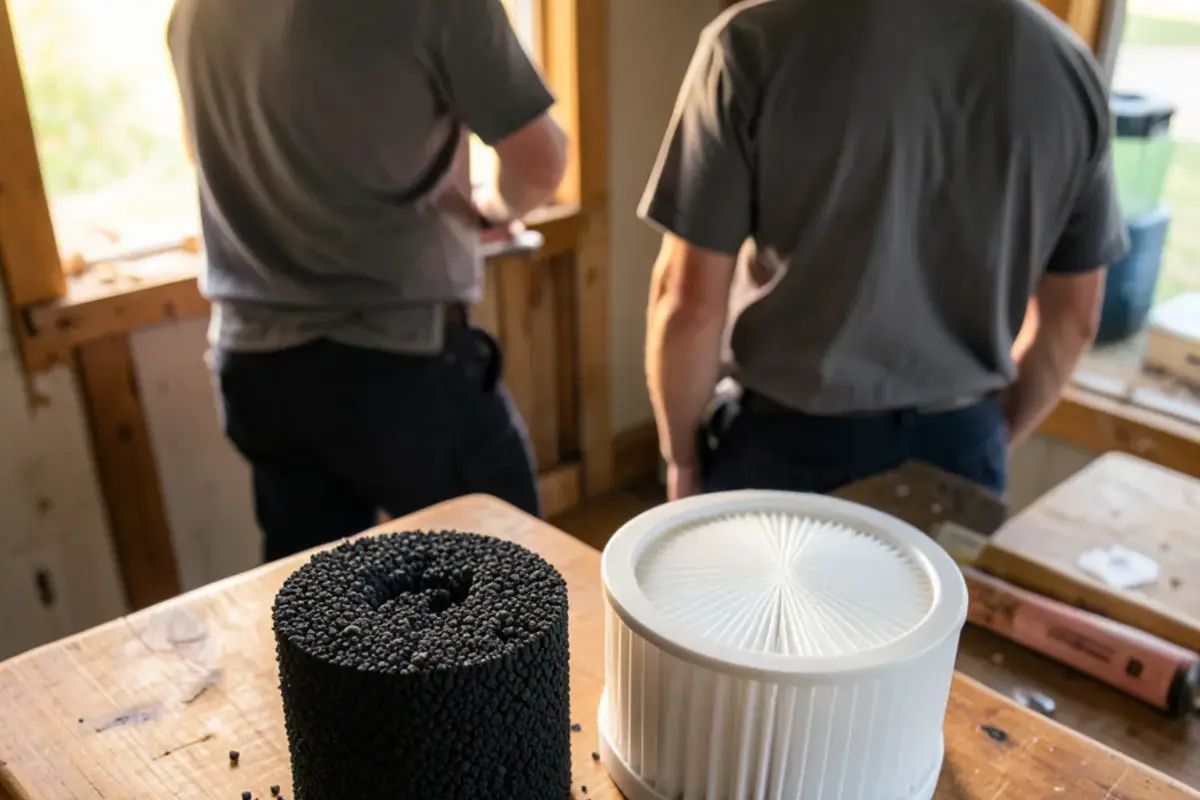
Airflow comes first. The EPA recommends at least MERV 13, or the highest rating your system fan and filter slot can take, and that last clause matters on older equipment. A filter too tight for the blower can freeze a coil in summer and trip the limit switch in winter.
We size around four things:
- Return duct area. Many older homes have one small return, which limits every filter option.
- Blower capacity. Older motors have less room to overcome restriction.
- Cabinet space. A media cabinet needs clear room beside the furnace or air handler.
- What you are filtering. Missouri's health department lists cedar, hickory, oak, walnut and ash as heavy spring pollinators, and ragweed often begins in August and runs into October. Gravel-road dust and hay season add to the load on rural properties.

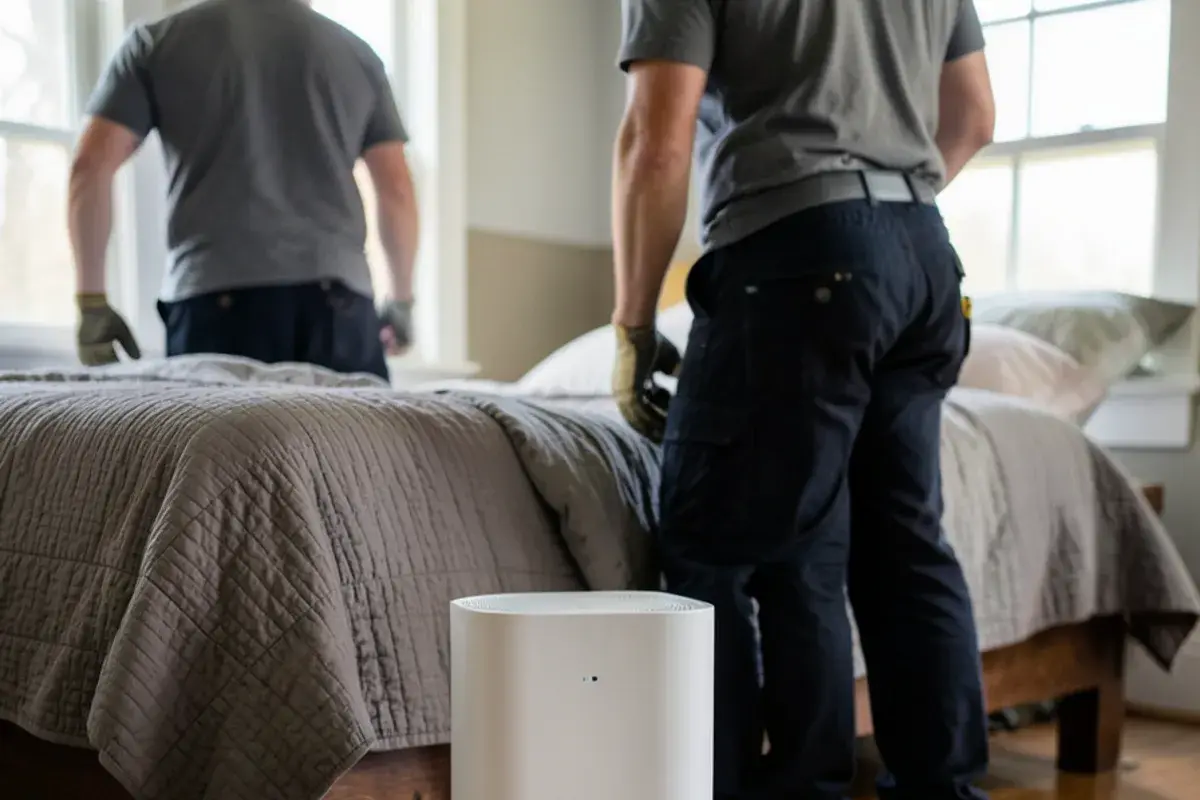
For a house with no ducts, or a single bedroom that needs help, a portable unit is the right tool. The EPA uses clean air delivery rate (CADR) for sizing, so pick one rated for the room.
Should you add UV light to your HVAC system?
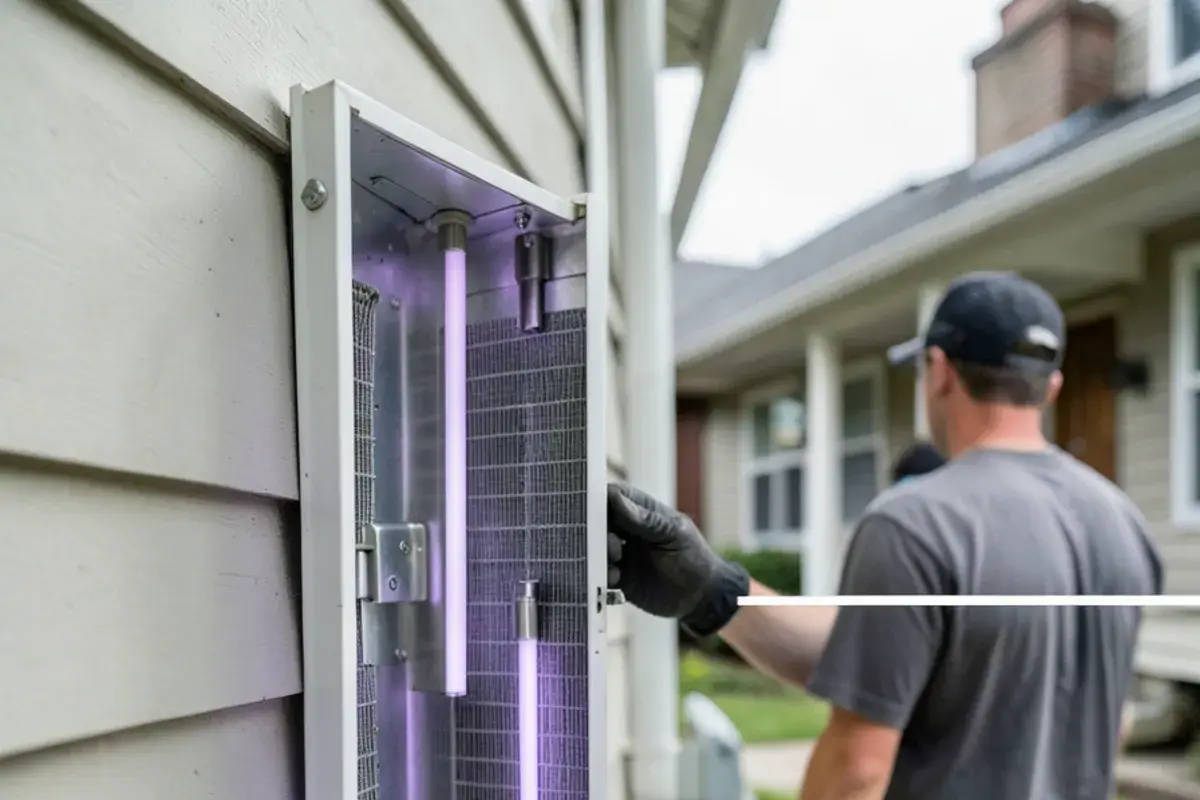
Only for a narrow job. EPA's technical summary says a lamp aimed at a cooling coil can limit growth on that moist surface, and a clean coil transfers heat better. River-valley summers keep coils and drain pans wet for months, so this is a reasonable add-on for some systems.
It is not an air cleaner. The same summary says typical home units do not deliver enough exposure to kill most airborne organisms, and that UV does not capture particles. It found no studies showing UV reduces dust mite or mold allergens. Uncoated lamps can also produce ozone.
What is included when we add filtration
You should get an equipment choice with a reason behind it, not a catalog.
- A check of the filter slot, return duct and blower.
- A recommendation that fits your system, including a plain "you do not need this" where that is true.
- A filter or cabinet installed with sealed connections so air cannot bypass the media.
- A note on filter size, rating and change interval, written on or near the equipment.
- A check of airflow after installation.
Here is how the job goes.
- We talk through what is bothering you and when it happens.
- We check humidity, the filter and the ducts for an underlying cause.
- We measure the return and look at the blower.
- We quote the options before starting.
- We install the cabinet, lamp or filter.
- We run the system and confirm it is moving air properly.
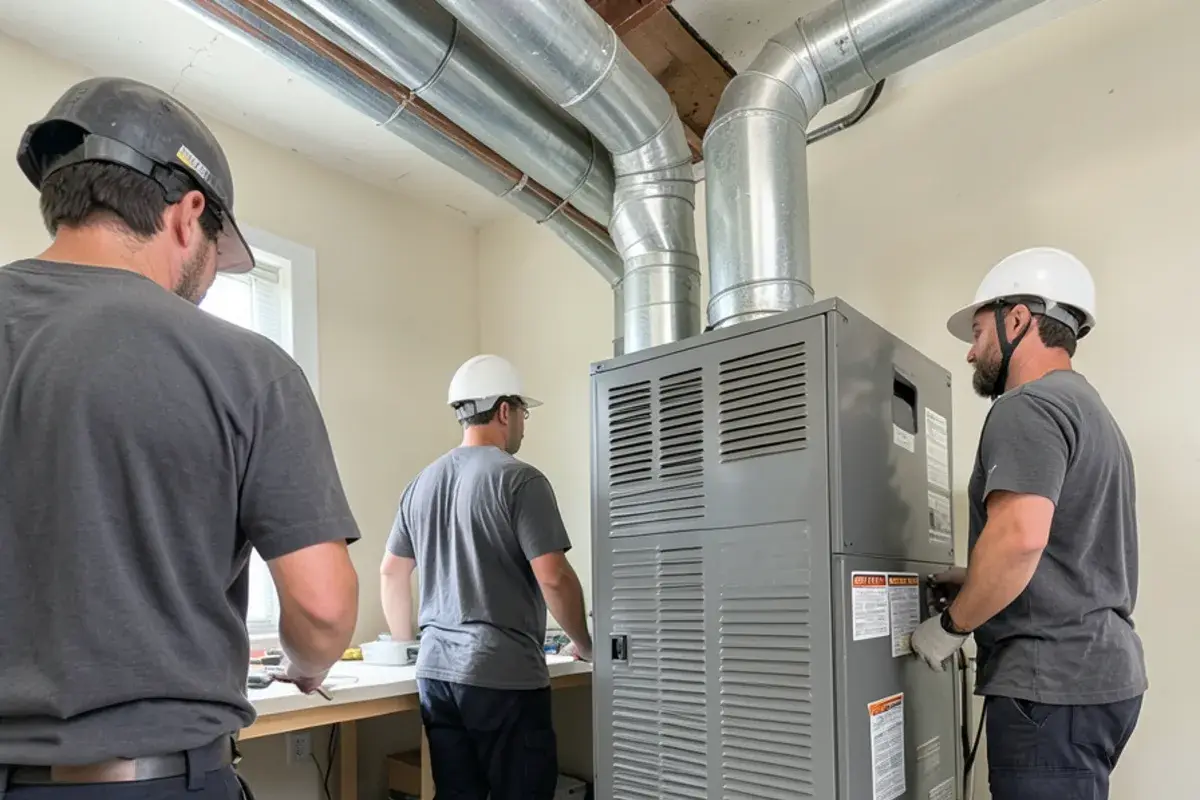
A filter swap or a media cabinet is usually a single-visit job. A bypass system or added return duct takes longer.
What changes the cost of filtration?
The technology and the sheet metal work move the price most. National guides put an extended media filter at $400 to $700, electronic cleaners at $600 to $2,000 and whole-house HEPA at $2,000 to $4,000 (Bob Vila, 2023). PICKHVAC's 2026 guide lists coil-mounted UV at $200 to $1,200, plus $40 to $200 for replacement lamps. Those are national figures, not our prices.
Your bill also depends on duct changes, electrical work and access. Replacement filters and lamps are a running cost, so count them before you buy. Ask us for a clear, upfront quote that shows the yearly upkeep too.
Caring for filters, lamps and carbon
Skipped upkeep undoes the purchase. The EPA says filters are typically replaced every 60 to 90 days, following the manufacturer's schedule. Check yours after oak season and again after ragweed. Our guide to how often to change your HVAC filter goes through each type.
- UV lamps. Dust cuts their output, so they need cleaning and periodic replacement. Shut power off first, because UV-C light harms eyes and skin.
- Carbon. It saturates over time, and a tired carbon filter stops helping.
- The basement. Keep humidity under the EPA's 60 percent line, because no filter handles moisture.
Why Brian Grannemann Services for air filtration
- We are not a filter brand. As a Hermann company since 1998, we recommend what suits the house, including no purchase at all.
- We work on the furnace and AC the filter sits on, so airflow problems do not turn into a second service call to someone else.
- Donna M. wrote that we are "not just out to get the money," which is the standard for a purchase that is easy to oversell.
- Our front desk at 124 E 10th St takes questions about filter sizes on weekdays, 8 to 4.
We serve homes around Hermann, including Berger, New Haven, Morrison and Washington. Call (209) 563-1270 with your filter size and what you are trying to remove.
Calling is fastest
Ask about Air Purifiers and Filtration
Calling gets you an answer sooner, especially if the house is cold or hot right now. If it can wait, send the details and our office will get back to you during business hours.
Smell gas? Do not use this form. Leave the building and call from outside.
What customers say on Google
4.7 on Google(15 reviews)“Hot water heater went out and Brian worked with us to help us find the correct replacement parts, and the repair process. He is knowledgeable, reliable and very responsive. He came out saw that we needed one more possible part and said he wouldn’t charge us labor until the water heater was up and running. We got the right parts he came out to install and had us up and running! We will definitely rely on him again for any future issues with HVAC, water heater, and or plumbing issues! It’s so nice to have hot water again!”
“I can’t say enough good about Brian and his company. They are my go to guy’s. I’ve had them work for me about a half dozen times now. No need to look elsewhere. They are fair and responsive to your needs.”
“Brian consistently shows up when promised, completes the work correctly the first time, and provides quality products. I cannot recommend him more highly.”
Good to know
Air Purifiers and Filtration questions
What MERV rating should I use for pollen?
The EPA recommends at least MERV 13, or the highest rating your system and filter slot can take. In a tight 1-inch slot on an older Hermann furnace, MERV 13 can choke airflow, so measure the return first. A deeper media cabinet is usually how we get there without starving the blower.
Do UV lights kill mold in air ducts?
Not in the way ads suggest. EPA's technical summary says lamps aimed at a coil can limit growth on that surface, but typical home units do not deliver enough dose to kill most airborne organisms. Mold needs its moisture source fixed and the growth removed. A lamp is not a substitute for either.
Is whole-home HEPA filtration worth the cost?
Rarely on a standard home system. True HEPA media is so restrictive that it usually needs its own fan and bypass, which adds cost and upkeep. Many homes do better with a MERV 13 media filter plus a portable HEPA unit in the bedroom. We can look at your return and tell you which fits.
Will an air purifier fix a musty basement?
No. The EPA is clear that filters do not fix mold, and a musty smell along the river usually means moisture. Measure the humidity first and aim for below 60 percent. Then find the water: seepage, a wet crawl space or a blocked AC drain. Add filtration only after that.
Are ionizers and ozone air cleaners safe to use?
Avoid anything sold to produce ozone on purpose. The EPA says ozone irritates the lungs and that no federal agency has approved ozone generators for occupied spaces. Ionizers, electrostatic units and uncoated UV lamps may also emit some ozone, so check the California Air Resources Board's list before buying one.
Can filtration help with wood smoke or odors?
Partly. A MERV 13 filter catches a share of the fine smoke particles passing through it, while odors and gases need activated carbon, and the EPA says carbon works best with plenty of material. Thin carbon filters do little. For a wood stove or a neighbor's burn pile, a portable unit with a heavy carbon bed fits better.
Sources
- U.S. EPA, Guide to Air Cleaners in the Home
- U.S. EPA, Residential Air Cleaners: A Technical Summary, 3rd edition
- U.S. EPA, A Brief Guide to Mold, Moisture and Your Home
- News Tribune, Missouri DHSS on seasonal pollen (March 2026)
- News Tribune, fall allergy timing (September 2026)
- PICKHVAC, HVAC UV light installation cost (May 2026)
- Bob Vila, whole-house air purifier cost (2023)
Where we handle air purifiers and filtration
- BergerSmall town on the Berger Bottom along Route 100.
- New HavenRiverside town with historic homes.
- MorrisonRoute 100 community with older farmhouses.
- WashingtonRegional hub with historic and newer housing.
- RhinelandDirectly across the river, with flood-aware rebuilt homes.
- Montgomery CityCounty seat with older housing.
- UnionCounty seat with subdivisions and commercial work.
- SullivanI-44 town serving a wide rural area.
- St. ClairSmall city along the I-44 corridor.
Related services
Based at 124 E 10th St in Hermann, we work across Gasconade County and the towns around it, including Owensville, Morrison, Rhineland, Berger. See all the areas we serve.
Air Purifiers and Filtration from a Hermann company
A Hermann company since 1998. Tell us what is going on and we will tell you what happens next.
- 4.7 on Google(15 reviews)
- Serving Hermann since 1998
- Office at 124 E 10th St