
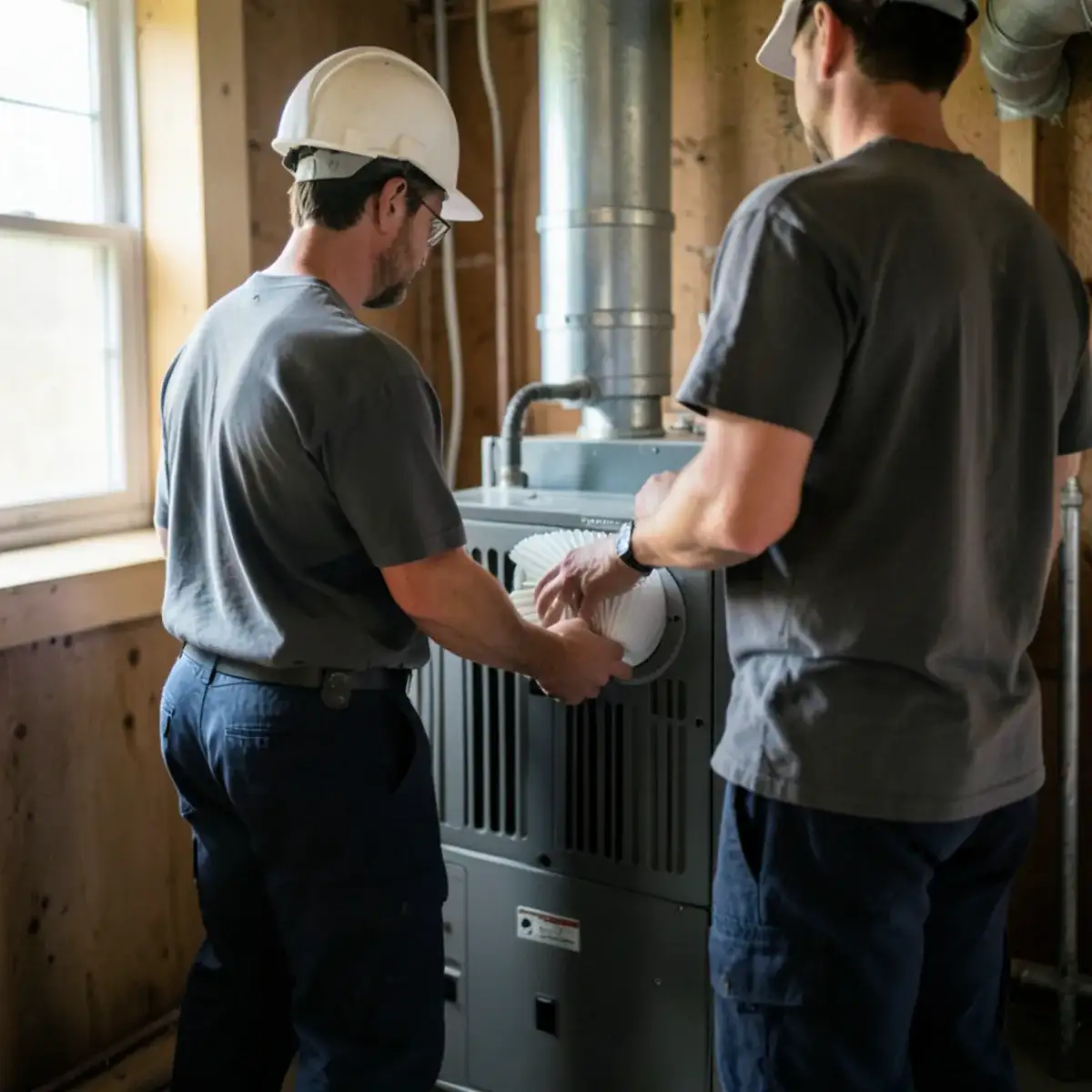
Change a standard 1-inch HVAC filter about every 90 days, and every 30 to 60 days if you have pets, allergies or a dusty gravel road nearby. Thicker 4-inch media filters last around six months. The real test is simple: hold it up to a light, and if you cannot see through it, change it.
How often should each filter type be changed?
The right schedule depends on the filter's thickness and what is in your air. Use this as a starting point, then adjust with the light test.
| Filter type | Typical change interval | Notes |
|---|---|---|
| 1-inch fiberglass | 30 days | Protects the equipment, does little for air quality |
| 1-inch pleated | 60 to 90 days | The usual choice for most homes |
| 2-inch pleated | 3 to 4 months | Needs a slot that fits it |
| 4-inch or 5-inch media | 6 months or so | Needs a media cabinet |
The Department of Energy puts it plainly: a clean filter can lower an air conditioner's energy use by 5 to 15 percent. Check it monthly during the heating and cooling seasons.
Tell us what your system is doing
Our office is open Monday to Friday, 8 AM to 4 PM. Call and we will sort out the next step.
What shortens a filter's life around Hermann?
Pets, dust and how hard the system is running shorten it most. Hermann sees about 116 freezing nights a year and 27.6 days above 90°F (BestPlaces), so the blower runs for long stretches in both seasons.

Rural homes have their own version of the problem. Gravel roads, hay season and the cottonwood fluff in the river bottoms all load a filter faster than a town lot does. If you are on a county road near Morrison or on the ridge past Berger, check it every 30 days from June through September.

What does a clogged filter do to the system?
It starves the system of air, and every problem follows from that.
- In cooling season, the indoor coil gets too cold and freezes, which can flood the condensate pan and shut the system down.
- In heating season, the heat exchanger runs hot, and the limit switch shuts the burners off. That is why a clogged filter can look like a furnace blowing cold air.
- Year round, the blower motor works harder and dust gets past the filter onto the coil.
Should you upgrade to a thicker filter?
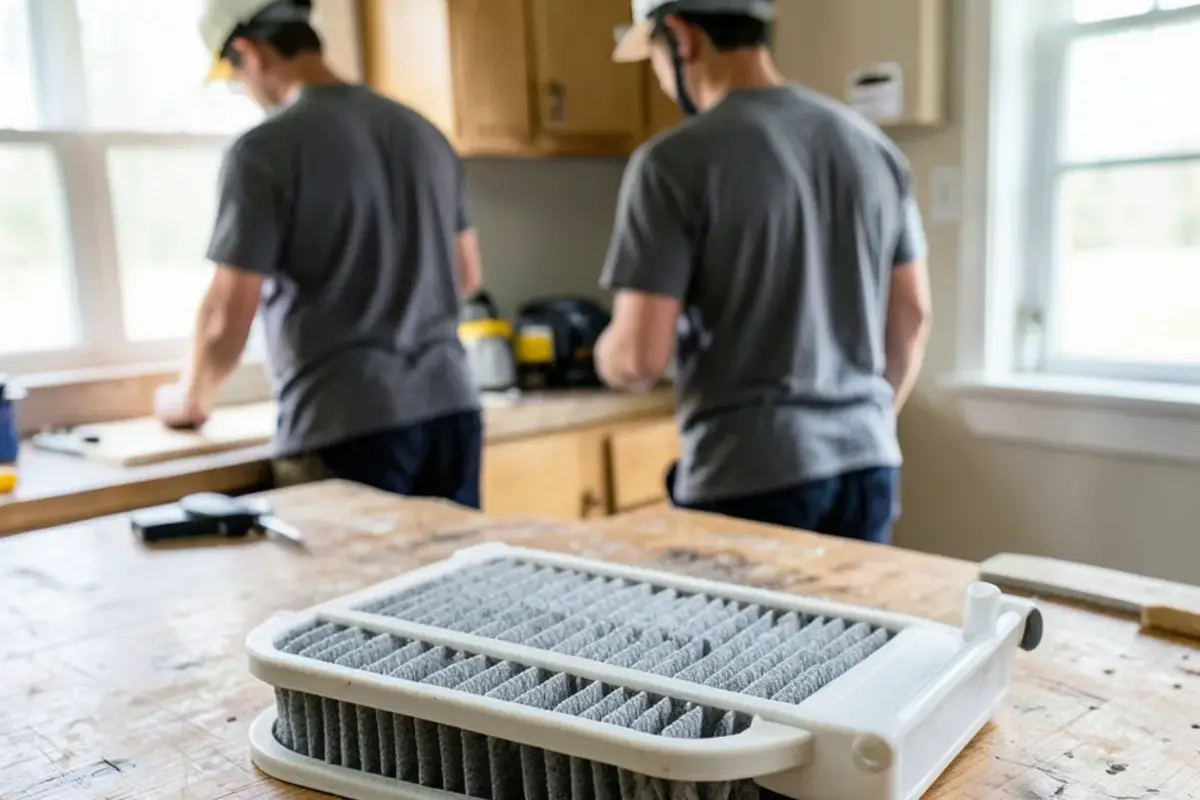
Yes, if you want better filtration and your system has room for it. A 1-inch filter has little surface area, so a high MERV rating in that size chokes airflow. A 4-inch media filter has far more pleated area, which lets it catch finer particles while moving air more freely.
The EPA notes that filters are rated by particle removal, and that the system has to be able to handle them. Ask before you buy the highest MERV on the shelf. We can look at your return size and blower and tell you what fits, and our air purifier and filtration page explains the whole-home options.
How do you find the right filter size?
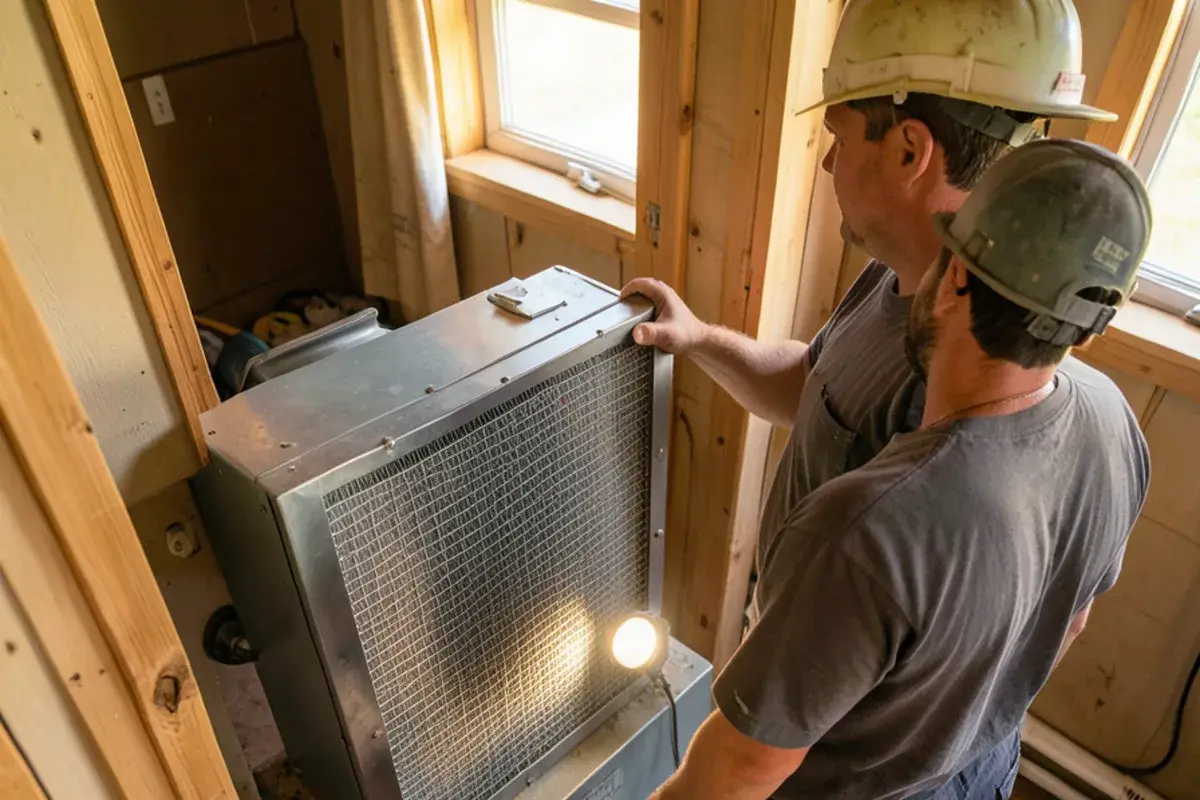
Read the size printed on the old filter's frame, then measure the slot, because the label and the opening do not always agree. Filters are sold by a rounded "nominal" size, so a 16 x 25 x 1 filter can measure a little under those numbers. Write down length, width and depth.
Start by finding where your filter actually lives. There are two common spots, and some homes have both.
- At the furnace or air handler. Look for a slot in the return duct beside the blower cabinet, often behind a thin metal door.
- At a return grille. A large grille on a wall or ceiling may hinge open with a filter behind it.
If you have filters in both places, you are stacking restriction. Ask us whether one can go.
The EPA says to pick a filter that fits snugly, with no air leaking around it and no need to bend or crush it. A gap around the edge lets dirty air go straight past the filter to the blower and coil, so a cheap filter that fits beats a costly one that rattles.
What MERV rating should you buy?
Aim for MERV 13 if your system can handle it, and let the system decide. The EPA suggests a filter rated at least MERV 13, or the highest your system can accommodate. It also says most furnaces and HVAC systems can take one if it is replaced often, and that a technician should confirm the fit, because equipment rarely lists a recommendation.
That "if" matters on the older systems around here. Treat a new, tighter filter as a test.
- Check the filter after 30 days, not 90, the first time you move up.
- Listen for a louder whistle at the return or the filter door.
- Notice whether rooms at the end of a duct run lose airflow.
- Drop back one step if any of those show up, then ask us about a deeper cabinet.
The EPA's typical replacement window is every 60 to 90 days, and sooner if the filter looks heavily soiled when you pull it.
When should you change it ahead of schedule?
Change it right after anything that puts dust or smoke in the air, whatever the calendar says.
| What happened | What to do |
|---|---|
| Drywall sanding, floor refinishing or demolition | Shut the system off during the work, then change the filter when it is done |
| New construction or an addition | Check it weekly at first, since building dust loads a filter fast |
| Smoke from a brush pile, a stove or a distant fire | Check it the same week, and sooner if it smells |
| Harvest, or a neighbor's gravel being graded | Hold it up to the light that month |
| A new pet or a long visit from a dog | Move to the 30 to 60 day schedule |
| A rental changing tenants | Change it at every turnover, and record the date |
Rentals deserve their own note, because about a third of housing units in Hermann are rented (BiggestUSCities). A tenant may not know a filter exists, and a landlord pays for what a clogged one does. Write the size on the lease paperwork and leave a spare at the unit.
Skip the idea that one filter suits every month. In a house with a shedding dog in June and a closed-up house in April, the same filter can last very different lengths of time, and the light test settles it.
Do heat pumps and mini splits follow the same schedule?
Mostly, with a few differences. A heat pump runs in both seasons, so its filter works most of the year, and a clogged one can trigger frozen coils in summer and heavy backup heat use in winter. Check it monthly from the start of the cooling season through the end of heating.
A ductless mini split has a washable mesh screen in each indoor head, not a throwaway filter. Rinse it every few weeks in season, let it dry fully and slide it back in. A head with a dirty screen loses airflow and can start to smell musty.
What we tell customers
Write the size on the furnace in marker, buy a season's worth at once and tie the change to something you already do, like the first of the month. Put the airflow arrow on the frame pointing toward the furnace. If you find a filter that has gone black or sucked into the slot, tell us at your next furnace tune-up so we can check the coil and blower behind it.
Not sure what size or rating your system takes? Call (209) 563-1270 and our office will help you sort it out.
Brian Grannemann
Owner, Brian Grannemann Services Inc, Hermann, MO. In business since 1998 across heating, cooling, electrical and plumbing work.