
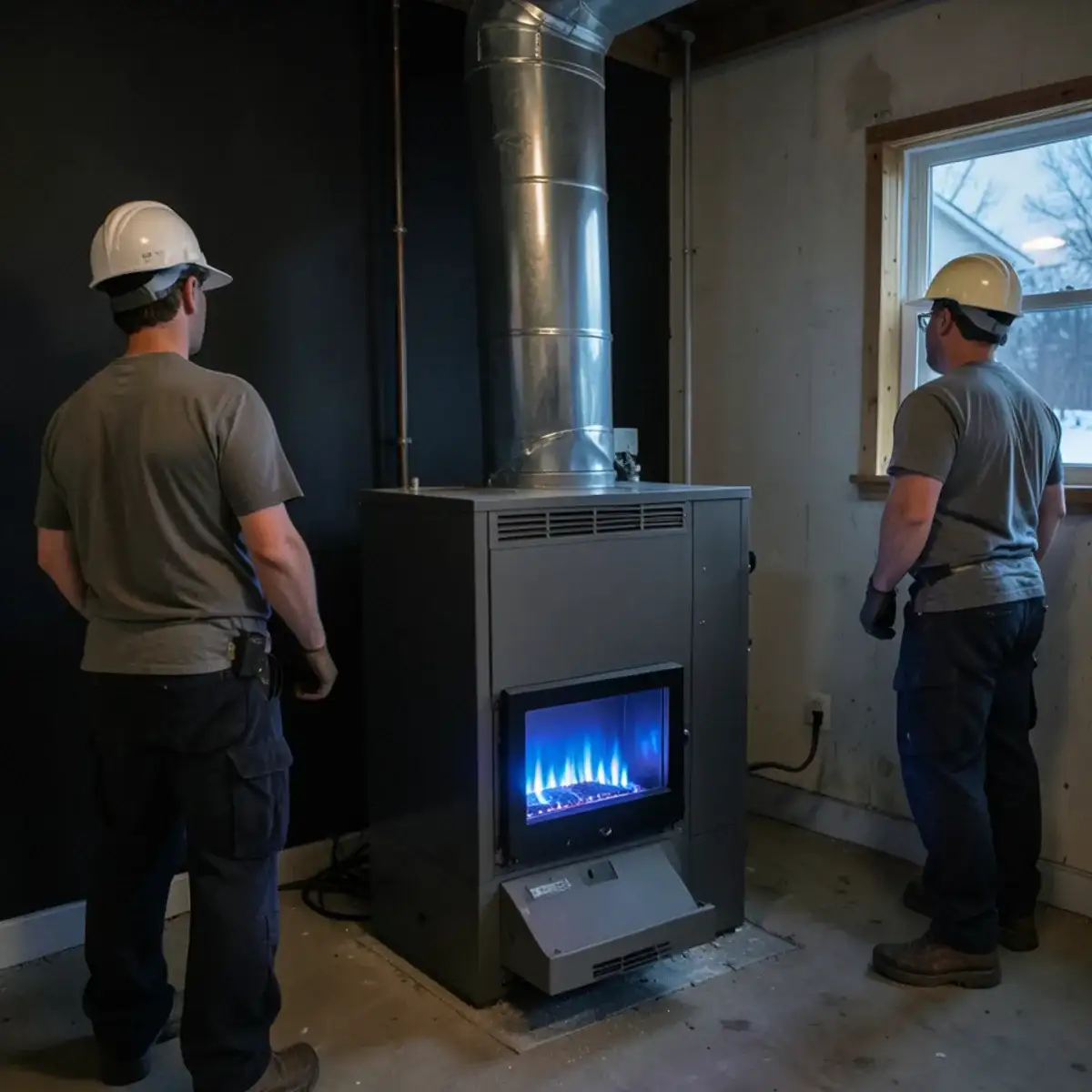
A furnace blowing cold air is telling you something through its timing. Cool air for the first minute is normal. Cool air between heating cycles is often a fan setting. Warm air that turns cold after a few minutes means the burners shut down, and that needs a technician with a meter.
Furnace blowing cold air: match the timing to the cause
Stand at a register through a full cycle before you touch anything. When the cold air shows up tells you more than the fact that it is cold.
| When the air is cold | Likely cause | Your next step |
|---|---|---|
| First minute or two only | Normal warm-up | Nothing |
| Between heating cycles | Fan set to ON | Set the fan to AUTO |
| The whole time, burners never light | Thermostat, fuel supply, igniter | Run the checks below |
| Warm, then cold after a few minutes | Limit switch, flame sensor, pressure switch | Change the filter, then call |
| In one room only | Duct or register problem | Check registers and ducts |
Tell us what your system is doing
Our office is open Monday to Friday, 8 AM to 4 PM. Call and we will sort out the next step.
Is cold air during the first minute normal?
Yes. The burners fire first, and the blower holds back until the heat exchanger is hot. What reaches you in that gap is the air already sitting in the ducts. A long run through a cold crawl space makes the delay more noticeable. If the air turns warm within a couple of minutes, you have no problem to fix.
What if it is cold from start to finish?
Then the burners are not running, and the blower is moving house air. Work through these in order.
- Set the thermostat to HEAT, raise it 5 degrees above room temperature and set the fan to AUTO. On ON, the blower runs even when no heat is being made.
- Replace the batteries if the display is dim or blank.
- Check the breaker and the furnace switch, which often resembles an ordinary wall switch near the unit.
- Confirm the gas valve handle at the furnace runs parallel to the pipe. If it is not, do not turn it. Call us.
- Check your fuel. On propane, read the tank gauge.
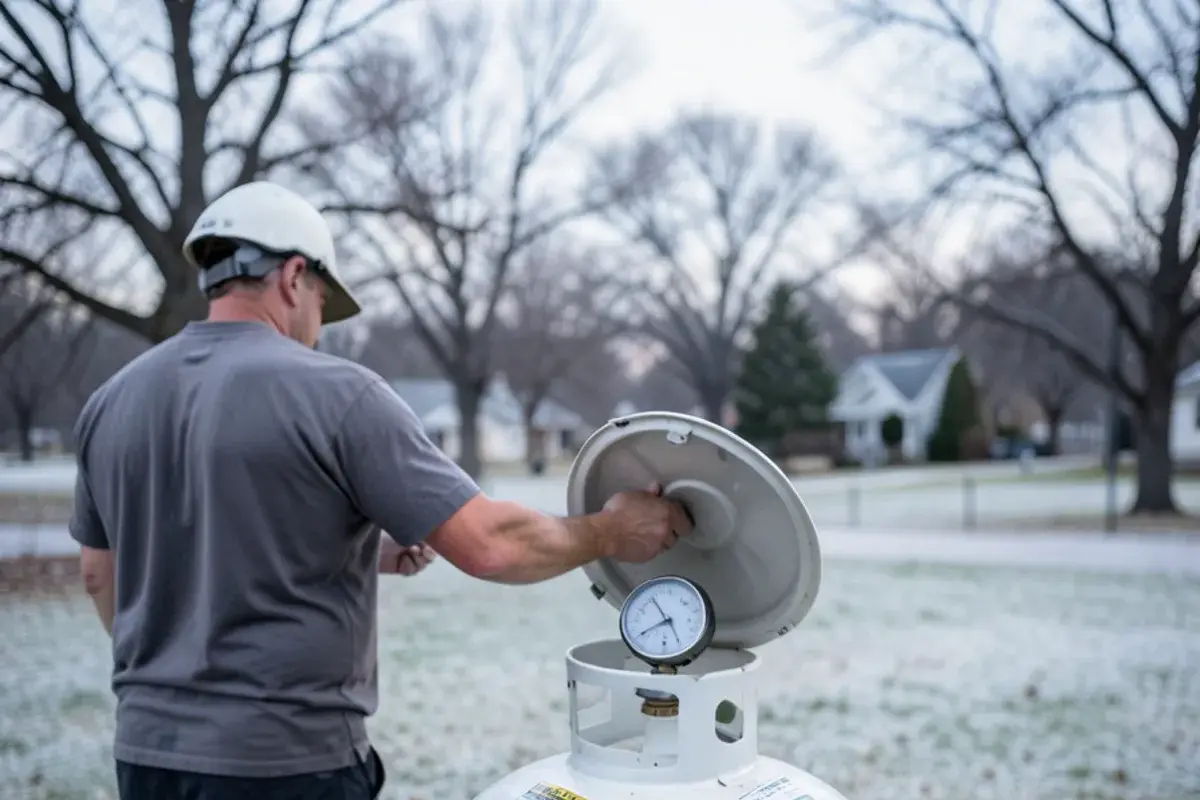
Step five catches rural homes more than you would expect. Around Berger, the fuel depends on the address: some homes may be on a gas main, and others on propane or all-electric heat. If the tank is empty, call your propane supplier before trying to relight anything.
Past those checks, the likely faults are a failed igniter, a gas valve or a control board. Those are diagnosed with a meter and the furnace's error code, not by swapping parts.
Warm for a few minutes, then cold: why do the burners quit?
Because a safety device told them to. The blower keeps running after the burners stop to pull heat out of the cabinet, and that air feels cold. Three devices cause most of this.
- Limit switch. It opens when the heat exchanger gets too hot, and low airflow is the usual reason. A clogged filter, closed registers or a blocked return can all do it, so change the filter first.
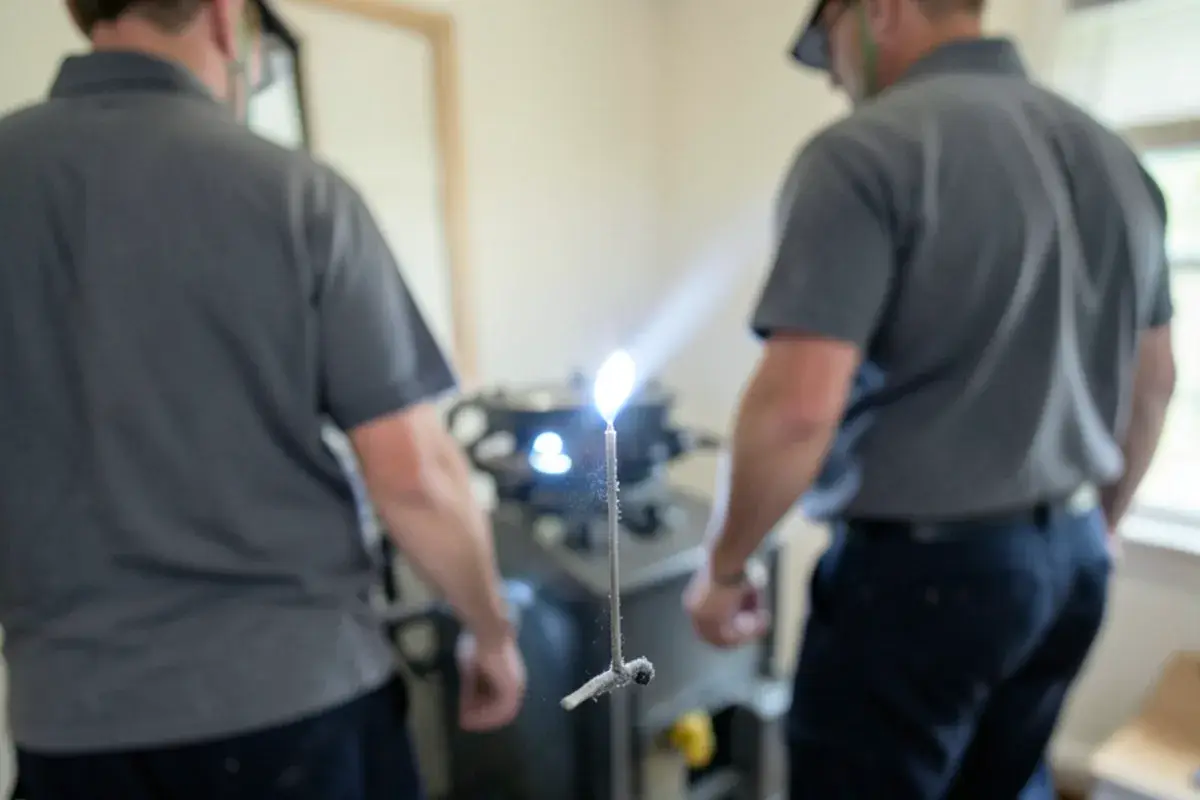
- Flame sensor. This rod proves the burners lit. A coated sensor cannot read the flame, so the board shuts the gas valve within seconds, and the furnace may try again a few times before locking out.
- Pressure switch. On a high-efficiency furnace, this proves the venting is clear before gas flows. A blocked vent pipe, a failed inducer motor or a frozen condensate drain can each hold it open.
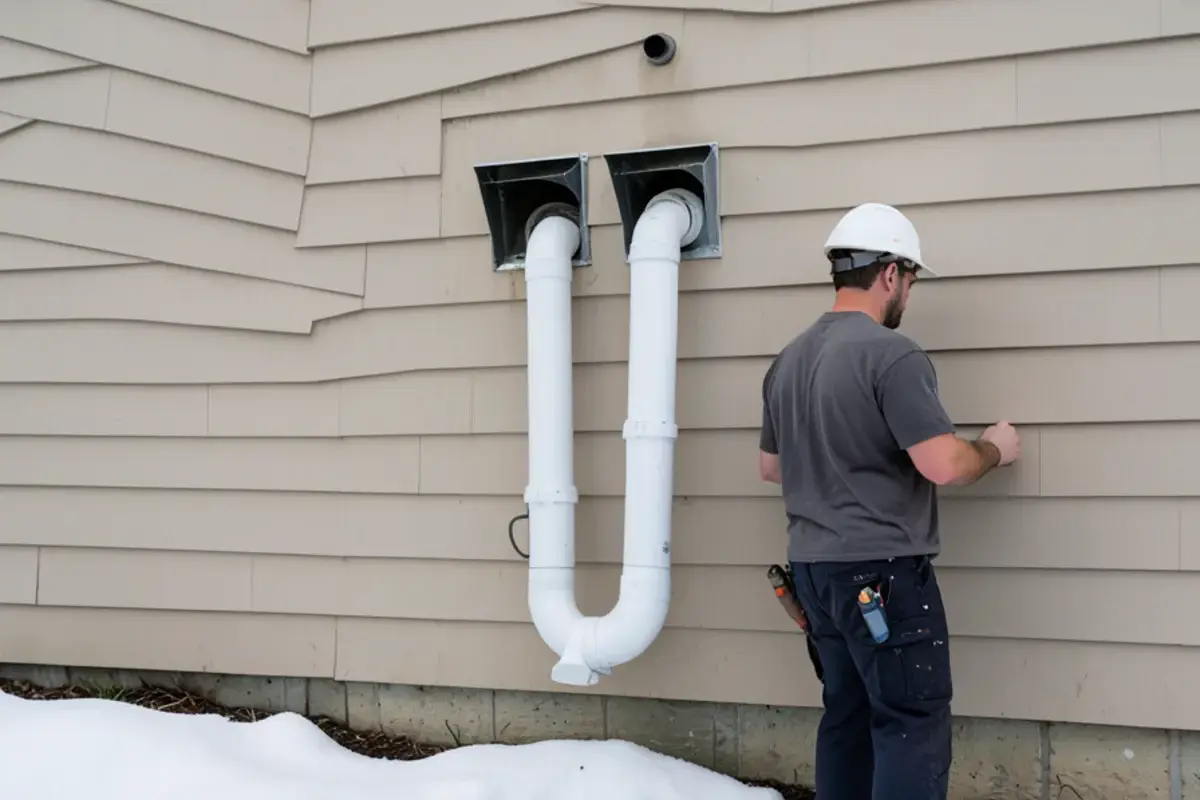
Walk outside and look at the white vent pipes. Clear any leaves or snow you find. That is the one vent check you can safely make yourself.
A furnace that keeps overheating deserves a call, even if it restarts. Repeated trips stress the heat exchanger, and the U.S. Consumer Product Safety Commission warns that poor maintenance and blocked venting can lead to carbon monoxide problems with fuel-burning equipment.
Cold air in one room only
That is a duct problem, not a furnace problem. Check that the register is open and not blocked by a rug or a couch. Then look at the run feeding that room, if you can see it. A disconnected or crushed section will dump the heat into a basement or crawl space, and our post on leaky ductwork shows what to look for.
What is the blinking light on the furnace telling you?
Most furnaces built in the last few decades report their own faults. A small light on the control board flashes a pattern, and a chart on the inside of the door explains it. Many units have a sight window so you can see that light without removing a panel.
Count the flashes before you turn anything off, because cutting power can clear the code. Write the number down, or take a short phone video through the window. Two flashes on one brand can mean something different on another, so give us the code and the model together. If you cannot see the light without opening the unit, leave it closed and tell us that.
Is the cold air coming from a heat pump?
Check what you own before you troubleshoot. Heat pump air feels cooler than furnace air even when everything is working, because it comes out at a lower temperature for longer. During a defrost cycle it can feel cool for several minutes while the outdoor unit melts its frost. Our guide to a heat pump freezing up shows when that stops being normal.
Which fixes belong to a technician?
Most of them, once the filter and thermostat are ruled out. Here is the split, and why it falls where it does.
| Fix | Who does it | Why |
|---|---|---|
| Filter, fan setting, batteries | You | No risk, no tools |
| Clearing snow from vent pipes | You | Outdoors, away from gas |
| Flame sensor cleaning | Technician | Inside the burner compartment |
| Igniter replacement | Technician | Fragile part, and the fault needs testing first |
| Pressure switch or inducer | Technician | Venting safety |
| Heat exchanger inspection | Technician | A crack is a carbon monoxide concern |
For scale, the average St. Louis furnace repair was $238 in Angi's 2026 data, and most jobs fell between $113 and $364. Angi lists heat exchanger work at $113 to $3,000. Treat these as regional benchmarks rather than our prices.
What we tell customers before a cold night
Do not keep resetting a furnace that keeps locking out. Each restart is a chance for the same fault to repeat, and the error code in the control board is more useful to us than a tenth attempt.
With roughly 116 freezing nights a year in Hermann (BestPlaces), a furnace that is acting up in November will not improve by January. If you lose heat and the temperature is falling, let a faucet drip and prop open the cabinets under your sinks.
CPSC advises a professional inspection of fuel-burning heating equipment every year, plus carbon monoxide alarms on each floor and outside sleeping areas. A fall furnace tune-up is the usual place to catch a dirty sensor before it strands you.
Still blowing cold after these checks? Call (209) 563-1270 and tell us the timing you saw. Weekday office hours are 8 to 4. If the blinking light on the control board has a pattern, count the flashes before you call, and see our furnace repair page for how we test.
Brian Grannemann
Owner, Brian Grannemann Services Inc, Hermann, MO. In business since 1998 across heating, cooling, electrical and plumbing work.