
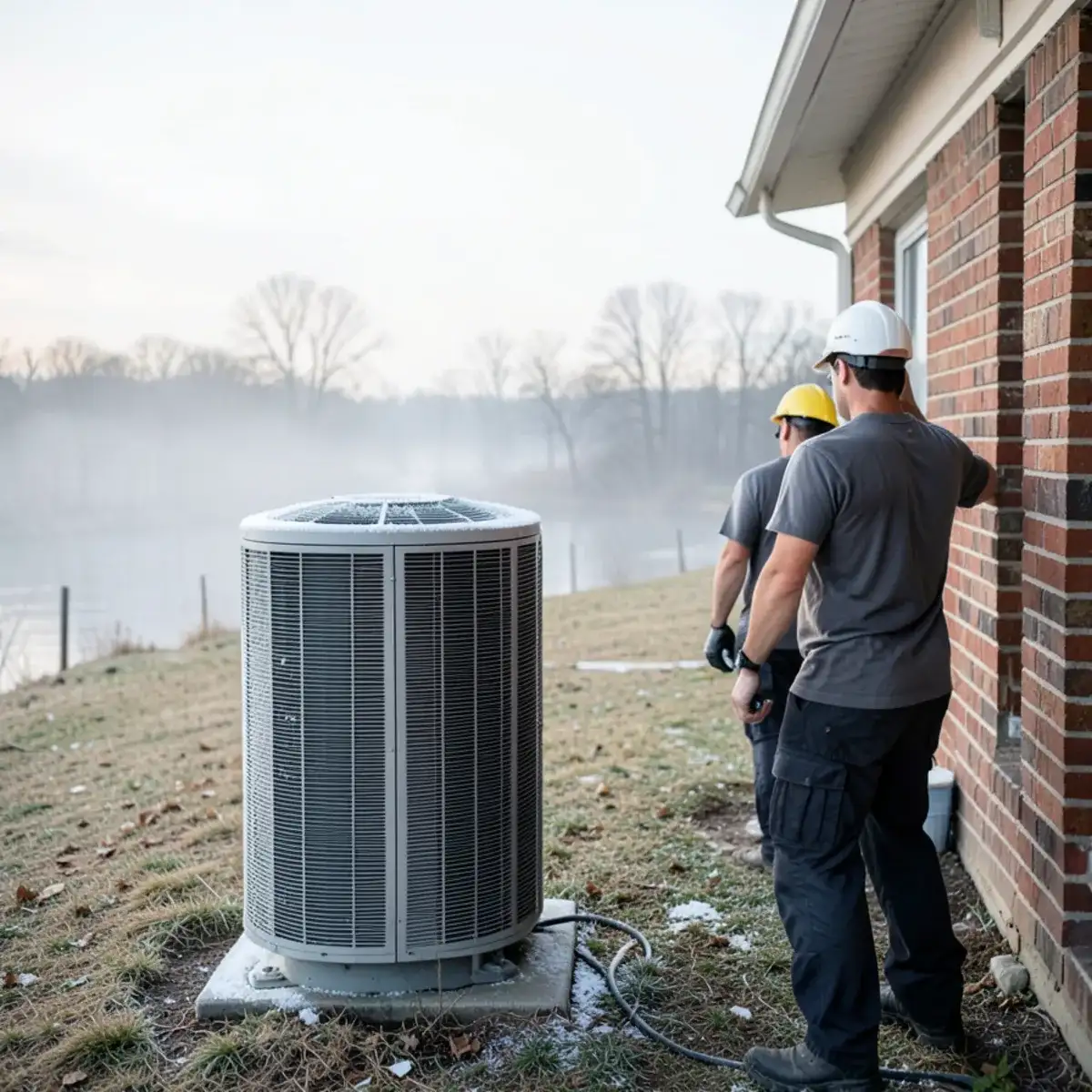
A heat pump freezing up in winter is often doing exactly what it should. A thin coat of frost that clears by itself is the defrost cycle at work. A solid shell of ice over the coil, top or fan is a fault, so switch to backup heat and call before the compressor pays for it.
Frost or ice: which one do you have?
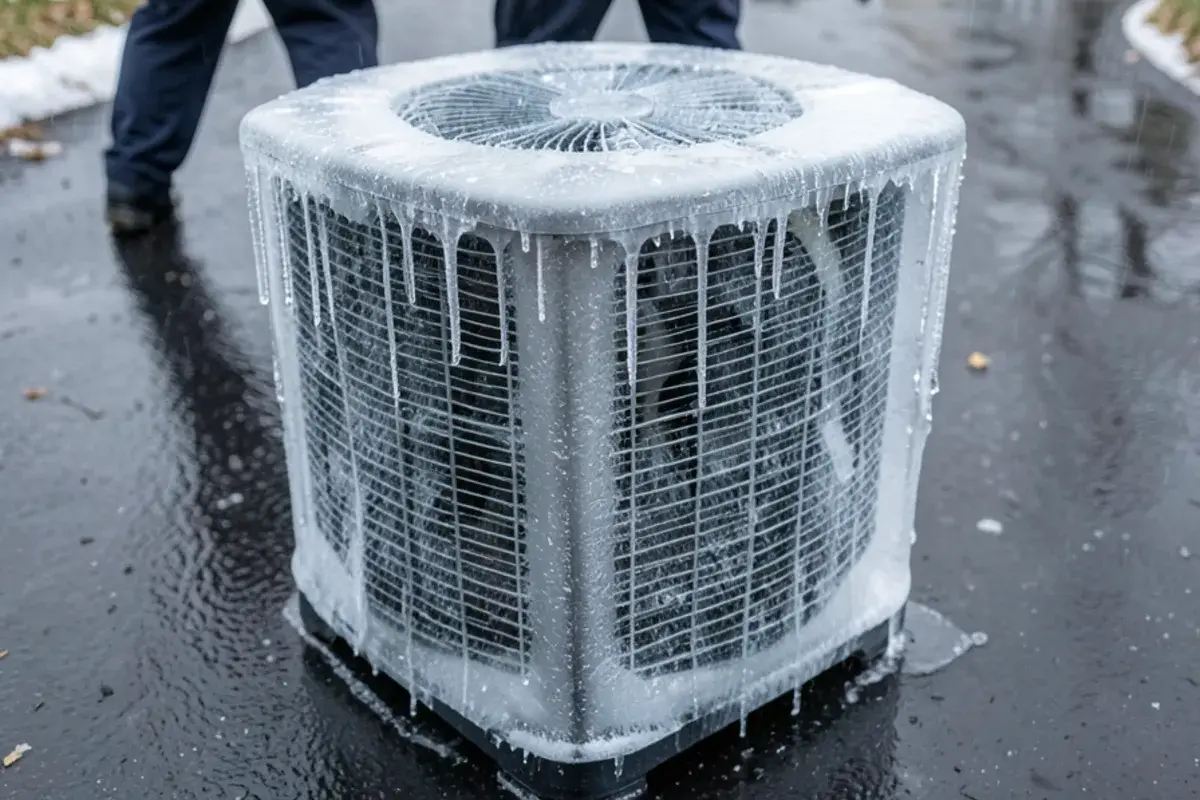
Go outside and look at the unit. Thin white frost on the fins is normal. Thick ice that hides the coil, fan or top panel is not.
| What you see | Normal frost | A problem |
|---|---|---|
| Coverage | Light coat on the coil | Solid shell, ice on top or around the fan |
| How it behaves | Clears on its own | Stays through several defrosts or keeps growing |
| Sound and steam | Fan stops, hissing, steam for a few minutes | Fan grinding against ice, or no defrost at all |
| Timing | Defrost usually ends in about ten minutes | Cycles closer than 30 minutes apart, or none |
| Heat indoors | Slightly cooler air for a short time | House losing temperature, backup running constantly |
Heat pumps frost up because the outdoor coil runs colder than the air. Moisture freezes onto the coil, usually as temperatures close in on freezing, and humid air makes it worse. InspectApedia's defrost guide puts the start of ice formation at around 30°F. So the frostiest days are not the coldest ones. They are the raw, damp mornings near freezing that the river valley does so well.
Tell us what your system is doing
Our office is open Monday to Friday, 8 AM to 4 PM. Call and we will sort out the next step.
What to do when the unit is iced over
Start with this list. It protects the compressor and keeps the house warm while you arrange a repair.
- Watch for one defrost. If the fan stops, steam rises and the coil clears within about ten minutes, the system is fine.
- If the ice stays, set the thermostat to EMERGENCY or AUX heat. If you have no such setting, turn the system off and tell us.
- Clear snow, leaves and brush from around the base and sides by hand.
- Check the indoor filter. A clogged filter hurts a heat pump in heating mode, too.
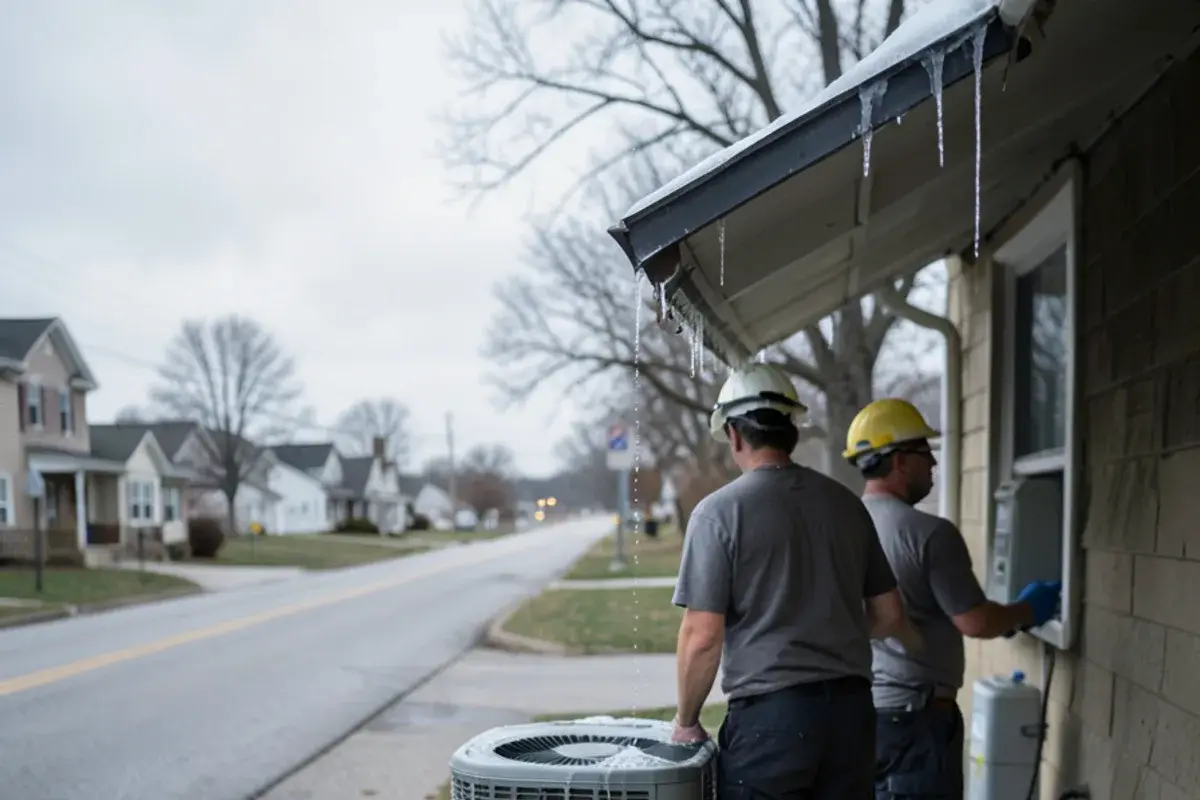
- Look above the unit for a dripping gutter or roof edge.
- Call us, and read off the model on the data plate.
Hot water from a kettle is not the answer either. It can refreeze on the base and it does nothing about the reason the coil iced over.
Heat pump freezing up: what causes it?
Something has stopped the defrost cycle or overwhelmed it. Sort the causes into two groups.
The defrost system has failed:
- A failed defrost board, timer or relay never starts the cycle.
- A bad coil or outdoor temperature sensor tells the board that everything is fine.
- A failed reversing valve cannot send heat back to the coil.
Something else is beating the defrost cycle:
- Low refrigerant. A leak drops the coil temperature, and frost builds faster. Refrigerant work belongs to a technician with Section 608 certification.
- A failed outdoor fan. A burned motor, bad capacitor or iced blade stops airflow across the coil.
- Blocked airflow. Drifted snow, leaves, brush and bent fins all restrict the coil.
- Dirty indoor filter or coil. ENERGY STAR ties airflow problems to efficiency losses as high as 15 percent, and low indoor airflow pushes pressures down outdoors.
- Water from above. A broken gutter or roof drip can coat the unit faster than it can clear itself.
- Freezing rain. An ice storm can seal a healthy unit. Give it a few cycles once the storm passes.
What does ice do to the compressor?
Ice insulates the coil. A coil locked in ice cannot pull heat out of the air, so the system's heating output falls, the indoor temperature slips and the backup heat picks up the load. The compressor keeps running against a coil that cannot do its job, and that is the expensive part to lose.
You also pay on the bill. The Department of Energy says heat pumps can deliver up to three times more heat than the energy they use, while electric resistance backup delivers one for one. At Missouri's August 2026 average of about 16 cents per kWh (EIA), that gap adds up during a long cold stretch. Your rate may differ, especially on a municipal or cooperative utility, so check your bill.
How do you know backup heat is doing all the work?
Check the thermostat first. Most show "AUX" or "backup" when the heat strips are on. Seeing that for a few minutes during defrost is normal, and seeing it on a bitter night can be too. Seeing it all day on a mild afternoon is not, because that means the outdoor unit has stopped pulling its share.
Hermann's winter average low sits around 24°F, so a healthy heat pump here spends plenty of time near the point where it needs help. As a rule of thumb, heat strips turn one unit of electricity into one unit of heat, while the Department of Energy's figure above puts a working heat pump at up to three. A week on strips can show up on the next bill as a jump you cannot explain by the weather.
Take a photo of your meter or note the usage on your bill each month in winter. A sudden rise is often the first sign, well before the ice.
Is summer ice the same problem?
No. In cooling mode the indoor coil is the cold one, so ice on the indoor unit or the suction line means low airflow or low refrigerant. It has nothing to do with defrost. Shut off cooling, run the fan and read our guide to why an AC blows warm air, because the same faults apply.
Can where the unit sits prevent ice?
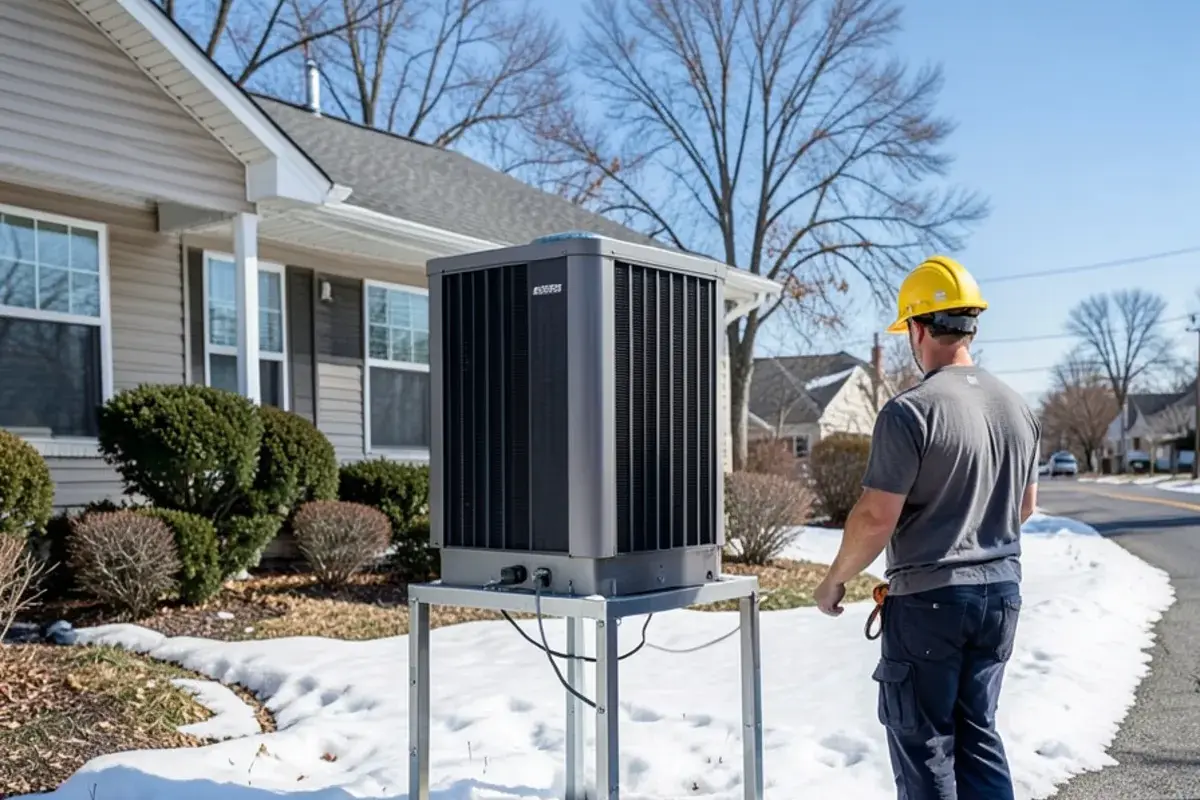
Yes, and it is worth fixing if your unit keeps icing. Fix the gutter above it first, since a cheap repair may end the problem. Keep the base clear and trim shrubs back so air moves freely around the cabinet, and leave a clear path for meltwater to drain away.
A raised stand can help on exposed lots, because it lifts the coil above drifts and lets defrost water drop clear rather than refreezing under the unit. If you are planning a new system, raise the placement question during your heat pump installation quote, when moving the unit costs the least.
What we tell customers on a frozen-unit call
Take a phone video before anything thaws. Ice patterns are useful: ice only on the bottom third suggests a different fault from a coil frozen top to bottom. Note the outdoor temperature and whether it was raining or snowing.
Then tell us whether the outdoor fan is turning and whether the house is holding temperature. Homes along the river in New Haven, about 22 minutes from our office, deal with the same damp valley air as Hermann, so it helps to know if the problem began in a freezing fog or a real cold snap.
Our heat pump repair page explains how we test defrost controls and the refrigerant circuit. If the unit is frozen solid, run on backup heat and call (209) 563-1270. We are in the office weekdays, 8 to 4.
Brian Grannemann
Owner, Brian Grannemann Services Inc, Hermann, MO. In business since 1998 across heating, cooling, electrical and plumbing work.