
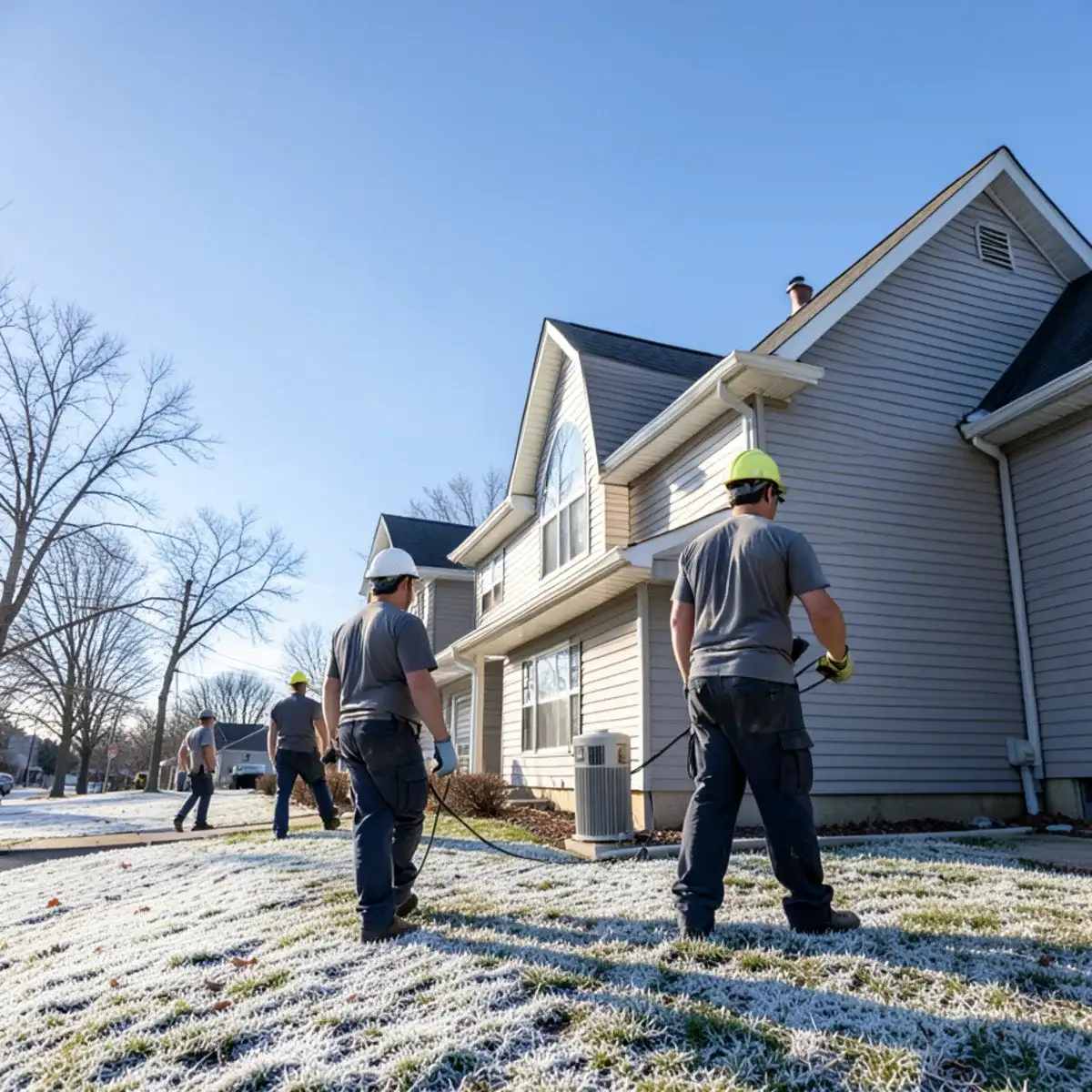
Heat pump vs furnace in Missouri comes down to your fuel more than your weather. January lows here average in the low 20s, which a good heat pump handles. On natural gas, a furnace is still cheaper on the coldest nights. On propane or all-electric, a heat pump usually wins, and dual fuel covers the hard snaps.
Heat pump vs furnace: Missouri side by side
A furnace burns fuel to make heat. A heat pump moves heat that is already outdoors, and it doubles as your air conditioner. That difference drives everything else in this table.
| Heat pump | Gas or propane furnace | |
|---|---|---|
| Heating source | Electricity, moving outdoor heat | Burns fuel on site |
| Also cools the house? | Yes | No, it needs a separate AC |
| Output as it gets colder | Falls, and efficiency falls with it | Steady at any temperature |
| Federal minimum | 14.3 SEER2, 7.5 HSPF2 | 80% AFUE |
| Air at the register | Warm, not hot | Hot |
| Runs in a power outage? | No, not without a sizable generator | The fan needs power, a small generator may do |
| When to start planning a replacement | Past 10 years (ENERGY STAR) | Past 15 years (ENERGY STAR); life of 15 to 20 years with maintenance |
Tell us what your system is doing
Our office is open Monday to Friday, 8 AM to 4 PM. Call and we will sort out the next step.
How cold does Missouri really get?
Colder than people remember in a mild year, but rarely for long. Normal January lows sit in the low 20s across the middle of the state and drop into the teens up north.
| Location | Normal January low | Source period |
|---|---|---|
| Cape Girardeau | 26°F | 1991 to 2020 |
| St. Louis | 24°F | 1991 to 2020 |
| Hermann, winter average low | About 24°F | BestPlaces |
| Columbia | 23°F | 1991 to 2020 |
| Rolla | 22°F | 1991 to 2020 |
| Jefferson City | 21°F | 1991 to 2020 |
| Hannibal | 18°F | 1991 to 2020 |
| Kirksville | 15°F | 1991 to 2020 |
Those are averages, so plan for the snaps as well. National Weather Service records for Columbia show -11°F on January 14, 2024, and -8°F on February 16, 2021. Further back, Columbia reached -26°F in 1899, St. Louis hit -22°F in 1884 and Warsaw set the state record of -40°F in 1905.
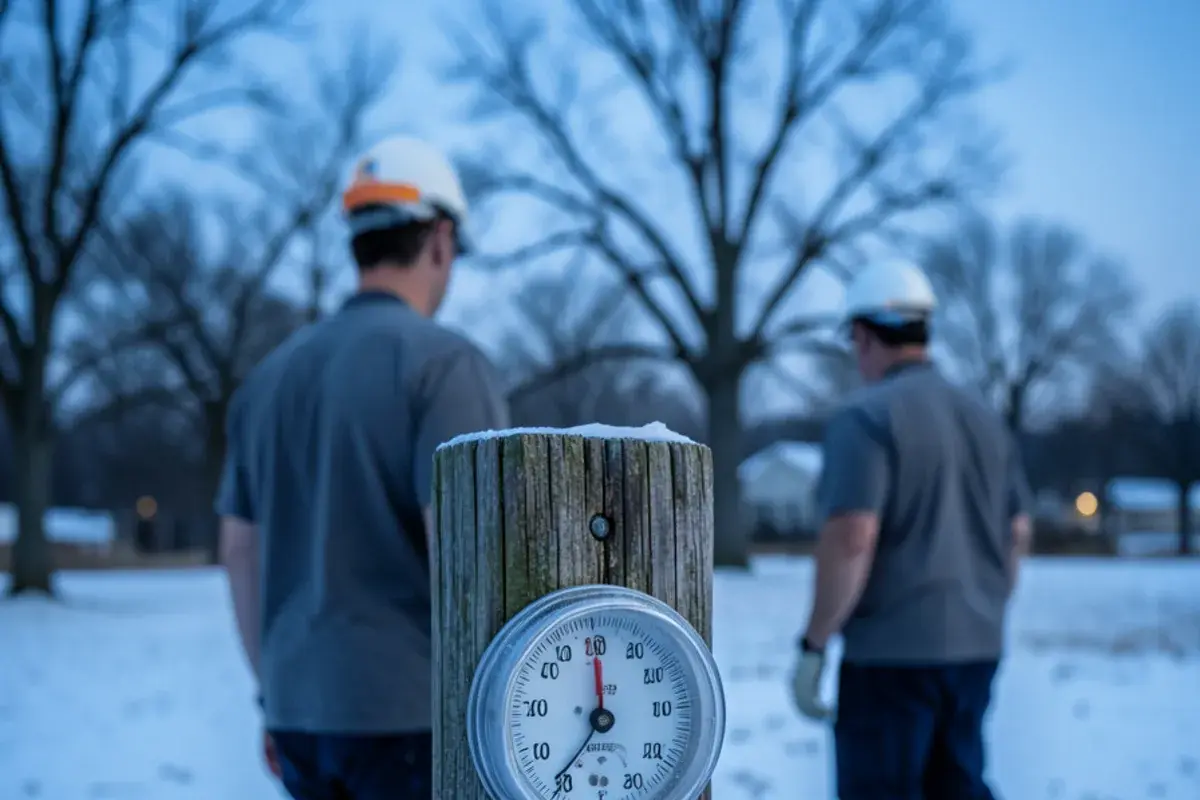
Here is what that means for equipment. ENERGY STAR's cold climate label requires a heat pump to keep a coefficient of performance (COP) of at least 1.75 at 5°F, and to hold at least 70 percent of its 47°F capacity at that temperature. COP is heat delivered for each unit of electricity. So a labeled unit is still ahead of electric strips at 5°F, and most Missouri winter nights are far warmer than that. Below about 5°F, count on backup heat.
Which costs less to run on your fuel?
Your fuel decides this, not the brochure. We ran recent Missouri prices from the EIA to compare the cost of one million Btu of delivered heat. These are statewide averages rather than Hermann rates, and our math rather than a bill forecast.
| Heat source | Assumed efficiency | Cost per million Btu |
|---|---|---|
| Natural gas furnace | 95% AFUE | About $14.70 |
| Heat pump, mild weather | COP 3 | About $15.65 |
| Propane furnace | 95% AFUE | About $25.70 |
| Heat pump, near 5°F | COP 1.75 | About $26.85 |
| Propane furnace, older | 80% AFUE | About $30.50 |
| Electric strips | 100% | About $46.95 |
Inputs: electricity 16.02 cents per kWh (August 2026), propane $2.234 per gallon before taxes (October 26, 2026) and natural gas $14.51 per thousand cubic feet (January 2026). Prices move, and propane usually moves in winter, so run your own bill through the same sum.
Three things stand out. Against propane at 95 percent, a heat pump breaks even near COP 1.8, so it beats propane for most of the winter. Against natural gas, it needs a COP near 3.2, so gas wins on cold nights. And both beat electric strips by a wide margin. The Department of Energy's Midwest factsheet points the same way: the most savings go to homes leaving propane, fuel oil or electric resistance, while high electric rates can add cost against gas.
Inside the City of Hermann, your gas and power are municipal, so plug in the rates on your own bill. In and around Union, the fuel varies by address, and it is worth reading your bill before you compare.
Which system fits which home?
Start from what is already in your basement.
- On natural gas with a working AC: a furnace is the simple choice. A 95 percent model keeps the lowest cold-night cost.
- On natural gas, replacing both AC and furnace: price dual fuel, and let the heat pump carry the mild months.
- On propane: a heat pump with a propane furnace or strip backup makes a strong case. Keep the furnace if it is sound.
- All-electric with strips or baseboard: a heat pump is the clear upgrade. The Department of Energy says it can cut heating electricity by about half compared with electric furnaces or baseboards.
- No ducts: skip both and look at ductless heat pumps.
What do the running-cost tables leave out?
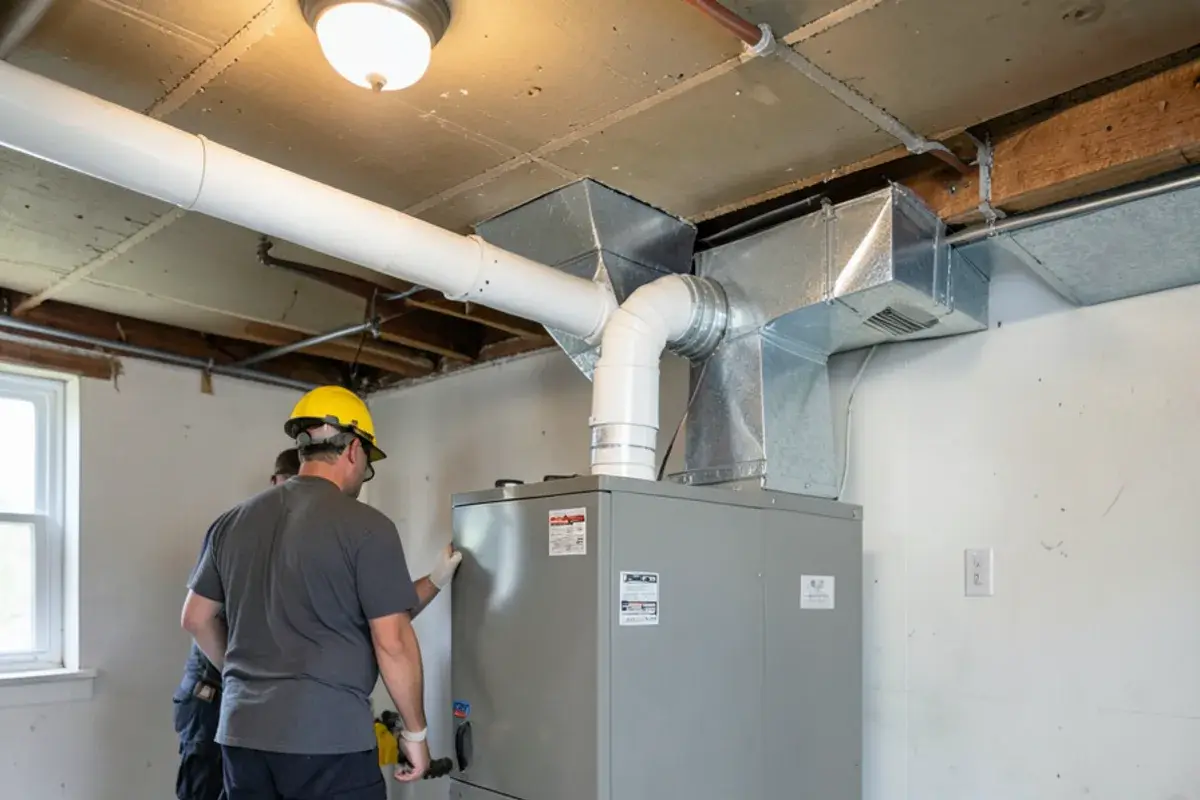
Cost is not the only difference you will feel. A furnace delivers short bursts of hot air, then shuts off. A heat pump runs longer at a lower temperature, so the house stays more even, but some people notice that the air at the register does not feel hot. If you like standing over a floor vent on a January morning, say so before you choose.
Think about the outdoor unit as well. A heat pump works all year, while a furnace rests through summer and an AC rests through winter, which is one reason ENERGY STAR suggests planning for a heat pump's replacement sooner. Location matters too. Keep it clear of drifting snow, roof drips and dryer vents, and away from a bedroom window if a neighbor or you are light sleepers.
When does dual fuel earn its cost?
When your winter has long mild stretches and short hard ones, which describes Missouri. The heat pump runs through the 30s and 40s at a low cost, and the furnace takes over below a set temperature. A Department of Energy lesson puts that switchover anywhere from 5°F to 35°F depending on the equipment, and it is found from a load calculation and capacity data.
The setting is also a money decision. With gas near $14.70 per million Btu, you would switch at a much warmer temperature than you would with propane near $25.70. Ask your installer to set it from your rates, not a factory default.
What we tell customers comparing the two
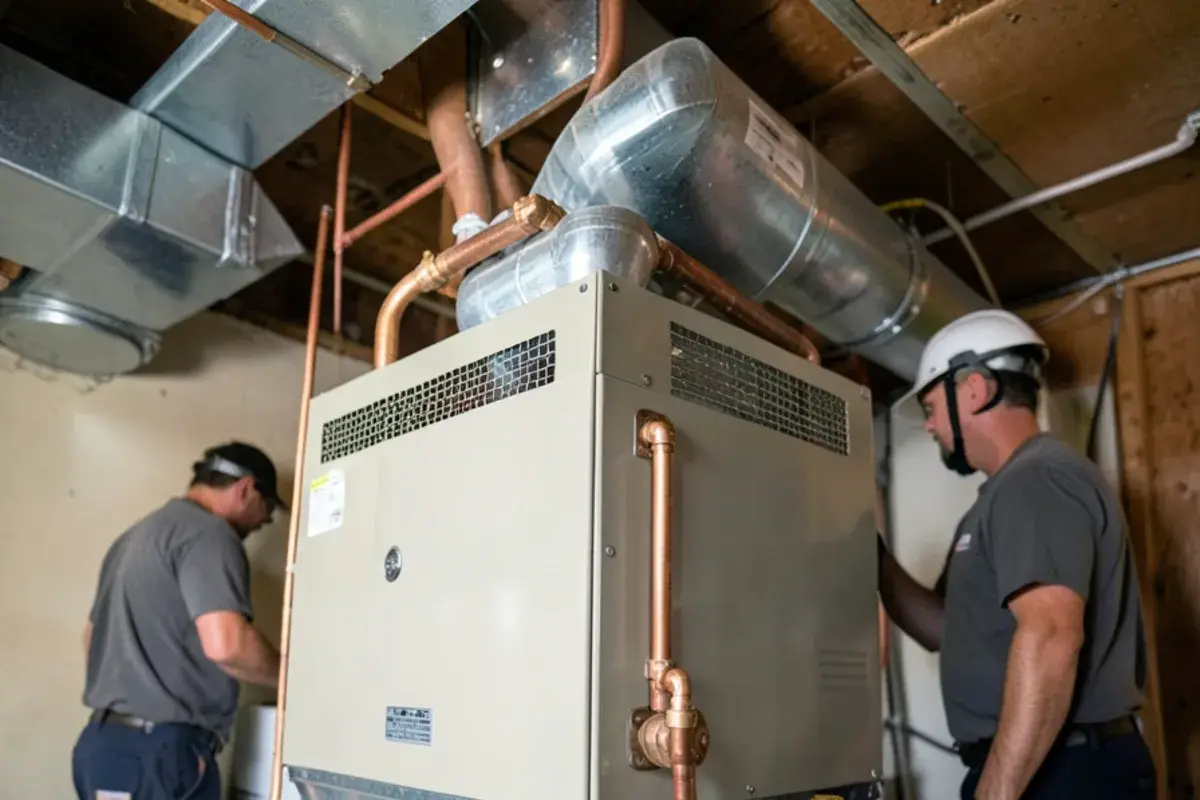
Run a Manual J before you compare price tags, and check your ducts. The Department of Energy notes that ducts may need to be larger for a heat pump than for a gas furnace, so a home with undersized runs can come up short on air.
Plan for outages too. Rural lines go down in ice, and a heat pump draws far more than a furnace blower. If you heat with propane and lose power often, keeping the furnace may matter more than the fuel savings.
For prices, HVAC Project Cost reports a heat pump system at $6,500 to $14,000 against $8,000 to $17,000 for an AC and furnace pair in 2026. Missouri installer pricing puts a Missouri furnace replacement at about $4,800, typically $2,800 to $9,500. Treat those as outside benchmarks, not our prices. Your own numbers come from a clear, upfront quote on your house.
See our pages on heat pump installation and furnace replacement for how each job goes. Then call (209) 563-1270 with your fuel type, the age of your equipment and a recent bill, and we will walk through the numbers for your house.
Sources
- Current Results, January temperatures in Missouri (NOAA 1991 to 2020 normals)
- National Weather Service, Columbia MO daily record temperatures
- National Weather Service St. Louis, January Weather Facts
- Warsaw, Missouri (Wikipedia)
- ENERGY STAR, When Is It Time to Replace?
- ENERGY STAR, Heat Pump Equipment Key Product Criteria
- U.S. EIA, Electric Power Monthly, Table 5.6.A
- U.S. EIA, Missouri Weekly Heating Oil and Propane Prices
- U.S. EIA, Missouri Price of Natural Gas Delivered to Residential Consumers
- U.S. EIA, British Thermal Units (Btu)
- U.S. Department of Energy, Thermostats and Dual Fuel Control lesson
- U.S. Department of Energy, Heat Pump Benefits: Midwest factsheet
- U.S. Department of Energy, Energy Renovations: HVAC
Brian Grannemann
Owner, Brian Grannemann Services Inc, Hermann, MO. In business since 1998 across heating, cooling, electrical and plumbing work.