
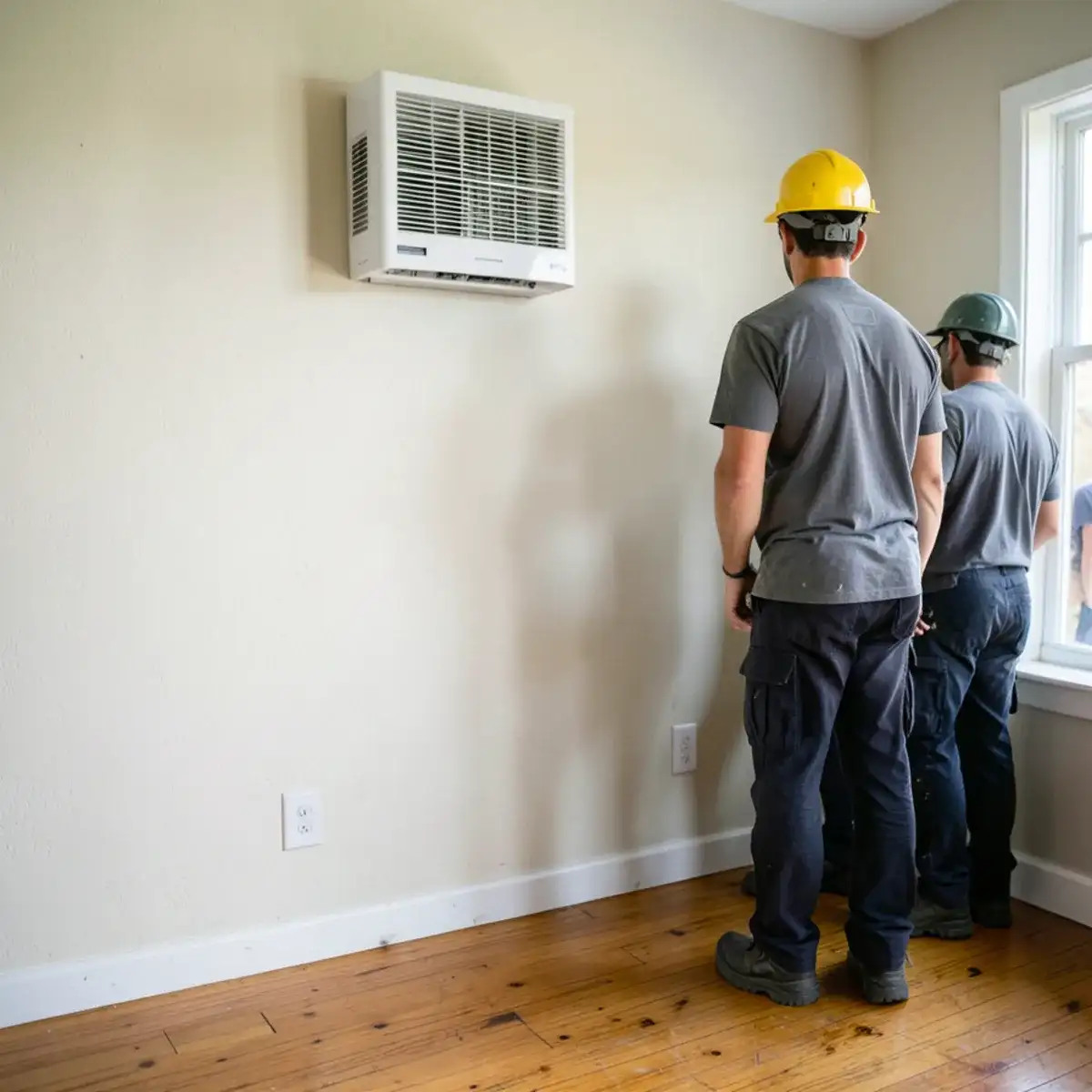
Mini split vs central air mostly comes down to your ducts. If the house has sound ductwork, central air is usually the simpler, cheaper way to cool all of it. If it has no ducts, or you only need to condition an addition or a few rooms, a ductless mini split usually makes more sense.
Mini split vs central air at a glance
The two systems cool by the same principle. What differs is how the cold gets into the room: through a network of ducts, or through a head on the wall.
| Ductless mini split | Central air | |
|---|---|---|
| Needs ducts? | No | Yes |
| Control | Room by room or zone by zone | Usually one thermostat for the house |
| Cost pattern | Grows with each zone | Mostly fixed for the house |
| Published price guide | $2,000 to $5,000 per zone (Nears.me) | $8,000 to $17,000 with a furnace (HVAC Project Cost, 2026) |
| Indoors | Visible unit on a wall or ceiling | Hidden, registers only |
| Filtration | Small washable filter at each head | Central filter, room for a deep media filter |
| Heating | Most models heat as well | Needs a furnace or heat pump |
| Duct losses | None | ENERGY STAR says 20 to 30 percent in a typical house |
| Service | Each head needs its own cleaning | One air handler, one filter |
Both figures in the price row come from outside sources, not from us.
Tell us what your system is doing
Our office is open Monday to Friday, 8 AM to 4 PM. Call and we will sort out the next step.
Which one suits which house?
Skip the feature lists and find your house below.
A ranch or two-story with working ducts
Central air wins. The ducts are paid for, the indoor coil fits on the furnace and one thermostat handles the house. Have the ducts checked first, since a leaky run will waste some of what you are paying for. Our AC installation page covers sizing and coil matching.

An older house with radiators or no ducts at all
Ductless usually wins. The Department of Energy cautions that adding ducts to an existing home may not be worth the cost, unless you are installing a central furnace at the same time. Plaster walls, solid masonry and low attics all make duct runs difficult. A mini split needs a line set route and a small hole for each head.
One addition, sunroom or finished garage
Ductless wins, and by a lot. Tapping an existing duct system to feed a new room often leaves the new room weak and starves the rest of the house. A single-zone unit gives that space its own thermostat, and it leaves the central system alone.
A long farmhouse with closed-off rooms
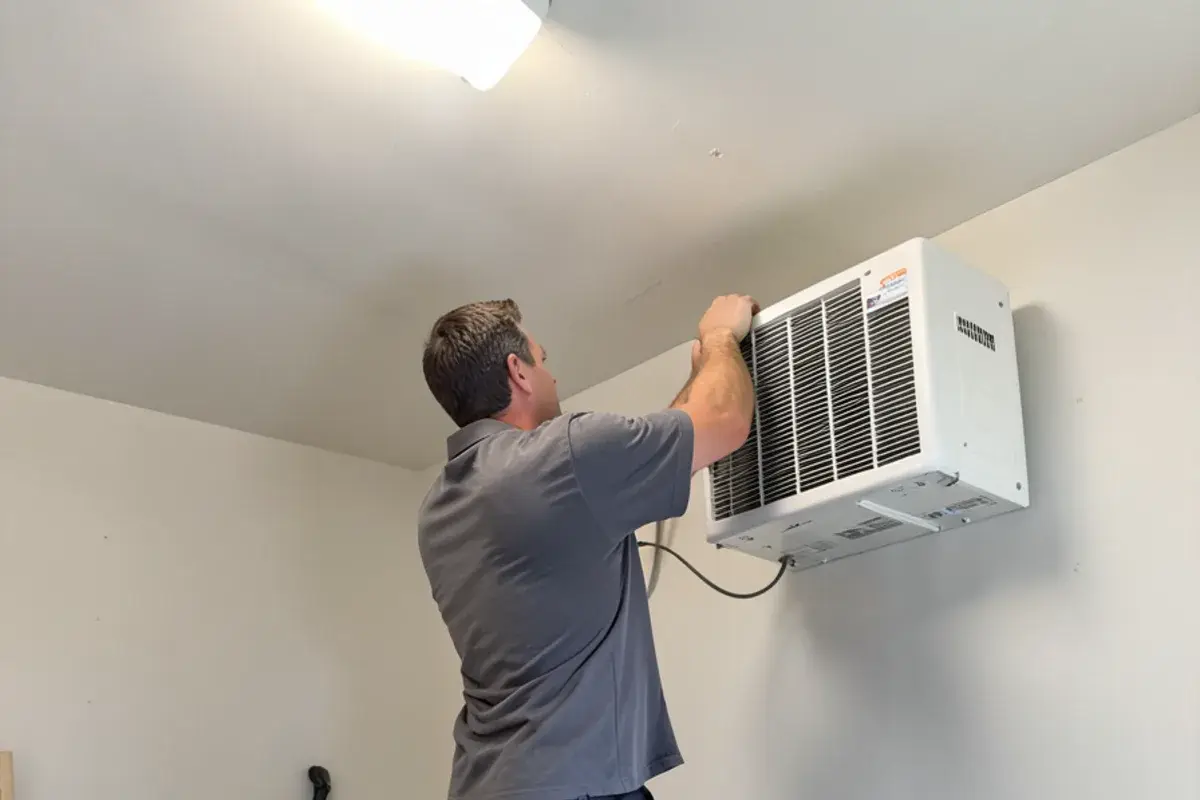
It could go either way. Doors and long hallways limit how far one wall unit can throw air, so a farmhouse may need a head in each room you use. Count those zones and price them against the central option. If only the kitchen, living room and main bedroom matter, ductless may be the better deal. If you want every room even, central with new ducts in the basement can compete.
A guest house or rental with separate tenants
Ductless is a strong fit. Each zone runs when it is occupied, and a closed room need not be conditioned. If you run a short-term rental around Hermann, our bed and breakfast guide goes into that in more detail.
What does each cost for a whole house?
Count zones first, because that is what sets the ductless price.
| Project | Ductless (at $2,000 to $5,000 per zone) | Central option |
|---|---|---|
| One addition | $2,000 to $5,000 | A branch off existing ducts, if capacity allows |
| Three zones | $6,000 to $15,000 | Furnace and AC together, $8,000 to $17,000 |
| Five zones | $10,000 to $25,000 | Same central range, more if ducts are needed |
That simple math comes from the published ranges above, so treat it as a rough guide. Multi-zone jobs on one outdoor unit can land differently, and new ductwork is not included in the central column. Your house needs its own clear, upfront quote.
Looks, noise and where the lines go
Most complaints about ductless are about looks. Heads are small, but they sit in plain sight, usually high on a wall. On a formal or historic interior, ask about a ceiling cassette or a low wall model, and ask where the condensate drain will go.
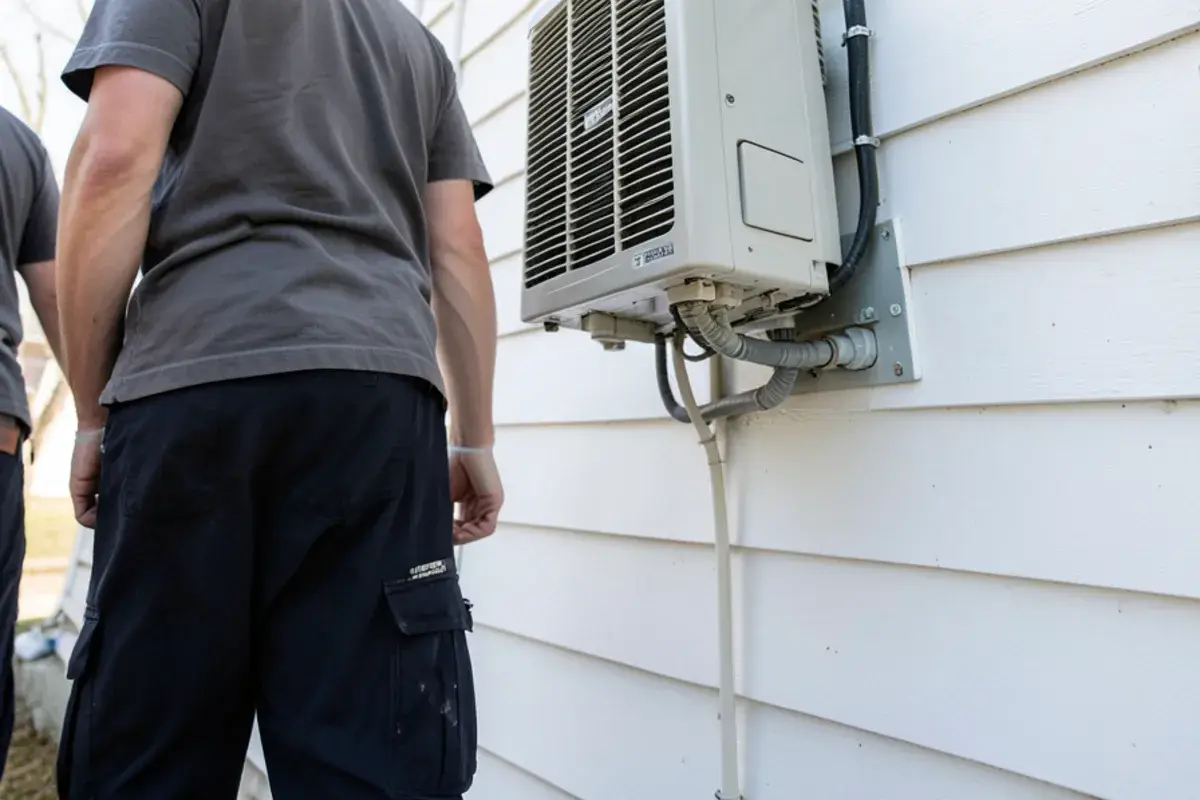
Outside, the Department of Energy notes that a unit can sit on a pad or mount on a wall, connected by refrigerant tubing. Line covers tidy up the run. On central air, the equipment is out of sight, and the only visible parts indoors are registers and a return grille.
Which feels more comfortable day to day?
Each one has a real edge. Ductless holds a steady temperature in the room it serves, with quiet indoor units and independent thermostats, so one person can sleep cool while another keeps the den warm. Central air moves air through the whole house, so rooms stay closer to one another, and a good central filter handles the whole air stream.
Humidity needs care on both. Hermann's river valley summers are damp, and an oversized unit of either type cools fast and shuts off before it removes moisture. A Manual J load, done room by room, avoids that for both.
What does each one ask of you after the install?
Upkeep is where these two feel most different, and it rarely shows up in a quote.
Central air. One filter, one coil, one drain. A tune-up each year covers the whole system, so a single visit handles the house. The hidden work sits in the ducts, which lose air slowly until someone tests them.
Ductless. Each head has its own washable filter, and the maker usually wants it cleaned every few weeks in season. Each head also has its own coil, blower wheel and drain line. In a humid river valley, a head that goes uncleaned can start to smell musty, because the wet coil and blower sit right there in the room. Budget for a periodic deep clean, and ask how the drain leaves the wall.
Single-zone and multi-zone setups fail differently, too. With several heads on one outdoor unit, a failed compressor takes out every room at once. Separate outdoor units cost more up front, but a failure stays in one zone. If the system will be your only heat, ask how it performs at Missouri's January lows and what backup you would use in an outage or a hard cold snap, because that answer can change the plan.
What we tell customers torn between the two
Look in the basement first. If you have sound ducts, the answer is often central. If you do not, price the zones you truly use, not every room in the house.
A mix can also be right. Plenty of homes do well with central air for the main floor and one ductless mini split for the addition that never kept up.
If you are in Sullivan, we should be straight about the distance. It is about 66 minutes and 51 miles from our Hermann office, so call first to confirm scheduling and we will tell you what we can do. Photos of your ducts or the rooms you want to condition help us give you a useful answer on the first call.
To talk it through, call (209) 563-1270 on a weekday during office hours, 8 AM to 4 PM. Tell us what you heat with, whether there are ducts and which rooms give you trouble.
Brian Grannemann
Owner, Brian Grannemann Services Inc, Hermann, MO. In business since 1998 across heating, cooling, electrical and plumbing work.