
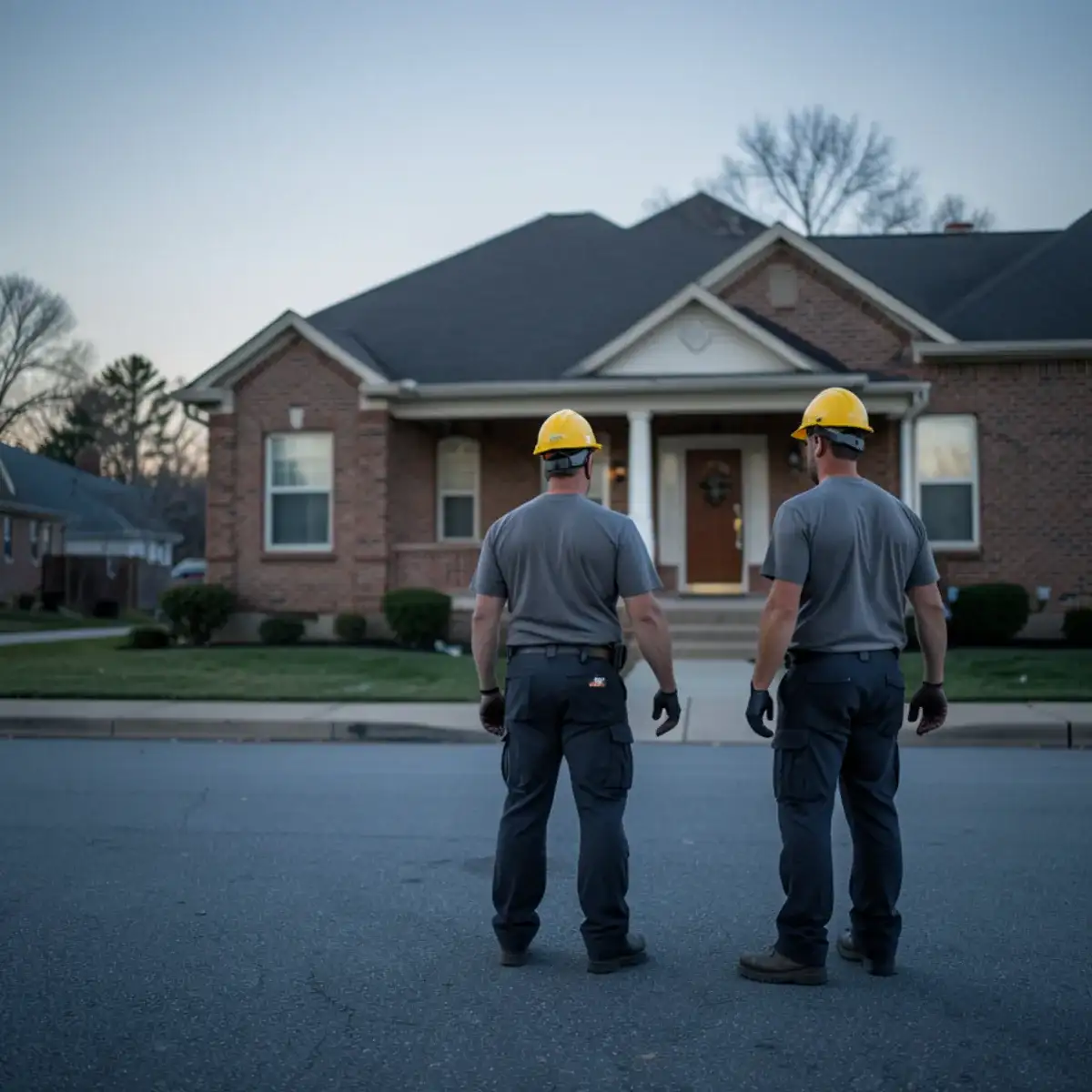
Smell gas near furnace equipment or anywhere else in the house? Get everyone out now, leave the switches and phones alone and call 911 from well away from the building. Read the rest of this page after you are safe, or before it ever happens, because the order matters.
Do these five things, in this order
Speed matters more than understanding. The sequence below follows the U.S. Pipeline and Hazardous Materials Safety Administration (PHMSA) and state regulators, and it does not change because the smell seems mild.
- Stop. Do not flip a switch, adjust the thermostat, or start or stop anything. Put out any open flame you are holding.
- Get everyone out. Bring people and pets, and leave everything else. Do not go looking for the source.
- Move well away. Go to a neighbor's home or a spot far from the building, upwind if you can tell.
- Call 911 from there, then call your gas utility or propane supplier. PHMSA specifically says to phone from a neighbor's home or another location far from the leak.
- Stay out. Do not go back inside until the fire department or gas company tells you it is safe.
Tell us what your system is doing
Our office is open Monday to Friday, 8 AM to 4 PM. Call and we will sort out the next step.
What not to touch on the way out
A spark is all gas needs, and everyday controls make sparks. PHMSA, the Missouri Public Service Commission and state regulators agree on this list.
| Do not touch | Why |
|---|---|
| Light switches, either direction | Switch contacts can spark when they open or close |
| Garage door opener | PHMSA names it with light switches as an ignition risk |
| Phone, inside or near the smell | The Missouri PSC warns that a phone used inside could create a spark |
| Thermostat, furnace switch, appliance controls | Each one opens or closes an electrical contact |
| Doorbell and elevators | Same reason, named in state guidance |
| Matches, lighters, candles, cigarettes | Open flame ignites gas directly |
| Your car, if it is in the garage or near the smell | PHMSA says not to start an engine of any kind |
Do not reach for the gas valve either, even if you know where it is. Connecticut's regulator notes that a smell near an appliance can come from a pilot that went out or a burner valve left slightly open. You cannot tell those apart from a leaking fitting by smell, so that diagnosis belongs to the person with the meter.
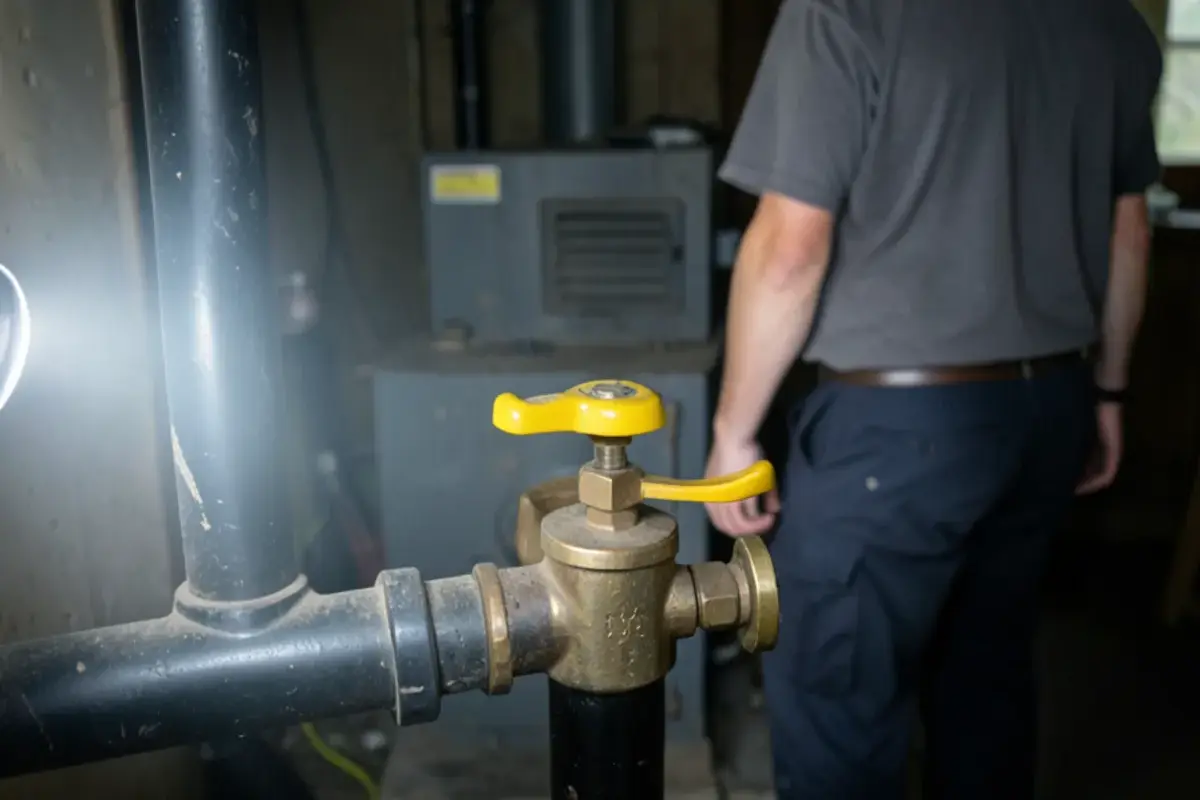
Smell gas near furnace equipment? Who you call depends on your fuel
Call 911 first if you are unsure, because that number works for every home on this page. After that, the right second call comes from your own bill or tank, not from a guess about the town.
| What you heat with | Your second call |
|---|---|
| Natural gas inside Hermann city limits | The City of Hermann, which runs the Hermann Gas System through its municipal utilities. Use the emergency number on your bill. |
| Natural gas with Spire on the bill | Spire's emergency line, printed on the bill |
| Propane | Your propane supplier, whose name is on the tank or delivery ticket |
| Not sure, or the bill is inside the house | Skip it. 911 can route the call. |
Do not assume a Hermann home is on Spire. Inside the city it is a municipal system, and only the customer's own bill settles the question. Find that number now, and put it in your phone and on the fridge, because you will not be going back inside for it.
Across the river in Rhineland, about 9 minutes and 6 miles from our office, and on farms throughout the county, a home may have no gas main at all. Check what feeds your own house before you need to know.
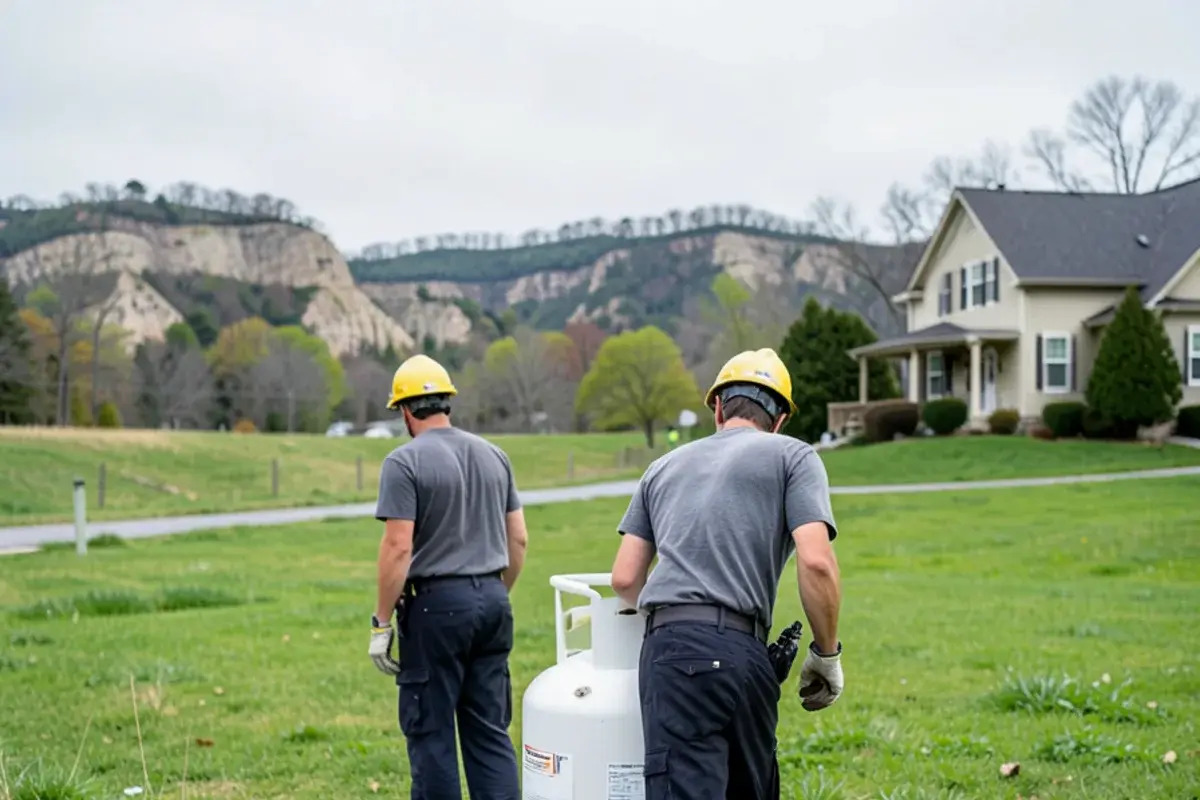
What is different about a propane home?
The first steps are identical, with one more hazard. Propane is heavier than air, so it can pool low in a basement or crawl space instead of rising and thinning out. A furnace room below grade deserves extra caution for that reason.
Propane has no natural smell. As Connecticut's regulator explains, a chemical called mercaptan is added to give it that rotten egg warning. Some propane suppliers tell customers to close the tank valve if they can do it safely. Do that only if the tank is on your way out and away from the smell. Otherwise leave it for the supplier or fire department. If gas was shut off for safety, do not turn it back on yourself, and call your propane company.
Propane service has its own details, including regulators and orifices that differ from natural gas equipment. Our propane furnace service page explains them.
After the all-clear: what happens next
The gas company or fire department finds and stops the immediate hazard, and may shut off gas to the house or a single appliance. Their job ends at safe. Fixing the cause is the next step.
- Do not relight or reopen anything. Connecticut's guidance is clear: never turn gas back on after a safety shutoff.
- Keep any tag or paperwork. It records what they found, and the repair starts from there.
- Book the repair. Tell us which appliance was involved, or what the responder told you.
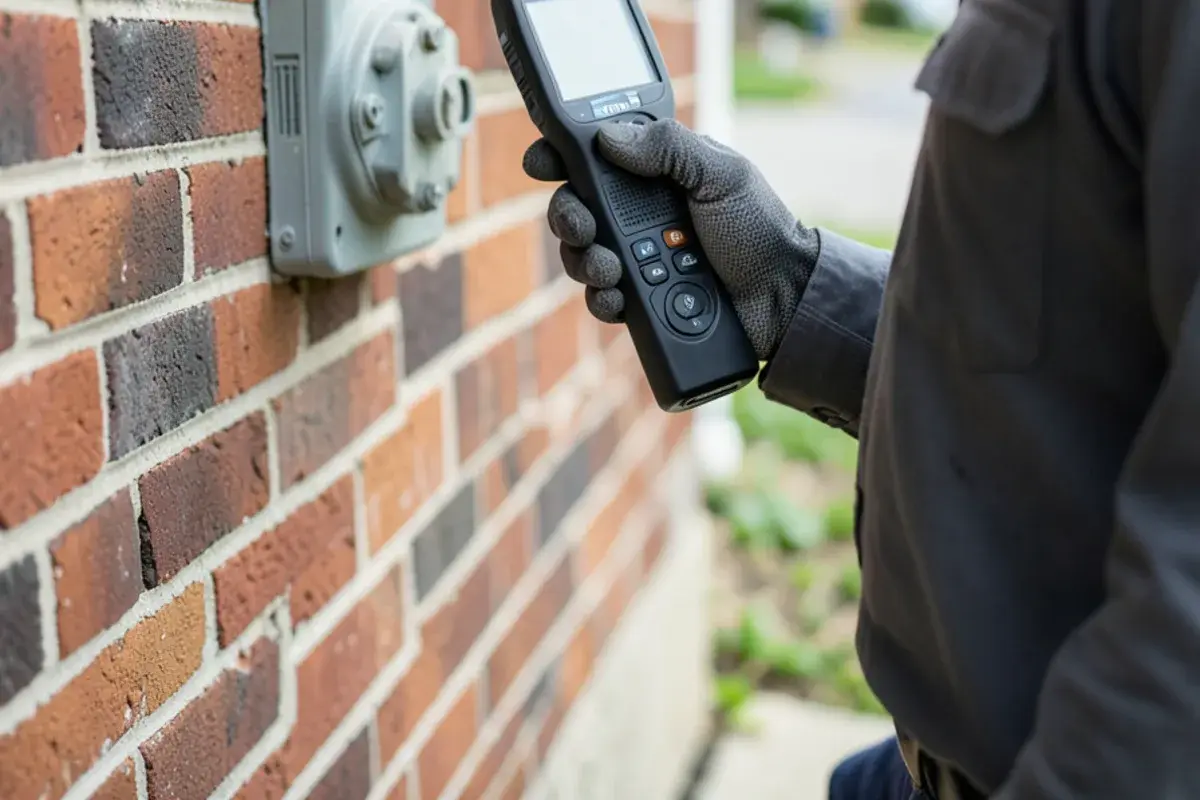
When we get to the furnace, we test before we replace anything. Depending on what the responder found, that means checking the fittings and connector, the gas valve and the burners, then confirming the furnace lights and vents correctly. You get a clear explanation of what failed, and we quote the work before we start. Our emergency furnace repair page covers the no-heat side of that visit.
Can you always trust your nose?
No. Gas odorant is a warning, not a guarantee. Some people have a weaker sense of smell, especially older adults and anyone with a cold, and a smell you live with can stop registering. Propane odorant can also fade in some conditions, such as a new tank or one that has rusted inside.
That makes a listed gas alarm a sensible backup, separate from your carbon monoxide alarm, because the two sensors look for different things. Place it as the maker directs. Gas rises and propane sinks, so a natural gas alarm goes high and a propane alarm goes low. Treat any alarm like the smell itself: leave first, then call.
What we tell customers about gas odors
Do not call us first. Call 911 and your gas provider first, from outside. We are the third call, after the danger is gone. Once the responders have cleared the house, call (209) 563-1270 and tell us what they said.
Gas is the one situation where we never want a homeowner to troubleshoot. Please do not sniff around the furnace to confirm it, and do not wait for office hours to report it. We keep weekday office hours until 4 PM, but 911 never closes, and that is the number that matters here. Donna M.'s review says Brian is careful about safety, which is the right way to see this: a false alarm is a good outcome, and we would far rather you leave for nothing than stay for something.
Spend ten minutes this week so you are ready: put your gas provider's emergency number in your phone, show everyone in the house where to meet outside and book a furnace repair check if you have ever noticed an odor near the unit that went away on its own.
Brian Grannemann
Owner, Brian Grannemann Services Inc, Hermann, MO. In business since 1998 across heating, cooling, electrical and plumbing work.