
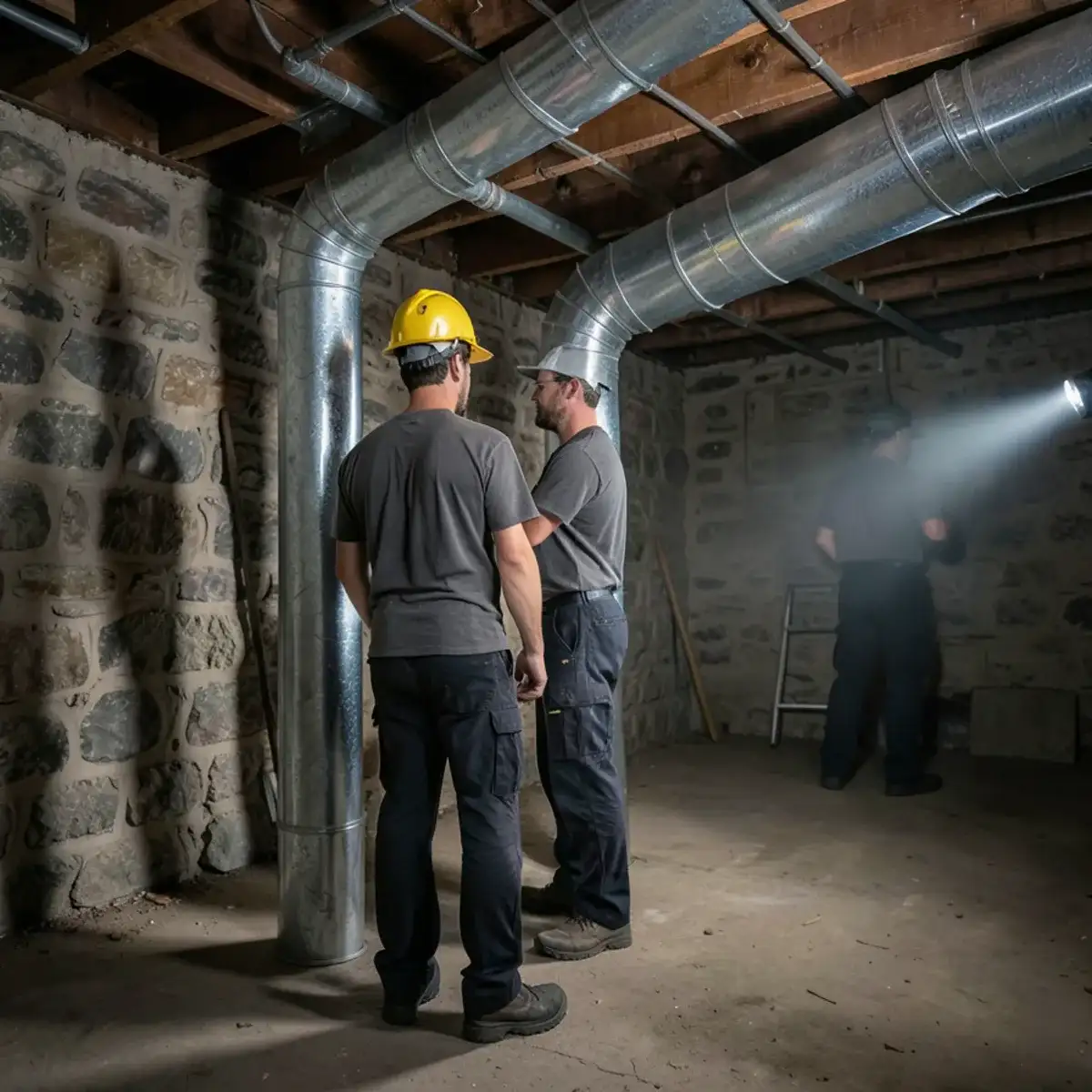
The clearest signs of leaky ducts are rooms that never catch up, dust that returns days after you clean and bills that keep climbing while your habits stay the same. ENERGY STAR says a typical house loses about 20 to 30 percent of the air moving through its ducts to leaks, holes and poor connections.
Six signs of leaky ducts, from the obvious to the easily missed
Any one of these can have another cause. Two or more together make ducts the first place to look.
- One room is always the problem. A bedroom at the end of the run stays hot in July and cold in January, because the air bound for it escapes along the way.
- Bills climb in both seasons. ENERGY STAR lists high summer and winter bills as the first warning sign. A rise in one season alone points elsewhere.
- Stuffy rooms. Rooms that never feel comfortable are often short on delivered air, even with the register wide open.
- Dust that keeps coming back. Return leaks pull air from dirty spaces and deliver it through your registers.
- Ducts in unconditioned space. Runs in an attic, crawl space or garage leak directly to the outdoors, or close to it.
- Tangled or kinked flexible duct. A crushed run behaves like a leak: the air never arrives.
ENERGY STAR's replacement guidance adds humidity trouble to the list, and it notes that leaky ductwork can be behind it. That is worth remembering before you price a new system.
Tell us what your system is doing
Our office is open Monday to Friday, 8 AM to 4 PM. Call and we will sort out the next step.
How to find the leaks yourself
You can learn a lot in an hour with the blower running. Set the fan to ON, take a flashlight and work from the rooms down.
- Start at the registers. Pull a floor or wall grille and look where the boot meets the floor or drywall. ENERGY STAR calls out these connections as common leak spots.
- Compare airflow. Hold a hand to every register and note the weak ones. A big difference between rooms on the same trunk points to a disconnected or crushed branch.
- Move to the air handler. Feel around the plenum and cabinet seams, and look for gaps where ducts meet the furnace.
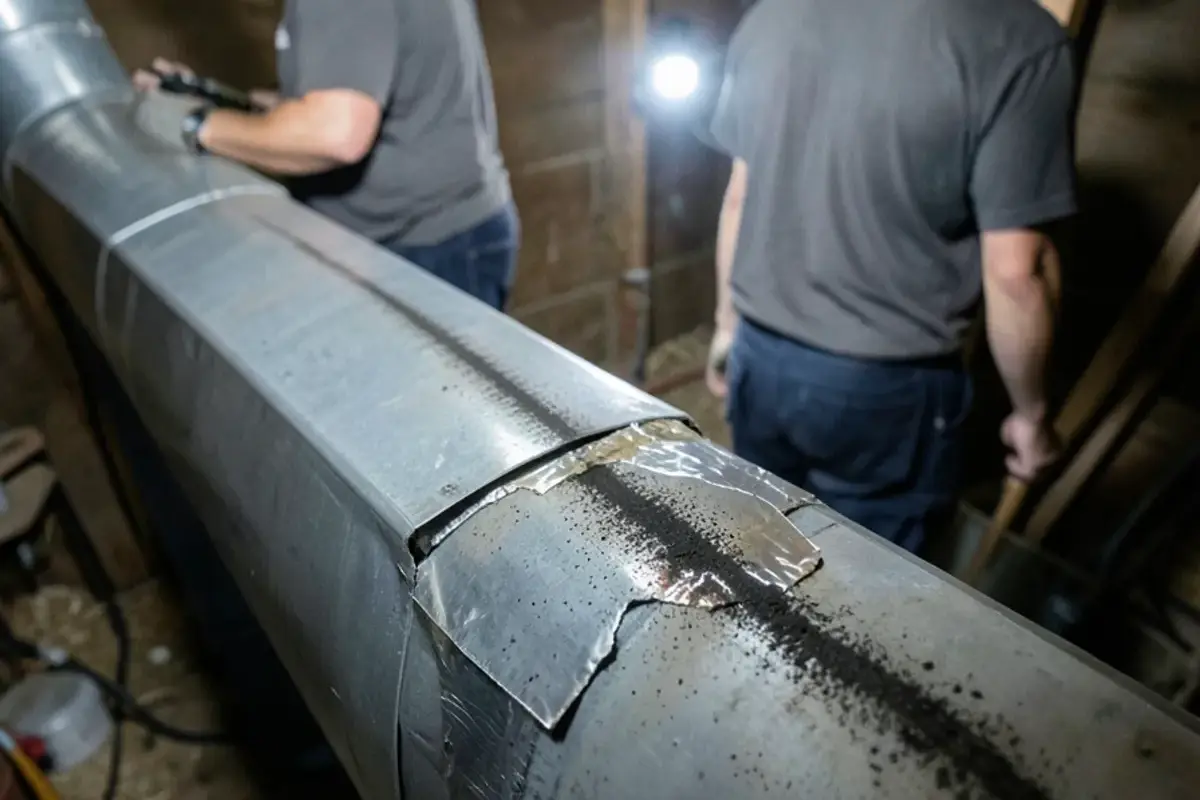
- Follow the trunk. Run your hand along joints in the basement and look for dark dust streaks, which are a sign of long-term air movement.
- Check old tape. Cloth duct tape that has dried, curled or fallen away means the joint is open.
- Look at crawl space and attic runs from the access hatch. Note any kinks, sags or pieces on the ground.
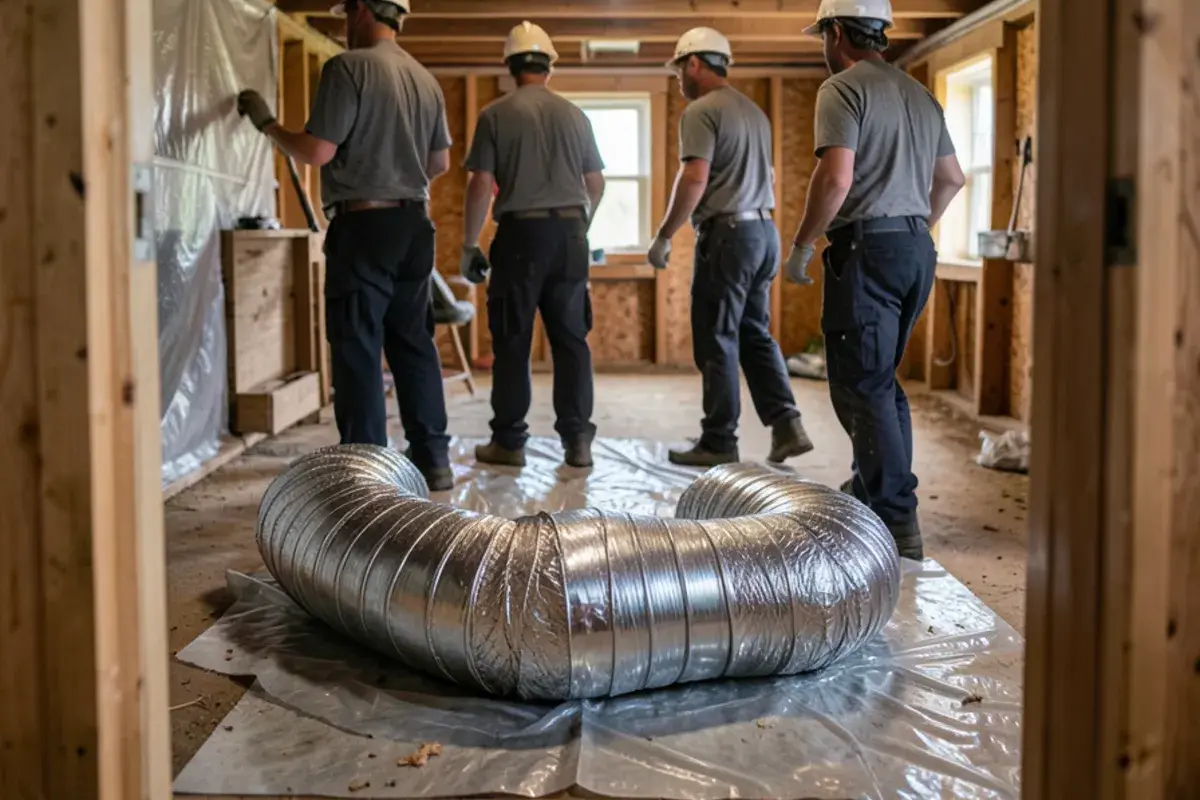
The University of Missouri Extension advises checking heating ducts yearly for leaks and insulating runs that pass through unheated areas. Pair that check with your filter changes and it costs you nothing.
What does a duct test show that your eyes cannot?
It gives you a number. A contractor seals the registers, connects a calibrated fan to the system and pressurizes the ducts, then reads the leakage directly. That matters because the worst leaks are often inside walls and chases, where no flashlight reaches.
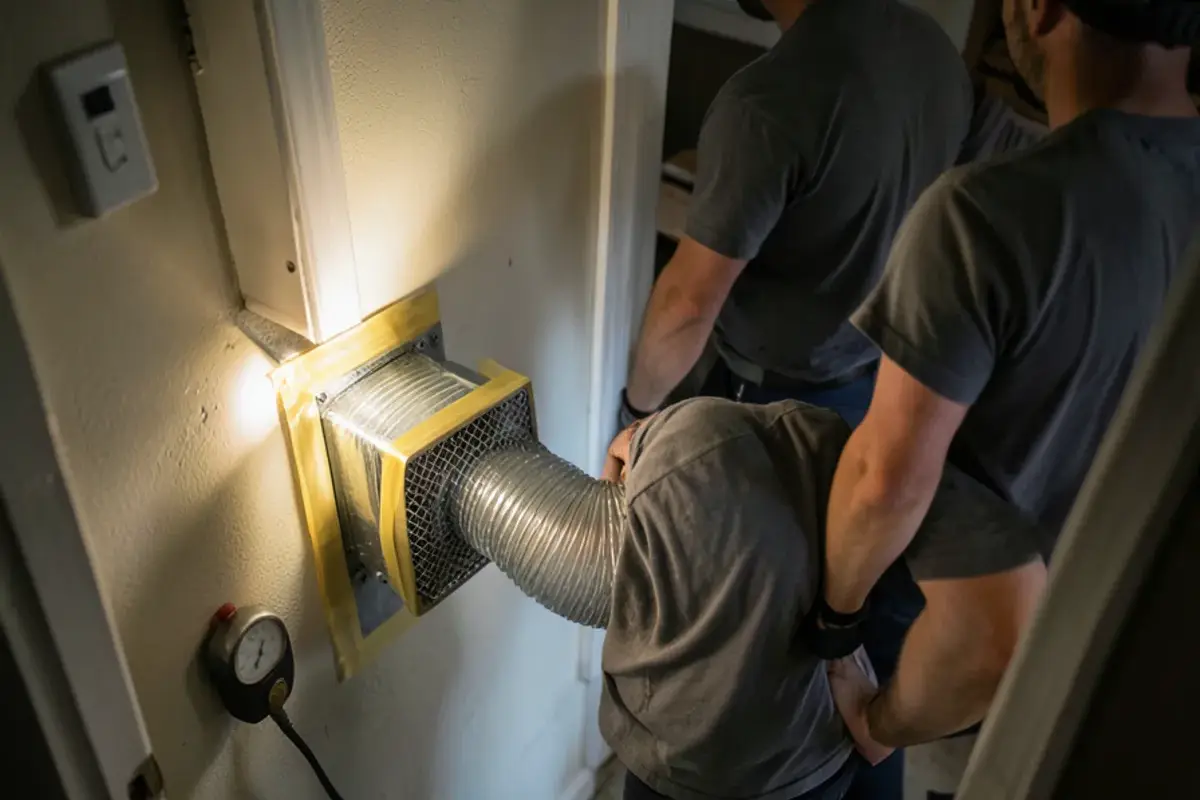
The test also gives you a before and after. If a contractor seals your ducts and cannot show what changed, you are relying on faith. Ask for the test result in writing.
Does it matter where the leak is?
Yes, because a leak's location decides what it costs you. A joint leaking into a heated basement loses less than the same gap in a crawl space or attic, since the lost air still warms part of the house. Treat the runs in unconditioned space as the priority.
Supply and return leaks do different damage, too.
- Supply leaks push air you already paid to heat or cool out of the system. The room at the end of the run comes up short.
- Return leaks pull air in from wherever the duct passes. In a river-valley crawl space, that means damp, musty air going straight to your coil, which is one reason a house can feel clammy with the AC running.
Older homes add a detail that catches people out. Many return runs were built by nailing sheet metal across the floor joists, so the joist bay itself is the duct. Those panned returns are rarely tight, and they are hard to see once a basement ceiling is finished. If your return grille sits in the floor of an older house, ask about this before anyone quotes new equipment.
What is a leak costing you?
Work it out on your own bills, using a rough figure. If your heating and cooling cost $2,000 a year and the ducts lose 20% of the air they move, about $400 of conditioned air never reaches a room. You will not win all of that back, because some of it still warms a basement, but it shows why sealing often comes ahead of a bigger furnace. A before and after test tells you what the work really changed, in numbers you can keep.
What does duct repair involve?
Matching the fix to the fault keeps the bill sensible. Sealing a sound system is cheap compared with replacing it.
| Problem | Typical fix | Note |
|---|---|---|
| Open seams and joints | Mastic or metal tape | ENERGY STAR says never to use duct tape, because it does not last |
| Gaps at boots and registers | Sealed at the floor or wall | Quick work, and often overlooked |
| Disconnected branch | Reconnect, strap and seal | Often the quickest win on the list |
| Crushed or kinked flex | Replace that section | Keep runs straight and fully stretched |
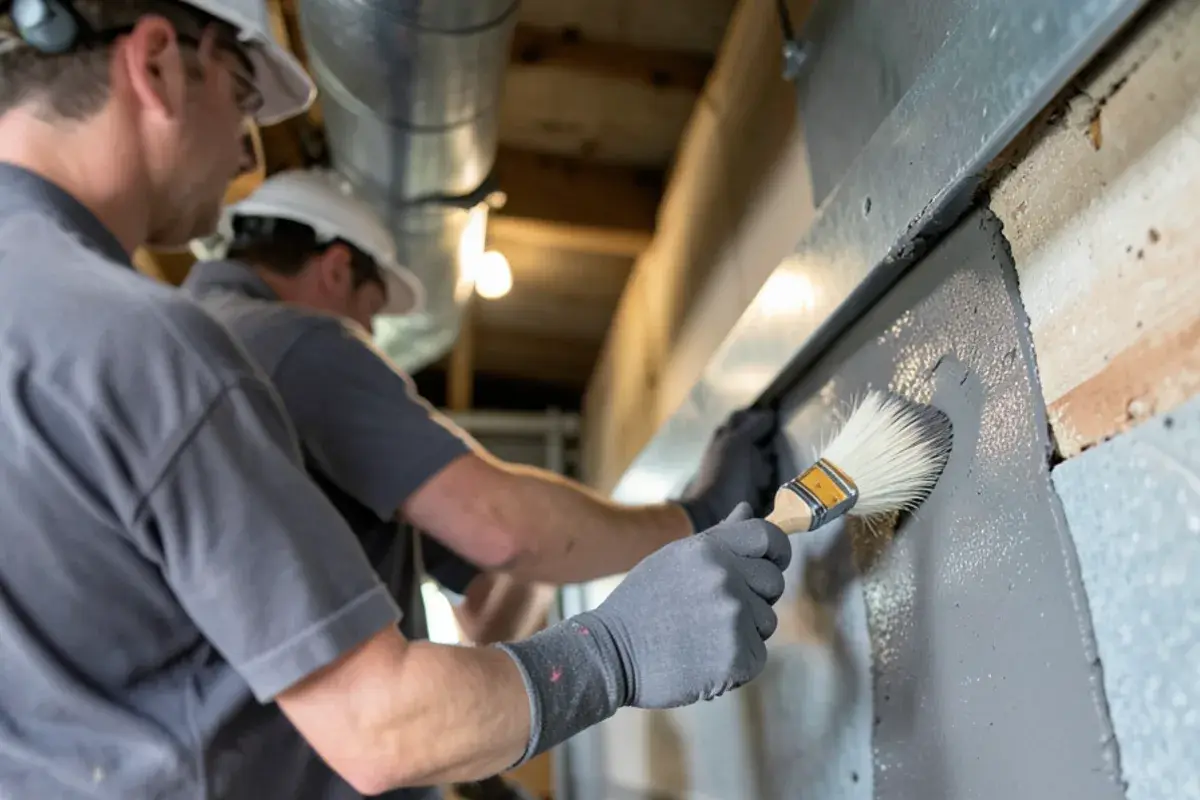
| Bare ducts in unheated space | Seal first, then insulate | Insulation over a leak hides it |
| Undersized or failed system | Redesign using Manual D | Needed when the layout itself is the problem |
What we tell customers before they replace equipment
Have the ducts looked at first. The Department of Energy points out that furnace efficiency ratings do not include duct losses, which can reach 30 percent or more in bad cases. A new high-efficiency furnace on a leaky duct system still loses that air.
Ducts also shape the next system. A new unit sized to a load calculation only performs if the air reaches the rooms, so ask for a duct check with any furnace replacement quote.
Sealing and cleaning are also different jobs. Cleaning does not close a single leak, so read our take on air duct cleaning before booking one to fix dust.
Bland is a 37-mile drive from our Hermann office, about 43 minutes each way. On a farmhouse that far out, tell us where your ducts run and how you reach them on the phone, so the visit can be planned around one trip.
Our duct repair page explains the work in more detail. To talk through what you found on your walk-through, call (209) 563-1270.
Brian Grannemann
Owner, Brian Grannemann Services Inc, Hermann, MO. In business since 1998 across heating, cooling, electrical and plumbing work.