
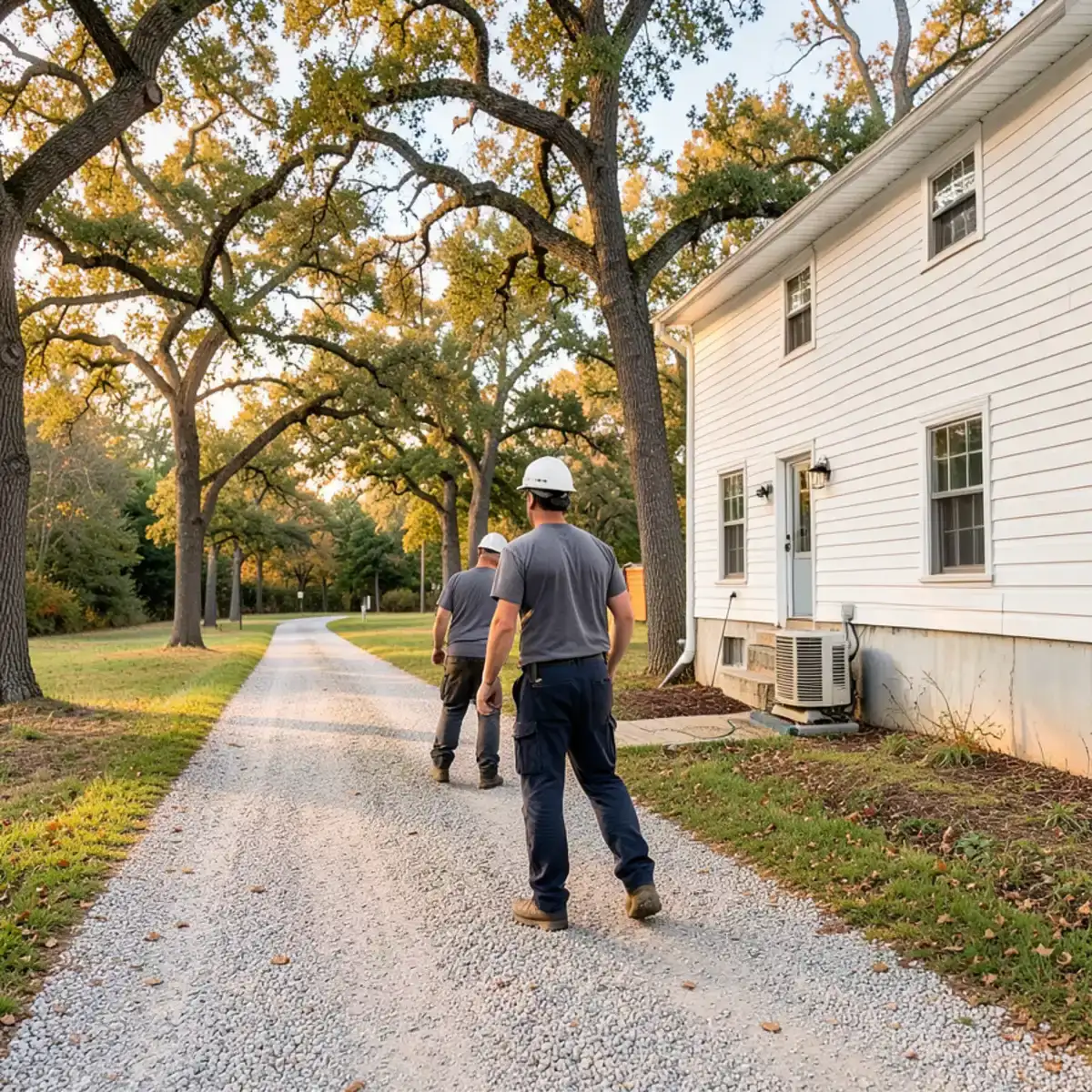
Rural HVAC maintenance in Missouri comes down to doing the simple tasks yourself, keeping a few parts on the shelf and booking the technician before the season turns. If a service call means a long drive, small problems have time to become big ones. A short calendar, a shelf kit and good notes change that.
The rule for living far from town
Do the small jobs yourself, on a schedule, and hand the rest to a technician before it turns urgent. Distance changes the math. In town, a minor fault is an inconvenience. At the end of a county road it can mean a wait, a second trip for a part or a cold night.
For scale, Morrison is about 22 minutes from our Hermann office, Bland about 43 and Belle about 49. Our office hours are Monday to Friday, 8 AM to 4 PM. Planning ahead does more for you out here than any other habit.
Tell us what your system is doing
Our office is open Monday to Friday, 8 AM to 4 PM. Call and we will sort out the next step.
Rural HVAC maintenance in Missouri, month by month
Tie each task to a date you will not forget. Hermann averages 116 or so nights below freezing (BestPlaces), and both seasons are long enough to find a weak part.
| When | Do this yourself | Book or arrange |
|---|---|---|
| January | Check the filter, clear snow from outdoor units and vent pipes, watch the propane gauge | Delivery before the tank runs low |
| March | Walk the outdoor unit for winter damage, check the filter | Call for a spring cooling tune-up |
| May | Rinse the outdoor coil gently after the power is off, cut back brush | Finish the tune-up before the first hot stretch |
| July | Check the filter monthly, pour a little water at the drain to confirm it flows | Service if the drain is slow |
| August | Check for mud dauber nests in vent pipes | Call for a fall furnace visit |
| October | Test CO alarms, run the heat once for an hour, look at the tank level | Fill the tank before cold arrives |
| December | Replace thermostat batteries, check the filter | Top off the tank ahead of a forecast |
ENERGY STAR's maintenance list follows this same rhythm: the contractor comes in spring for cooling and fall for heating, and the homeowner checks filters monthly. Rural homes just need to start sooner.
What belongs on the shelf
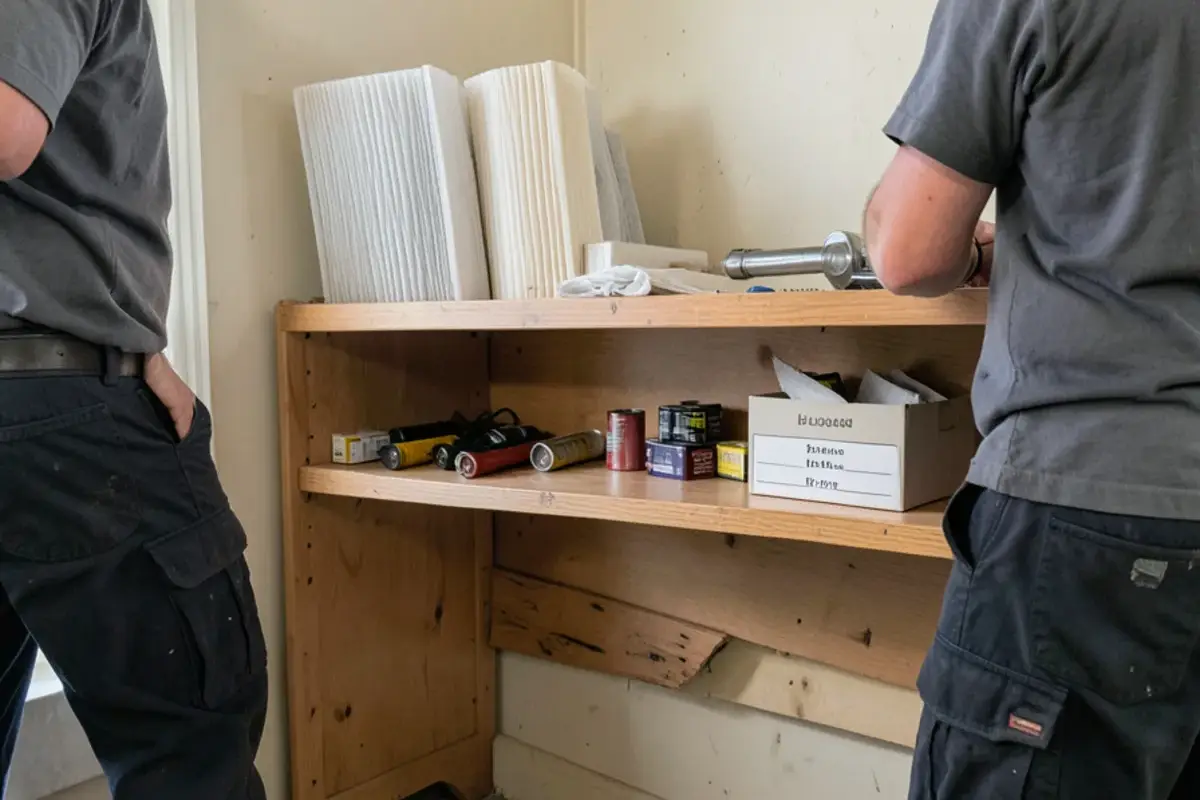
Keep a small kit where you can reach it in the dark. Every item below solves a real no-heat or no-cool call without a truck.
- Filters, a full season's worth, because the nearest store may not carry your size.
- Thermostat batteries, since a dead pair looks exactly like a dead furnace.
- The right blade fuse for your furnace board. Read the rating on the old one or ask the office.
- A flashlight with fresh batteries, plus a headlamp if you can.
- Condensate tablets and a wet vac for clearing a slow drain.
- Space heater with a tip-over switch on its own circuit, for one room in an emergency.
- Your notes page, covered next.
Skip the igniter and capacitor unless a technician tells you exactly which part fits. Those are model-specific, and fitting one calls for testing that a shelf kit cannot do.
Pests, dust and other country problems
Rural equipment fails in ways town equipment rarely does. Check for these three before each season.
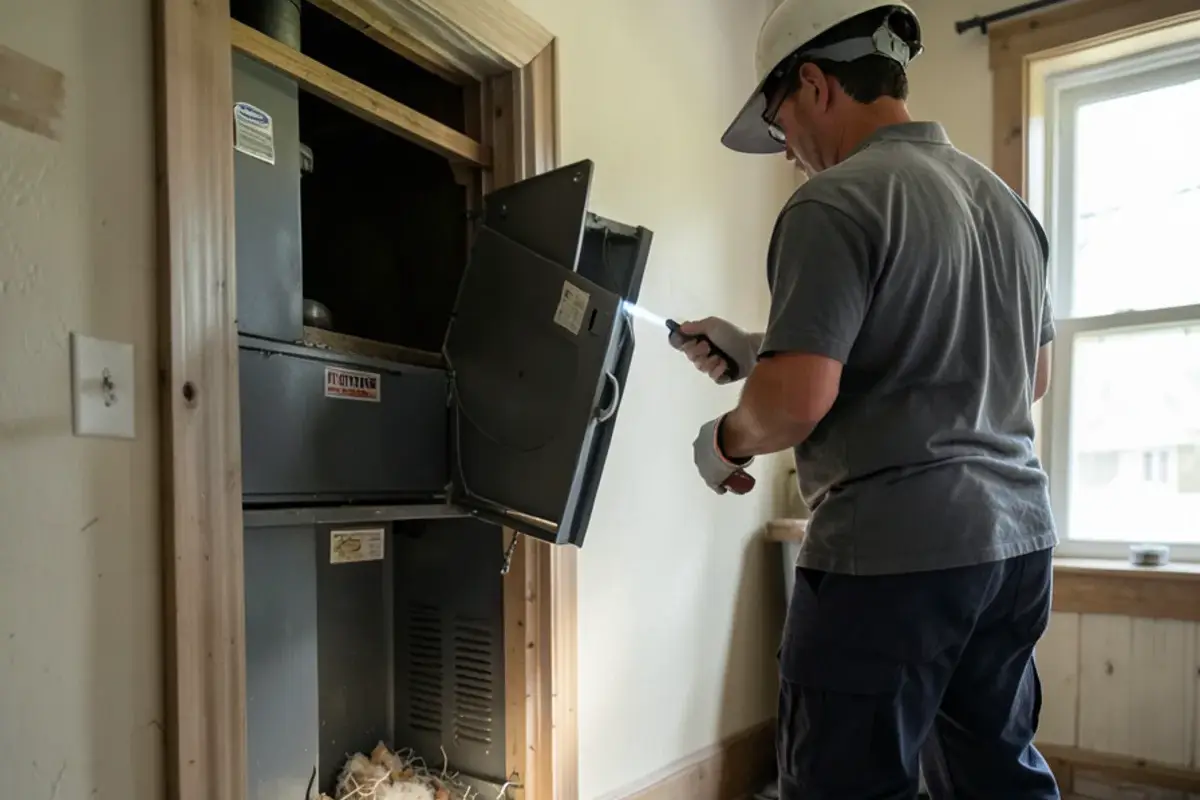
Mice. They move into warm cabinets when fields are cut, and they chew wire and shred insulation. Keep feed and pet food away from the furnace room, and look inside the lower panel area once a year with the power off.
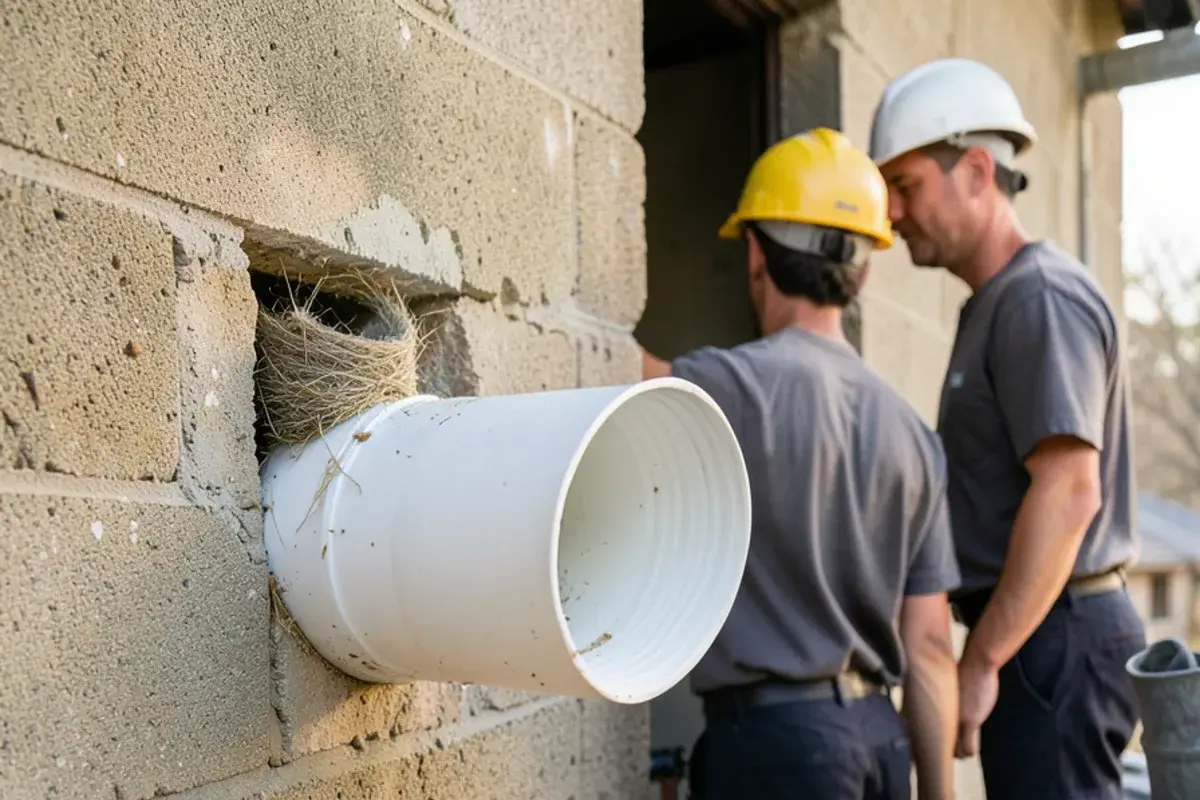
Wasps and mud daubers. They love an open plastic vent pipe. A blocked intake or exhaust will shut a high-efficiency furnace off on a pressure safety. Look at the pipes from outside in August and clear anything you can reach by hand.
Dust and chaff. Gravel, harvest and hay fines pack the outdoor coil and load the filter. Cut the filter interval in half during dusty months. Our HVAC filter guide covers the timing.
If you heat with propane, add one more check. Regulators and tank connections sit out in the weather, and any new smell of gas means you leave the house and call your supplier from outside. Our propane furnace service page explains what a technician looks at.
Can you keep an eye on the system from a distance?
Yes, and a small amount of equipment goes a long way when you are the only one who will notice a problem. These matter most for a shop, a rental or a place you leave empty.
- A low-temperature alert. A simple sensor can text you if a building falls below a set point. Some work over Wi-Fi, and cellular models suit a place with no internet.
- A water sensor at the condensate pan and the water heater. A slow overflow in a basement can run for days before anyone sees it.
- A smart thermostat, if the signal is reliable. Seeing the indoor temperature from your phone tells you the heat has failed while there is still time to act.
- A surge protector for the outdoor unit. Long rural lines and summer storms are hard on control boards. Ask a qualified electrician to fit it at the panel or disconnect.
None of these fixes anything. They buy you time, and time is what distance takes away.
What should a rural home ask before buying new equipment?
The best parts plan starts on the day you buy. Ask these questions of any contractor, and let the answers count as much as the price.
- Are the common parts for this model stocked nearby, or are they ordered in?
- Does the filter come in a size the nearest store carries?
- How much room will a technician have to reach the coil, blower and controls?
- How far off the ground should the outdoor unit sit here, given drifting snow, runoff or dust from the lane?
- If it fails in January, what is my backup heat?
A simple, serviceable system with parts on the truck is often worth more out here than the highest efficiency label.
How to make one trip do the work of two
Give the office the facts before anyone leaves town. A technician who knows the model and the symptom can load the right part, and that is often the difference between one visit and two.
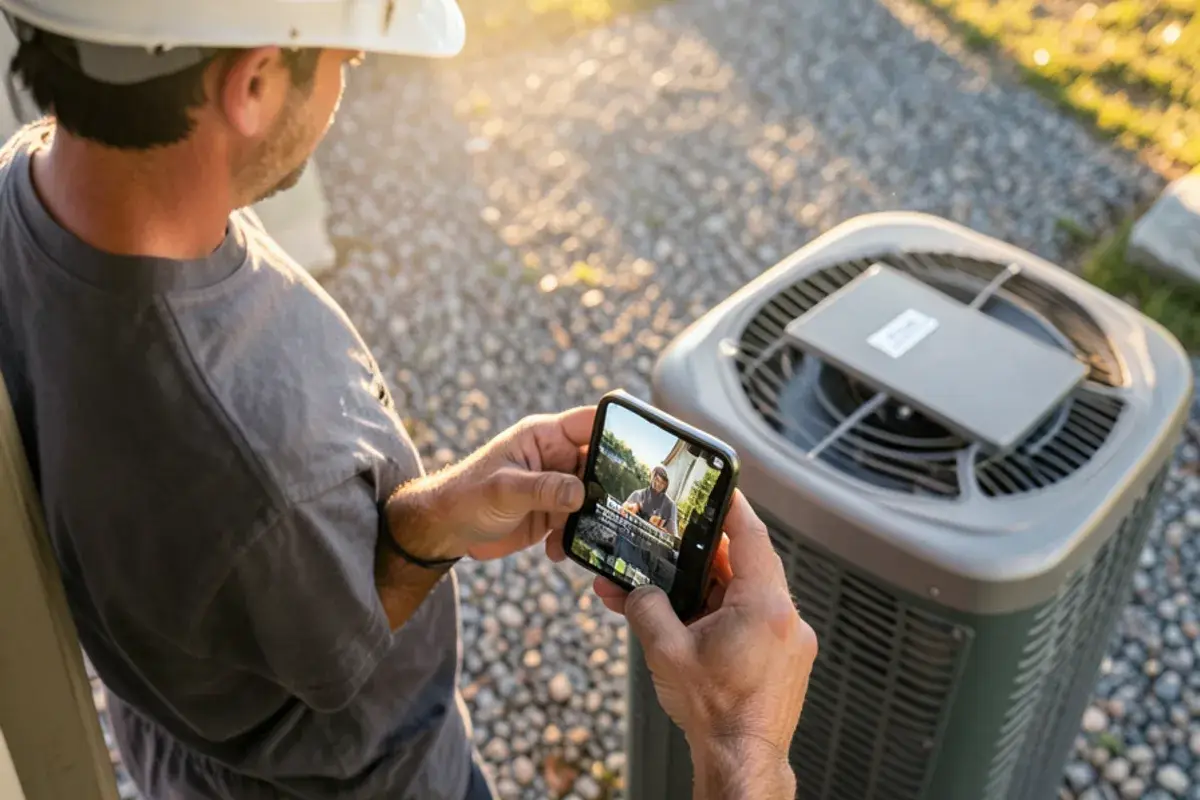
- Keep phone photos of both data plates, indoors and outside.
- Write down the age of the system, the filter size, your fuel supplier and the tank size.
- Note the exact symptom: what it did, when it started and any code flashing on the board.
- Give clear directions, including the last turn and any low-water crossing or bad stretch of lane.
- Keep the path to the furnace and outdoor unit clear.
What we tell customers down long lanes
Do not wait for the system to fail to call. A furnace tune-up in September and an AC tune-up in April cost you a little planning, and they catch the weak capacitor or dirty flame sensor while the weather is still kind. Ask about the age of your equipment while the technician is there, too, so that a replacement is a planned decision rather than a February emergency.
If you are far out, say so when you call (209) 563-1270. We would rather hear about the distance up front and plan the visit properly. Past about an hour from Hermann, call first to confirm scheduling before you count on a date.
Brian Grannemann
Owner, Brian Grannemann Services Inc, Hermann, MO. In business since 1998 across heating, cooling, electrical and plumbing work.